Sicily Travel Update 2026: What Is Happening Right Now?

Sicily Travel Update 2026: Mount Etna, Catania Airport & What Tourists Need to Know

Last updated: 19 August 2026

If you are travelling to Sicily this year, recent headlines about Mount Etna may have raised some questions. Our Sicily travel update 2026 explains what visitors need to know before arriving.

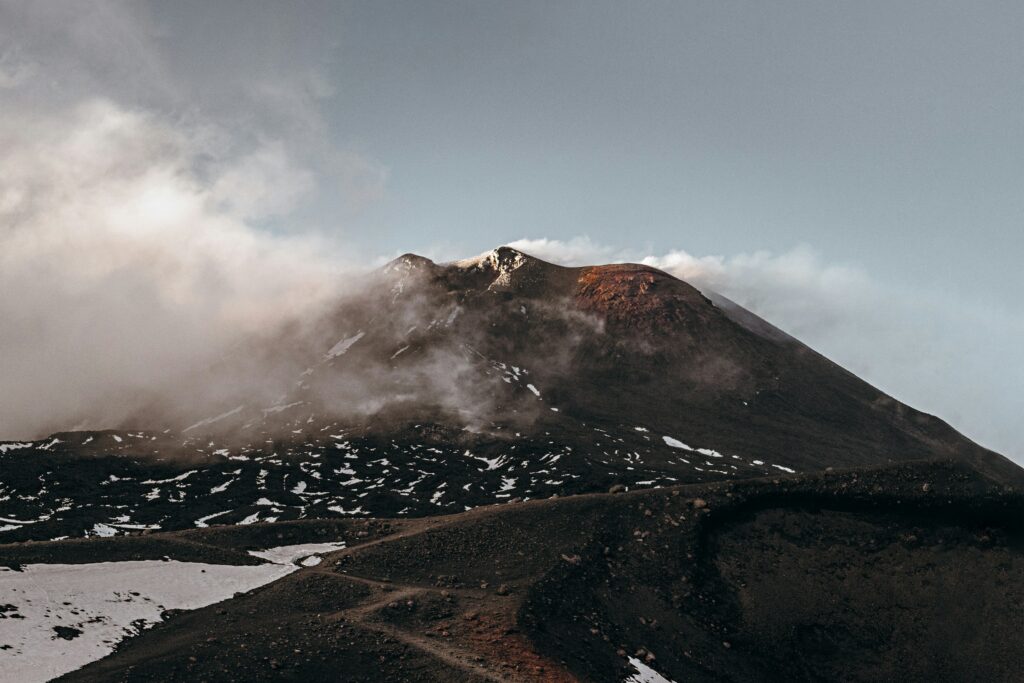
Mount Etna has experienced significant volcanic activity during August. As a result, volcanic ash has caused closures, cancellations and diversions at Catania Fontanarossa Airport.

The disruption has been significant. However, this does not mean that Sicily itself is closed to visitors.

Flights at Catania resumed on 15 August after the volcanic aviation alert was lowered from red to orange. However, flight operations remain subject to change, and further restrictions may be introduced at short notice if volcanic ash affects the airport or surrounding airspace.

For travellers, preparation is more important than panic.

Before leaving for the airport, check your flight directly with your airline. Keep your accommodation details available and understand your alternative airport options.

Most importantly, don’t assume that activity at Mount Etna means your entire Sicily holiday must be cancelled.

Here’s what is happening and how you can prepare.

Is It Safe to Travel to Sicily Right Now?

For most visitors, the current situation is primarily a transport issue rather than an island-wide tourism shutdown.

Mount Etna sits on Sicily’s eastern side, near Catania. Therefore, volcanic ash can have a significant impact on aviation around Catania.

Other parts of Sicily can experience very different conditions.

Visitors staying around Palermo, Cefalù, Trapani or western Sicily may see little direct effect from Etna’s activity. Nevertheless, transport disruption can spread when flights are diverted to other airports.

The important distinction is between volcanic activity and aviation disruption.

Etna is one of the world’s most active volcanoes. Its activity does not automatically mean that Sicily becomes unsafe for tourists.

Visitors should follow official instructions around the volcano and avoid restricted areas.

Mount Etna Eruption 2026: What Tourists Should Know

Mount Etna’s latest eruptive phase began in early August. The volcano produced sustained ash emissions alongside explosive and effusive activity.

The persistence of the ash has created particular problems for aviation.

Volcanic ash can damage aircraft engines and reduce visibility. Therefore, aviation authorities may restrict airspace even when conditions appear normal from the ground.

This explains why a beautiful sunny day in Catania can still coincide with flight delays.

Conditions can also change quickly.

Wind direction plays an important role because it determines where the volcanic ash travels. During the August activity, ash travelled well beyond eastern Sicily.

For visitors, this means yesterday’s airport information may not apply today.
Catania Airport Update: Are Flights Operating?

Catania Fontanarossa Airport is currently open and operating, following the resumption of flights on 15 August after Etna’s aviation alert was lowered from red to orange.

However, passengers should not assume that every scheduled flight will operate normally. Mount Etna remains active, and flight operations can still be affected at short notice if volcanic ash reaches the airport or surrounding airspace.

Therefore, always check your individual flight.

The official Catania Airport website provides live arrival and departure information. Your airline should remain your primary source for changes to your booking.

Avoid travelling to the airport simply because your original departure time still appears on an old confirmation email.

Check again before leaving your accommodation.

Why Does Mount Etna Affect Catania Airport?

Catania Fontanarossa is located close to Mount Etna.

That location makes Catania extremely convenient for eastern Sicily. However, it also leaves the airport vulnerable when volcanic ash moves towards its airspace.

Ash presents a serious aviation hazard.

Consequently, authorities may reduce arrivals, close sections of airspace or temporarily suspend operations.

These decisions can sometimes appear sudden. In reality, they are safety measures based on changing volcanic and atmospheric conditions.

What Happens If Your Catania Flight Is Cancelled?

First, contact your airline before making expensive alternative arrangements yourself.

Depending on your circumstances, the airline may offer another flight, rerouting or a refund.

EU passenger protection rules continue to provide important rights when flights are cancelled.

However, volcanic eruptions and volcanic ash generally fall under extraordinary circumstances. Therefore, standard cash compensation may not apply.

That does not necessarily remove your rights to assistance.

Passengers affected by cancellations can still have rights concerning rerouting, reimbursement and care.

Keep every receipt if you need to purchase essential meals, accommodation or transport.

Also keep screenshots of cancellation notices and airline communications.

These records can become important when requesting reimbursement later.

Should You Fly Into Palermo Instead?

Palermo can provide an excellent alternative, particularly for travellers staying in northern or western Sicily.

During the recent disruption, Palermo Airport absorbed a large number of flights diverted from Catania.

However, don’t automatically change your flight without considering your final destination.

Palermo is particularly convenient for:

  • Palermo
  • Cefalù
  • Scopello
  • Castellammare del Golfo
  • San Vito Lo Capo
  • Trapani
  • Marsala
  • Western and northwestern Sicily

Catania usually remains more convenient for:

  • Taormina
  • Mount Etna
  • Catania
  • Syracuse
  • Ortigia
  • Noto
  • Southeastern Sicily

If your airline offers Palermo as an alternative, calculate the onward journey before accepting the change.

Is Palermo Airport Affected by Mount Etna?

Palermo Airport is much farther from Mount Etna than Catania.

During the major August disruption, Palermo became an important alternative for diverted flights.

However, increased traffic can create secondary problems.

More passengers may mean greater demand for rental cars, taxis and onward transport. Therefore, travellers diverted to Palermo should organise ground transportation quickly.

If your flight changes airport, contact your villa company or accommodation provider as soon as possible.

A changed arrival airport can also affect your planned transfer or car rental.

What About Comiso and Trapani Airports?

Sicily has more airport options than many first-time visitors realise.

Comiso Airport can provide an alternative for southeastern Sicily. Trapani Airport can work particularly well for western destinations.

However, Comiso has also experienced temporary disruption during the recent Etna activity.

Therefore, don’t assume another Sicilian airport will always remain unaffected.

Check the airport and airline information before changing your plans.

Can You Still Visit Mount Etna?

Seeing an active volcano can be extraordinary. However, increased activity is not an invitation to approach restricted areas independently.

Conditions on Etna can change rapidly.

Access restrictions may change according to volcanic activity, weather and civil protection instructions.

If you plan to visit, use an authorised guide and follow current official restrictions.

Never cross barriers or enter closed areas simply to get a better photograph.

An eruption may look spectacular from a distance. The conditions closer to active areas can be very different.

What Should You Do If Volcanic Ash Falls During Your Holiday?

Light volcanic ash can occasionally reach towns around Etna.

If ash is falling, avoid unnecessary exposure and follow instructions from local authorities.

Keep windows closed when necessary. Protect your eyes if conditions become dusty.

Drivers should also take additional care.

Ash can reduce visibility and make roads slippery. It can also affect vehicles.

If you have a rental car, follow instructions from the rental company regarding ash contamination or cleaning.

Travelling Between Palermo and Catania

When Catania Airport experiences disruption, travelling across Sicily becomes an important backup option.

Rail services connect Palermo, Messina and Catania. Coaches and private transfers provide additional alternatives.

During the recent airport disruption, additional trains were introduced to help passengers move across the island.

Travellers should also be aware that planned infrastructure works are currently affecting part of the Palermo–Catania railway route. Services may therefore be modified or replaced by buses on some sections, and journey times may be longer than usual. Check the latest Trenitalia information before travelling.

However, Sicily is larger than many visitors expect.

A diversion to Palermo does not mean Catania is just a short taxi ride away.

Allow several hours for cross-island travel and confirm your route before booking an alternative flight.

Don’t Forget Your Rental Car

Flight disruption can create another problem that travellers sometimes overlook.

Your rental car reservation may be tied to a specific airport and arrival time.

If your flight moves from Catania to Palermo, contact the rental company immediately.

Don’t assume the same booking will automatically transfer between airport branches.

During major disruption, demand for vehicles can also increase quickly.

The same applies to private airport transfers.

Tell your driver or villa representative about any changes as soon as your airline confirms them.

Should You Cancel Your Sicily Holiday?

For most travellers, an Etna-related flight disruption alone is not a reason to cancel an entire Sicily holiday.

Instead, consider where you are staying and which airport you are using.

Someone flying into Palermo for a holiday in Cefalù faces a very different situation from someone flying into Catania.

Travellers heading towards Taormina, Etna or southeastern Sicily should monitor Catania Airport more closely.

Flexibility is particularly valuable during periods of increased volcanic activity.

Where possible, avoid tightly connecting your arrival with expensive activities or events on the same day.

Give yourself some breathing room.

What Should You Check Before Flying to Sicily?

A few minutes of preparation can prevent hours of unnecessary stress.

Before travelling:

  • Check your flight directly with your airline.
  • Check your departure and arrival airports.
  • Monitor Catania Airport if travelling through CTA.
  • Keep your villa or accommodation contact details available.
  • Confirm your airport transfer.
  • Check your rental car reservation.
  • Save your airline booking details offline.
  • Keep essential medication in your hand luggage.
  • Consider appropriate travel insurance.
  • Keep receipts if disruption creates additional essential expenses.

Most importantly, don’t rely solely on social media for airport information.

Conditions around Etna can change quickly.

Sicily Travel Advice for Families

Families should allow additional flexibility when travelling through Catania during periods of volcanic activity.

Keep snacks, water and children’s essentials easily accessible.

Medication should remain in hand luggage rather than checked baggage.

If travelling with a baby, keep enough supplies for a longer journey than originally planned.

Families staying in private accommodation should also keep their host’s contact details available.

A good local contact can become extremely useful when arrival plans change unexpectedly.

Sicily Travel Advice for Villa Guests

Guests staying in private villas have one significant advantage during unexpected travel disruption: local support.

If your flight is delayed, cancelled or diverted, contact your villa company as soon as possible.

Your original check-in time may need to change.

Airport transfers, car collection and keyholder arrangements may also need adjusting.

Early communication gives everyone more time to find a solution.

At Sicily4U, we always recommend keeping your booking information and local contacts accessible throughout your journey.

Is Sicily Still Worth Visiting in 2026?

Absolutely.

Mount Etna is part of Sicily’s extraordinary natural landscape. Its presence has shaped the island’s geography, agriculture and identity for thousands of years.

However, travelling near one of Europe’s most active volcanoes occasionally requires flexibility.

The recent disruption at Catania Airport has understandably frustrated thousands of travellers.

Yet Catania represents one gateway to a very large island.

Palermo, Trapani and Comiso provide additional options. Ferries, trains, coaches and road connections can also help travellers adapt.

The key is staying informed.

Planning Your Sicily Holiday With Confidence

Headlines about volcanic eruptions can sound alarming, particularly when you’re thousands of kilometres away planning a holiday.

The reality on the ground can be much more localised.

Sicily remains one of Europe’s most extraordinary destinations. Its beaches, historic towns, archaeological sites, countryside and villages continue to welcome visitors.

If you’re travelling through Catania, monitor your flight closely and prepare an alternative plan.

If you’re arriving elsewhere, remain informed without allowing dramatic headlines to define your entire holiday.

Travel has always required a little flexibility. Sicily in 2026 is no different.

At Sicily4U, our local knowledge helps guests understand not only where to stay, but how to experience Sicily with confidence.

Plan carefully, stay informed and then enjoy the island.

Sicily is still waiting for you.
12 Best Wedding Venues in Sicily: A Complete Destination Wedding Guide

Searching for the best wedding venues in Sicily means choosing much more than a beautiful place to say “I do.” The island offers dramatic coastlines, centuries-old towns, and countryside estates — and every region creates a completely different wedding experience, from Taormina’s cliffside sea views to the wild coastline of the west.

Here’s the part most couples planning from abroad don’t realize until they’re deep into it: a Sicilian wedding usually runs three to five days, not one. Your ceremony happens in one place; your guests need somewhere to actually stay, gather, and unwind for the days around it.

That’s where Sicily4U comes in — private villas near every region on this list, close enough to your ceremony to matter, with their own pools and terraces for the welcome dinner and the morning-after nobody wants to spend checking out of a hotel room.

Jump to a Section

  1. The Best Regions for a Sicily Wedding
  2. Private Villa Weddings With Sicily4u
  3. Hidden Sicilian Towns for Wedding Photos
  4. How Much Does a Destination Wedding in Sicily Cost?
  5. What to Consider Before Choosing a Region
  6. Do You Need a Wedding Planner in Sicily?
  7. How Far in Advance Should You Plan?
  8. Planning From Abroad Sicily
  9. How to Get Married in Sicily as a US or Canadian Couple
  10. Elopements and Small Weddings in Sicily
  11. Wedding FAQs

The Best Regions for a Sicily Wedding

Taormina: Sea Views Beneath Mount Etna

Taormina is Sicily’s most photographed wedding backdrop — the Ionian Sea on one side, Mount Etna smoking gently on the other, and a hill town wrapped around both.

It’s reached via Catania Airport, roughly 45–50 minutes by car. Most Taormina ceremonies happen on a terrace above the sea, often at one of the town’s historic hotels or converted monasteries with sweeping Etna views.

Taormina is the postcard version of a Sicilian wedding. Say your vows with Mount Etna smoking quietly in the distance, the Ionian Sea stretched out below, and centuries of stone streets behind you. It’s the region most couples picture first when they imagine getting married in Sicily, and that’s exactly why it books out the furthest in advance.

A few of the most requested by name:

1. San Domenico Palace

A former 14th century monastery turned Four Seasons hotel, set on a clifftop with views of Mount Etna and the Ionian Sea.

2. Grand Hotel Timeo

A historic Belmond hotel beside Taormina’s ancient Greek theater, with panoramic terraces overlooking Mount Etna and the sea.

3. Villa Sant’Andrea

A 19th-century Belmond hotel directly on Mazzarò Bay, with sub-tropical gardens and a beachfront ceremony space.

Where to stay: whichever ceremony setting you choose, your group needs a base for the rest of the week. Browse Sicily4U villas near Taormina — several with sea views and private pools, a short drive from the town center.

Palermo & Bagheria: Aristocratic Villas and Centuries of History

Palermo’s wedding profile jumped in 2024 when Dua Lipa chose the area for her wedding celebrations, joining a growing list of couples choosing Sicily over the Amalfi Coast or Tuscany.

The region is known for grand historic estates and formal gardens, particularly around Bagheria, where several private 18th-century villas host ceremonies for couples working with a local planner. Served by Palermo Airport.

A few names that keep turning up in the save-the-dates:

4. Villa Igiea

A Rocco Forte hotel set in a Belle Époque palazzo with tiered gardens over the Gulf of Palermo.

5. Villa Valguarnera

An 18th century aristocratic villa in Bagheria, one of the town’s grandest historic residences.

Where to stay: Sicily4U villas near Palermo put your guests close to both the city and Bagheria’s countryside estates, without everyone needing to relocate mid-celebration.

Sea-view terrace at Villa Elaia, a Sicily4u villa near Cefalù

Cefalù: A Cathedral Town Between Mountains and Sea

Cefalù pairs a Norman cathedral and medieval old town with genuine beach access — a combination few Sicilian wedding towns offer in one place.

A handful of boutique coastal hotels host beachfront ceremonies right along the town’s waterfront. It’s also where Sicily4U is based, so if a Cefalù wedding is on your shortlist, we’re not just pointing you to a villa down the road — we know this coastline personally.

One name that keeps coming up:

6. Le Calette

A seafront wedding hotel just outside Cefalù’s old town, with private bay access.

Where to stay: Sicily4U villas near Cefalù, many within walking distance of the old town.

Poolside terrace with sea views at Villa Provenza, a private Sicily4u villa near Cefalù

Noto & Ortigia: Baroque Gold and Seaside Stone

Slip south to Noto and its sister town Ortigia and the light itself seems to change — honeyed stone, wrought-iron balconies, and a baroque skyline that UNESCO didn’t protect so much as fall in love with. This is Sicily at its most theatrical, all grand staircases and golden facades, and it photographs like nowhere else on the island.

For couples chasing that stone-and-lace backdrop, Noto’s cathedral steps and Ortigia’s seafront piazzas are near-mythical among wedding photographers — golden hour here doesn’t need much help. Both towns are compact enough to walk between ceremony, dinner, and afterparty, and close enough to Syracuse airport for guests flying in just for the weekend.

A few names couples ask for again and again:

7. Dimora delle Balze

A design-forward boutique hotel just outside Noto, built into an 18th-century masseria and listed in the Michelin Guide — a favorite for couples who want architecture as striking as their guest list.

8. Villa Dorata (Seven Rooms Villadorata)

An intimate seven-room countryside retreat near Noto, prized by wedding planners for its private grounds and old-Sicily charm — book it and you effectively have the whole property to yourselves.

9. Ortea Palace Hotel, Autograph Collection

A grand seafront hotel on Ortigia’s edge, part of Marriott’s Autograph Collection, with sweeping views over the Ionian Sea — a polished choice for couples who want five-star comfort a short stroll from the baroque old town.

Wherever you say “I do” in Noto or Ortigia, your guests will want a comfortable base nearby — browse Sicily4U’s villas near Noto & Ortigia for private houses with pools and room for the whole wedding party.

Where to stay: Sicily4U villas near Noto & Ortigia, for couples who want their wedding party close to the baroque streets and seafront without giving up space or privacy.

Seafront infinity pool with sea views at Villa Meraviglia, a private Sicily4u villa in Noto

Western Sicily: Scopello, Trapani, and Marsala

The west coast trades polish for drama — rugged cliffs, salt flats, and a slower pace suited to smaller, more intimate celebrations. A former centuries-old tuna fishery on the water is one of the region’s best-known ceremony settings, framed by the faraglioni sea stacks just offshore.

10. Tonnara di Scopello

A centuries-old former tuna fishery right on the water, its rustic stone buildings and the offshore faraglioni sea stacks making it one of Sicily’s most photographed wedding backdrops.

11. Baglio Sorìa

A Firriato-run wine resort just outside Trapani, set among vineyards with its own restaurant and spa — a favorite for couples who want their ceremony and wine-country dinner in the same place.

12. Baglio Oneto dei Principi di San Lorenzo

A five-star wine resort in Marsala with a Belvedere Garden overlooking the Egadi Islands, where couples exchange vows among olive groves and historic vineyards.

Where to stay: Sicily4U villas in the West-Southwest region, for couples who want their whole wedding week away from the more touristed east coast.

Poolside terrace with thatched umbrella at Villa Baya Blu, a private Sicily4u villa in San Vito Lo Capo, Western Sicily

A note on ceremony venues: many of the historic properties above are private residences or boutique hotels that work through wedding planners rather than public booking pages — see the planner section below before you fall in love with a specific setting.

Private Villa Weddings With Sicily4u

The venues above are some of Sicily’s best-known wedding settings. But Sicily4u has its own villas built for weddings too — not just guest accommodation nearby.

Villa Mimì

A historic noble villa in Taormina, overlooking Isola Bella and the Ionian Sea. Built in the 19th century in English Neo-Gothic style. Legend says its first owner reserved a suite for King Edward VII. In the 1940s, Count Vittorio Cini restored it with architect Tomaso Buzzi. Villa Mimì sleeps 12 guests across six elegant suites. Its terraced gardens and infinity pool suit private gatherings and exclusive events. This is a genuine Sicily4u villa, not just a place to stay nearby.

See Villa Mimì.

Villa Hera

A contemporary villa perched between Giardini Naxos and Taormina, just minutes away. Its saltwater pool and wide terraces open onto sweeping sea views. Villa Hera sleeps 20 guests across ten en-suite double bedrooms. Four separate living areas make it ideal for large wedding parties. A dedicated wellness area offers a gym, sauna, and massage room. Villa Hera already hosts weddings and events for up to 60 guests. Pricing for a wedding or event starts at €2,000 (about $2,300 USD).

See Villa Hera.

Villa Tao Bay

Villa Tao Bay is a luxury seafront villa on Taormina’s Baia delle Sirene. Its 16-metre infinity pool and private beach create a stunning ceremony backdrop. The villa sleeps 12 guests across six spacious bedrooms. Wide terraces and a private garden suit welcome dinners and receptions. This makes it a genuine Sicily4u option, not just nearby accommodation.

See Villa Tao Bay.

Want to see more Sicily4u villas that welcome weddings? Browse our full collection near Taormina.

Hidden Sicilian Towns for Wedding Photos

Beyond the well-known ceremony settings, a handful of smaller towns are becoming favorites with wedding photographers for engagement shoots and the day-after session:

1. Sant’Elia

Just outside Palermo, Sant’Elia is a tiny fishing village with colorful houses, clear water and a sheltered Mediterranean cove.

The viewpoint above the village looks towards Capo Zafferano and Solanto. Its waterfront houses have also attracted photographers over the years.

For wedding photographs, the setting feels intimate and unmistakably Sicilian.

2. Aspra

Close to Bagheria, Aspra offers a more authentic fishing-village atmosphere.

Think colorful boats, a working waterfront and the blue Tyrrhenian Sea rather than polished resort scenery.

It could work beautifully for couples wanting photographs that feel relaxed, local and genuinely Sicilian.

3. Porticello

Neighboring Porticello brings another side of coastal Sicily.

Fishing remains central to the village’s identity, and its harbor connects this part of the coast with generations of Sicilian maritime tradition.

For photographs, it offers fishing boats, harbor scenes and a lived-in Sicilian atmosphere.

4. Castelbuono

For couples who prefer mountains to the sea, Castelbuono creates an entirely different setting.

This medieval town sits within the Madonie, centered around the historic Ventimiglia Castle. Stone streets and traditional architecture give photographs a romantic, old-Sicily character.

5. Marzamemi

In south-eastern Sicily, Marzamemi combines golden stone, fishermen’s houses and a beautiful historic piazza beside the sea.

The old Tonnara opens directly onto Piazza Regina Margherita and still hosts weddings and private events.

A nearby fishing harbor, medieval street or quiet Sicilian piazza could become the setting for photographs you remember just as much as the ceremony itself.

How Much Does a Destination Wedding in Sicily Cost?

Budgets vary enormously by guest count, region, and season, but as a rough guide: intimate celebrations of 20–40 guests typically start around €25,000 (about $29,000 USD), while large luxury events can run €175,000 (about $200,000 USD) or more once venue, catering, accommodation, and vendors are all included. That’s often less than the average wedding in New York or California.

Villa rental for your guest group is one of the more controllable pieces of that budget — renting one or two private villas for the week is often more cost-effective than blocking hotel rooms individually, and it keeps everyone together for the parts of the celebration that happen outside the ceremony itself.

What Should You Consider Before Choosing a Region?

Which Airport Should Your Wedding Guests Use?

Guest accommodation should be treated as part of the decision from day one, not an afterthought — where your guests sleep shapes the whole weekend, not just the ceremony day.

Airport choice matters too: Catania serves Taormina and the east coast; Palermo serves Bagheria, Cefalù, and the west.

And because several ceremony venues are private properties without public booking systems, organizing group transportation and confirming access windows early avoids last-minute logistics stress.

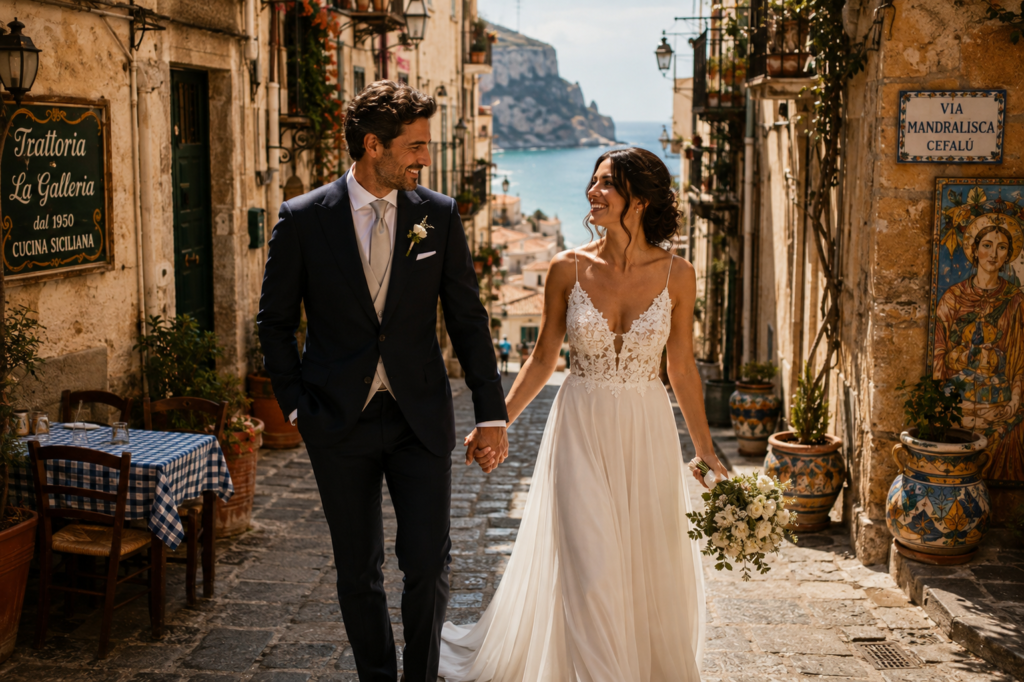
Bride and groom walking hand in hand through a cobblestone street in Cefalù, Sicily

How Should You Organize Wedding Transport in Sicily?

Group transport is one of those unglamorous details that quietly makes or breaks a Sicily wedding — arrange coaches or minibuses for the wedding day itself, and you spare your guests the parking hunt, the unfamiliar roads, and the temptation to skip the dance floor because someone has to drive home.

Spare a thought for older guests, too. Sicily’s most beautiful towns weren’t built with wheels in mind — Taormina’s compact center is a joy to wander, but its steps, cobbled streets, and steep pedestrian lanes can turn a short walk into a small expedition. A little planning here goes a long way toward keeping the whole guest list comfortable, not just the photogenic half.

Where Should Wedding Guests Stay in Sicily?

Keep your guests reasonably close to the venue, and offer a mix of accommodation across a few different budgets — not everyone needs, or wants, to stay under the same roof, but scattering guests across distant corners of Sicily just creates transport headaches nobody asked for.

Private villas tend to suit families and close friends particularly well, while hotels work nicely for couples or anyone staying just a short stretch. Many couples keep their core wedding party together in one larger villa, giving everyone a shared space to unwind between the ceremony, the welcome dinner, and the inevitable morning-after recovery. For a destination wedding, where your guests sleep isn’t a footnote — it’s part of the experience you’re actually giving them.

How Does Sicily Compare to Tuscany, Amalfi Coast, or Lake Como?

A custom villa wedding for 50–60 guests in Tuscany, the Amalfi Coast, or Lake Como typically runs $35,000–$65,000 once venue, catering, and basics are covered. Sicily can come in lower, particularly outside Taormina’s peak season, without sacrificing the coastline views or historic backdrops those regions are known for.

What Actually Drives the Cost of an Italian Destination Wedding?

Guest count matters more than almost anything else — every extra place setting adds to catering, seating, and accommodation costs. Peak season (July–August) and marquee venues push prices up fastest, while a private villa wedding often costs less than a hotel takeover of the same size, since you’re not paying for a name-brand property.

Do You Need a Wedding Planner in Sicily?

For most of the historic and private-residence venues mentioned above, yes.

A planner based in Sicily brings supplier relationships, familiarity with local permitting, and — critically for couples planning from abroad — someone who can visit a venue in person before you commit.

If you’re staying with us, ask when you inquire about a villa; we work alongside planners in each of these regions and can point you toward one.

Planning a wedding abroad comes with a hundred small details you can’t manage from another country — local vendors, permits, language, logistics — and that’s exactly where a wedding planner earns their keep.

A good one turns the stress of planning long-distance into a smooth, guided process, handling everything from venue coordination to décor so you can actually enjoy the lead-up to your big day.

Cefalù-based planner Simona Filastó is a great example, bringing years of experience creating elegant, Sicilian-themed celebrations for couples marrying on the island.

How Far in Advance Should You Plan a Sicily Wedding?

Twelve to eighteen months is the realistic window for premium ceremony venues, especially for a summer Saturday.

Popular properties book out well over a year ahead for peak season; boutique or off-season dates can sometimes be secured with less notice.

The same applies to villa accommodation for larger guest groups — the best properties near Taormina and Cefalù go early for summer weekends.

Is It Difficult to Plan a Wedding in Sicily From Abroad?

It’s manageable with the right support, but it isn’t a solo project.

Time zones, language, and unfamiliarity with local suppliers are the three things that trip up couples planning remotely. For this reason, most international couples marrying in Sicily work with a local planner rather than coordinating every vendor themselves from another country.

How to Get Married in Sicily as a US or Canadian Couple

The paperwork is real, but manageable — thousands of American and Canadian couples marry in Italy every year. The process is similar for both, though it runs through your own country’s embassy. Here’s what’s involved, current as of September 2026.

Is It Legal To Marry in Sicily as a US or Canadian Couple?

Yes, for both. Since neither the US nor Canada issues Italy’s standard ‘Nulla Osta’ certificate, each country has its own workaround: American couples work through the US Embassy or Consulate in Italy, while Canadian couples go through the Canadian Embassy in Rome or Consulate General in Milan. Both end with the same result — a sworn declaration that there’s no legal reason you can’t marry, which your Sicilian comune (town hall) accepts.

What Documents Do You Need?

Both nationalities need a valid passport, proof of citizenship (a certified birth certificate, or a Certificate of Canadian Citizenship for Canadians), and evidence any previous marriage has legally ended. The key document is a sworn affidavit confirming there’s no impediment to marriage — Americans typically sign this before a US consular officer in Italy, while Canadians may complete it before a notary in Canada or at their consulate, depending on current guidance. Once signed, it needs to be legalized at the local Prefettura before your comune will accept it. Because the exact steps and validity windows shift and vary by consulate, confirm the current process directly with your embassy and your chosen comune before booking vendors.

Civil Ceremony or Symbolic Ceremony – What’s the Difference?

Many international couples, American and Canadian alike, handle the legal civil ceremony quietly — sometimes even back home — and save their ‘real’ ceremony, the one with guests, vows, and a view of the sea, as a symbolic one in Sicily. This sidesteps a lot of the paperwork pressure without giving up the wedding you actually pictured.

When Should You Start the Process?

Start three to six months ahead, regardless of which country you’re coming from — even though the core documents don’t stay valid that long once issued, early research means no surprises later. A local wedding planner can help time the paperwork so everything is still valid on your actual wedding day.

Elopements and Small Weddings in Sicily

Why Sicily Works for Elopements

A smaller guest list opens up venues that a 100-person wedding never could — a clifftop terrace, a private garden, a quiet piazza at golden hour. Sicily’s mix of dramatic scenery and flexible small-venue options makes it one of the easier places in Italy to plan an intimate ceremony without months of lead time.

Best Sicily4u Villas for Small Weddings

Several Sicily4u villas suit an intimate guest list beautifully — see the Private Villa Weddings section above for full details on each one.

Sicily Wedding FAQs

What is the best month to get married in Sicily?

Late spring (May–June) and early fall (September–October) offer the most reliable combination of warm weather and lower humidity than peak summer, while also avoiding the highest-demand, highest-price weekends of July and August.

Is Sicily cheaper than other Italian wedding destinations?

Generally yes, compared with the Amalfi Coast, Lake Como, or Tuscany — venue and catering costs tend to run lower, though premium coastal settings in Taormina can still command Amalfi-level pricing in peak season.

How many days should guests stay for a Sicily wedding?

Most couples plan for a three- to five-day guest experience — arrival, a welcome event, the wedding day itself, and a recovery day — rather than a single-day event, which is exactly why villa accommodation matters as much as the ceremony venue itself.

Do wedding guests need a car in Sicily?

Not necessarily. Organized transfers can be easier when guests stay close together, particularly around wedding-day celebrations.
For larger celebrations, private minibuses or coaches can also be arranged in advance for wedding-day transport.

Is it legal for foreign couples to marry in Sicily?

Yes, but the paperwork and required notice period depend on your nationality. Many international couples handle the legal ceremony in their home country and hold a symbolic ceremony in Sicily. Confirm requirements with your chosen comune or a local wedding planner before booking anything.

Which airport should we fly into?

Catania Airport for Taormina and the east coast; Palermo Airport for Bagheria, Cefalù, and western Sicily. Choosing your region first makes this decision straightforward.

Can our ceremony and guest accommodation be in the same place?

Sometimes, at larger hotel properties with enough rooms — but most Sicily weddings pair a ceremony venue with private villas nearby for the guest group, which keeps everyone together for the days around the wedding rather than just the ceremony itself.

Can I get married at a Sicily4U villa?

Several of our villas have gardens or terraces suited to a small ceremony, a welcome dinner, or the wedding-week celebrations even when the main ceremony happens elsewhere. Availability depends on the property and your guest count — mention it when you inquire and we’ll help you check.

Ready to Start Planning Your Wedding in Sicily?

Your ceremony venue may host the “I do.” Your villa is where everyone actually comes together — the days before, the morning after, the moments that don’t happen on the wedding-day timeline. Explore Sicily4U’s private villas near Taormina, Palermo, and Cefalù, or browse villas with a pool and sea-view villas to start building your guest accommodation around the region you choose.

Planning more than the wedding day? See our guide to what’s happening in Sicily right now, or read the story behind Villa Mimì, one of the historic properties in our Taormina collection.

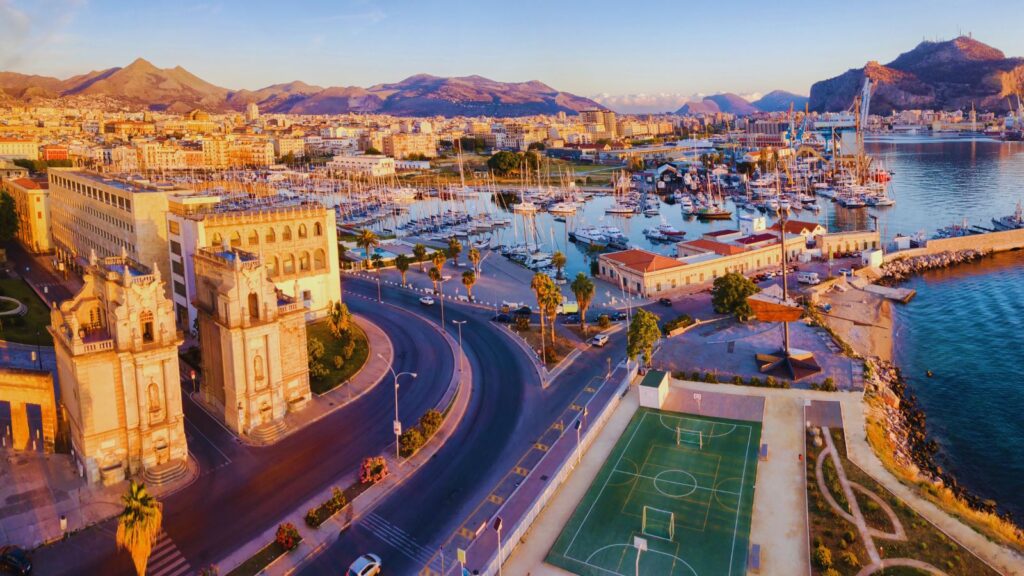
Palermo's La Cala harbor at golden hour, with Monte Pellegrino