Blog

Sicily Travel Update 2026: What Is Happening Right Now?

Sicily Travel Update 2026: Mount Etna, Catania Airport & What Tourists Need to Know

Last updated: 19 August 2026

If you are travelling to Sicily this year, recent headlines about Mount Etna may have raised some questions. Our Sicily travel update 2026 explains what visitors need to know before arriving.

Mount Etna has experienced significant volcanic activity during August. As a result, volcanic ash has caused closures, cancellations and diversions at Catania Fontanarossa Airport.

The disruption has been significant. However, this does not mean that Sicily itself is closed to visitors.

Flights at Catania resumed on 15 August after the volcanic aviation alert was lowered from red to orange. However, flight operations remain subject to change, and further restrictions may be introduced at short notice if volcanic ash affects the airport or surrounding airspace.

For travellers, preparation is more important than panic.

Before leaving for the airport, check your flight directly with your airline. Keep your accommodation details available and understand your alternative airport options.

Most importantly, don’t assume that activity at Mount Etna means your entire Sicily holiday must be cancelled.

Here’s what is happening and how you can prepare.

Is It Safe to Travel to Sicily Right Now?

For most visitors, the current situation is primarily a transport issue rather than an island-wide tourism shutdown.

Mount Etna sits on Sicily’s eastern side, near Catania. Therefore, volcanic ash can have a significant impact on aviation around Catania.

Other parts of Sicily can experience very different conditions.

Visitors staying around Palermo, Cefalù, Trapani or western Sicily may see little direct effect from Etna’s activity. Nevertheless, transport disruption can spread when flights are diverted to other airports.

The important distinction is between volcanic activity and aviation disruption.

Etna is one of the world’s most active volcanoes. Its activity does not automatically mean that Sicily becomes unsafe for tourists.

Visitors should follow official instructions around the volcano and avoid restricted areas.

Mount Etna Eruption 2026: What Tourists Should Know

Mount Etna’s latest eruptive phase began in early August. The volcano produced sustained ash emissions alongside explosive and effusive activity.

The persistence of the ash has created particular problems for aviation.

Volcanic ash can damage aircraft engines and reduce visibility. Therefore, aviation authorities may restrict airspace even when conditions appear normal from the ground.

This explains why a beautiful sunny day in Catania can still coincide with flight delays.

Conditions can also change quickly.

Wind direction plays an important role because it determines where the volcanic ash travels. During the August activity, ash travelled well beyond eastern Sicily.

For visitors, this means yesterday’s airport information may not apply today.

Catania Airport Update: Are Flights Operating?

Catania Fontanarossa Airport is currently open and operating, following the resumption of flights on 15 August after Etna’s aviation alert was lowered from red to orange.

However, passengers should not assume that every scheduled flight will operate normally. Mount Etna remains active, and flight operations can still be affected at short notice if volcanic ash reaches the airport or surrounding airspace.

Therefore, always check your individual flight.

The official Catania Airport website provides live arrival and departure information. Your airline should remain your primary source for changes to your booking.

Avoid travelling to the airport simply because your original departure time still appears on an old confirmation email.

Check again before leaving your accommodation.

Why Does Mount Etna Affect Catania Airport?

Catania Fontanarossa is located close to Mount Etna.

That location makes Catania extremely convenient for eastern Sicily. However, it also leaves the airport vulnerable when volcanic ash moves towards its airspace.

Ash presents a serious aviation hazard.

Consequently, authorities may reduce arrivals, close sections of airspace or temporarily suspend operations.

These decisions can sometimes appear sudden. In reality, they are safety measures based on changing volcanic and atmospheric conditions.

What Happens If Your Catania Flight Is Cancelled?

First, contact your airline before making expensive alternative arrangements yourself.

Depending on your circumstances, the airline may offer another flight, rerouting or a refund.

EU passenger protection rules continue to provide important rights when flights are cancelled.

However, volcanic eruptions and volcanic ash generally fall under extraordinary circumstances. Therefore, standard cash compensation may not apply.

That does not necessarily remove your rights to assistance.

Passengers affected by cancellations can still have rights concerning rerouting, reimbursement and care.

Keep every receipt if you need to purchase essential meals, accommodation or transport.

Also keep screenshots of cancellation notices and airline communications.

These records can become important when requesting reimbursement later.

Should You Fly Into Palermo Instead?

Palermo can provide an excellent alternative, particularly for travellers staying in northern or western Sicily.

During the recent disruption, Palermo Airport absorbed a large number of flights diverted from Catania.

However, don’t automatically change your flight without considering your final destination.

Palermo is particularly convenient for:

  • Palermo
  • Cefalù
  • Scopello
  • Castellammare del Golfo
  • San Vito Lo Capo
  • Trapani
  • Marsala
  • Western and northwestern Sicily

Catania usually remains more convenient for:

  • Taormina
  • Mount Etna
  • Catania
  • Syracuse
  • Ortigia
  • Noto
  • Southeastern Sicily

If your airline offers Palermo as an alternative, calculate the onward journey before accepting the change.

Is Palermo Airport Affected by Mount Etna?

Palermo Airport is much farther from Mount Etna than Catania.

During the major August disruption, Palermo became an important alternative for diverted flights.

However, increased traffic can create secondary problems.

More passengers may mean greater demand for rental cars, taxis and onward transport. Therefore, travellers diverted to Palermo should organise ground transportation quickly.

If your flight changes airport, contact your villa company or accommodation provider as soon as possible.

A changed arrival airport can also affect your planned transfer or car rental.

What About Comiso and Trapani Airports?

Sicily has more airport options than many first-time visitors realise.

Comiso Airport can provide an alternative for southeastern Sicily. Trapani Airport can work particularly well for western destinations.

However, Comiso has also experienced temporary disruption during the recent Etna activity.

Therefore, don’t assume another Sicilian airport will always remain unaffected.

Check the airport and airline information before changing your plans.

Can You Still Visit Mount Etna?

Seeing an active volcano can be extraordinary. However, increased activity is not an invitation to approach restricted areas independently.

Conditions on Etna can change rapidly.

Access restrictions may change according to volcanic activity, weather and civil protection instructions.

If you plan to visit, use an authorised guide and follow current official restrictions.

Never cross barriers or enter closed areas simply to get a better photograph.

An eruption may look spectacular from a distance. The conditions closer to active areas can be very different.

What Should You Do If Volcanic Ash Falls During Your Holiday?

Light volcanic ash can occasionally reach towns around Etna.

If ash is falling, avoid unnecessary exposure and follow instructions from local authorities.

Keep windows closed when necessary. Protect your eyes if conditions become dusty.

Drivers should also take additional care.

Ash can reduce visibility and make roads slippery. It can also affect vehicles.

If you have a rental car, follow instructions from the rental company regarding ash contamination or cleaning.

Travelling Between Palermo and Catania

When Catania Airport experiences disruption, travelling across Sicily becomes an important backup option.

Rail services connect Palermo, Messina and Catania. Coaches and private transfers provide additional alternatives.

During the recent airport disruption, additional trains were introduced to help passengers move across the island.

Travellers should also be aware that planned infrastructure works are currently affecting part of the Palermo–Catania railway route. Services may therefore be modified or replaced by buses on some sections, and journey times may be longer than usual. Check the latest Trenitalia information before travelling.

However, Sicily is larger than many visitors expect.

A diversion to Palermo does not mean Catania is just a short taxi ride away.

Allow several hours for cross-island travel and confirm your route before booking an alternative flight.

Don’t Forget Your Rental Car

Flight disruption can create another problem that travellers sometimes overlook.

Your rental car reservation may be tied to a specific airport and arrival time.

If your flight moves from Catania to Palermo, contact the rental company immediately.

Don’t assume the same booking will automatically transfer between airport branches.

During major disruption, demand for vehicles can also increase quickly.

The same applies to private airport transfers.

Tell your driver or villa representative about any changes as soon as your airline confirms them.

Should You Cancel Your Sicily Holiday?

For most travellers, an Etna-related flight disruption alone is not a reason to cancel an entire Sicily holiday.

Instead, consider where you are staying and which airport you are using.

Someone flying into Palermo for a holiday in Cefalù faces a very different situation from someone flying into Catania.

Travellers heading towards Taormina, Etna or southeastern Sicily should monitor Catania Airport more closely.

Flexibility is particularly valuable during periods of increased volcanic activity.

Where possible, avoid tightly connecting your arrival with expensive activities or events on the same day.

Give yourself some breathing room.

What Should You Check Before Flying to Sicily?

A few minutes of preparation can prevent hours of unnecessary stress.

Before travelling:

  • Check your flight directly with your airline.
  • Check your departure and arrival airports.
  • Monitor Catania Airport if travelling through CTA.
  • Keep your villa or accommodation contact details available.
  • Confirm your airport transfer.
  • Check your rental car reservation.
  • Save your airline booking details offline.
  • Keep essential medication in your hand luggage.
  • Consider appropriate travel insurance.
  • Keep receipts if disruption creates additional essential expenses.

Most importantly, don’t rely solely on social media for airport information.

Conditions around Etna can change quickly.

Sicily Travel Advice for Families

Families should allow additional flexibility when travelling through Catania during periods of volcanic activity.

Keep snacks, water and children’s essentials easily accessible.

Medication should remain in hand luggage rather than checked baggage.

If travelling with a baby, keep enough supplies for a longer journey than originally planned.

Families staying in private accommodation should also keep their host’s contact details available.

A good local contact can become extremely useful when arrival plans change unexpectedly.

Sicily Travel Advice for Villa Guests

Guests staying in private villas have one significant advantage during unexpected travel disruption: local support.

If your flight is delayed, cancelled or diverted, contact your villa company as soon as possible.

Your original check-in time may need to change.

Airport transfers, car collection and keyholder arrangements may also need adjusting.

Early communication gives everyone more time to find a solution.

At Sicily4U, we always recommend keeping your booking information and local contacts accessible throughout your journey.

Is Sicily Still Worth Visiting in 2026?

Absolutely.

Mount Etna is part of Sicily’s extraordinary natural landscape. Its presence has shaped the island’s geography, agriculture and identity for thousands of years.

However, travelling near one of Europe’s most active volcanoes occasionally requires flexibility.

The recent disruption at Catania Airport has understandably frustrated thousands of travellers.

Yet Catania represents one gateway to a very large island.

Palermo, Trapani and Comiso provide additional options. Ferries, trains, coaches and road connections can also help travellers adapt.

The key is staying informed.

Planning Your Sicily Holiday With Confidence

Headlines about volcanic eruptions can sound alarming, particularly when you’re thousands of kilometres away planning a holiday.

The reality on the ground can be much more localised.

Sicily remains one of Europe’s most extraordinary destinations. Its beaches, historic towns, archaeological sites, countryside and villages continue to welcome visitors.

If you’re travelling through Catania, monitor your flight closely and prepare an alternative plan.

If you’re arriving elsewhere, remain informed without allowing dramatic headlines to define your entire holiday.

Travel has always required a little flexibility. Sicily in 2026 is no different.

At Sicily4U, our local knowledge helps guests understand not only where to stay, but how to experience Sicily with confidence.

Plan carefully, stay informed and then enjoy the island.

Sicily is still waiting for you.
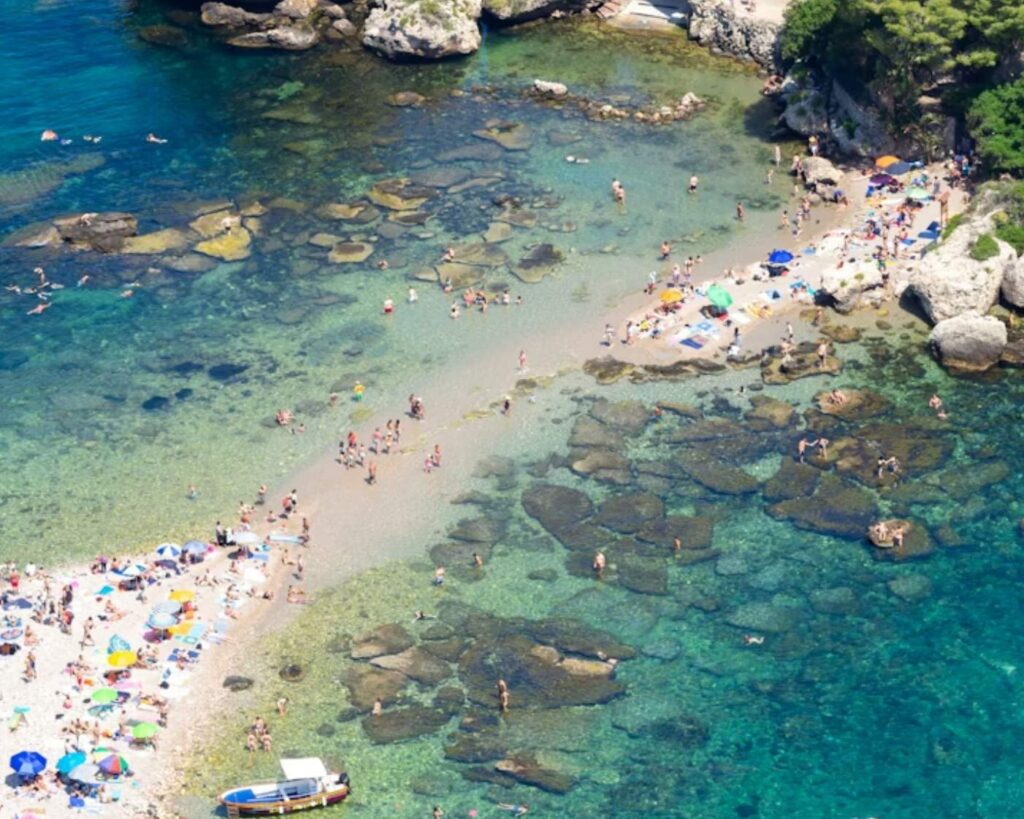
How Much Does a Beach Day in Taormina Really Cost?

If you’re researching Taormina beach lido prices, you’re probably wondering whether a beach day is really worth the cost. After seeing the turquoise waters of Isola Bella and the stylish beach clubs of Mazzarò on social media, it’s easy to understand why so many visitors choose Taormina for their Sicilian holiday.

From free public beaches to exclusive lidos with premium service, the cost of spending a day by the sea can vary considerably. Knowing what to expect before you arrive will help you choose the option that best suits your budget and travel style.

In this guide, we’ll break down Taormina beach lido prices, compare public and private beaches, and share practical tips to help you enjoy one of Sicily’s most famous coastal destinations.

Is There a Free Beach in Taormina?

One of the first questions visitors ask after researching Taormina beach lido prices is whether it’s possible to enjoy the coastline without paying for a private beach club. The good news is yes. Taormina offers several public beaches where you can swim for free while enjoying some of Sicily’s most spectacular scenery.

The most famous is Isola Bella Beach, a small pebble beach located beneath the iconic island nature reserve. Thanks to its crystal-clear waters and dramatic cliffs, it has become one of the most photographed beaches in Sicily. During the summer months, however, it can become extremely busy. Arriving early in the morning is the best way to secure a place on the public beach.

Unlike sandy beaches found elsewhere in Sicily, most beaches around Taormina are covered with smooth pebbles. Many visitors find that bringing water shoes makes walking into the sea much more comfortable. If you’re planning to spend the entire day, you may also want to bring your own umbrella and refreshments, as public beaches offer fewer facilities than the nearby lidos.

For travellers looking to save money, the free beaches provide excellent value. However, if comfort, shade and waiter service are priorities, a private beach club may be worth the additional cost.

beautiful island and beach Isola Bella at Taormina at Sicily, Italy

Average Taormina Beach Lido Prices

Before choosing a beach club, it’s helpful to understand what you can expect to pay. Prices vary depending on the season, the beach club and how close your sunbeds are to the sea. During July and August, premium locations around Isola Bella and Mazzarò are among the most expensive in Sicily due to exceptionally high demand.

ItemTypical Price
Sunbed€20–35
Umbrella + 2 Sunbeds€50–70
Parking€15–25
Lunch€20–40 per person
Cocktails€10–18

These prices are intended as a general guide and may vary depending on the beach club, the time of year and the row you choose. Exclusive beach clubs often charge significantly more for front-row positions or VIP experiences, while some neighbouring beaches outside Taormina offer more affordable options.

Do Taormina Beach Clubs Offer Transfers From Your Villa?

Staying in a private Sicily villa doesn’t mean you need to worry about driving to the beach. Some Taormina beach clubs offer shuttle services or can arrange private transfers for their guests.

This can be especially convenient during summer. Parking around Mazzarò and Isola Bella is limited, while traffic can become busy during July and August.

Some lidos operate shuttles from designated meeting points. Others may arrange a private villa pickup and return transfer when requested in advance. Availability and prices depend on the beach club and your villa’s location.

For example, Ipanema Beach Club Taormina advertises a scheduled shuttle between the Mazzarò cable-car area and its beach club. Private transfers can also be requested.

If you’re comparing Taormina beach lido prices, remember to consider transportation alongside the cost of your sunbeds. Paying slightly more for a lido offering transfers can make your beach day considerably easier.

Why Consider a Lido Transfer?

A transfer means you can leave the car at your villa and enjoy the entire day without thinking about parking. It’s particularly useful for families, larger groups or anyone planning a long lunch and a few cocktails by the sea.

Before booking, ask the lido whether they can collect you directly from your Taormina villa. Confirm the return journey, transfer price and pickup time as well.

For many guests staying in a private villa in Sicily, this offers the best of both worlds. You can enjoy the privacy of your own villa while still accessing Taormina’s famous beach clubs with minimal hassle.

Turn Your Beach Day Into a Sicilian Holiday

One day at Isola Bella is unforgettable.

Spending an entire week discovering Sicily’s coastline is something else entirely.

Many travellers choose to base themselves in a private villa rather than a hotel, allowing them to explore Taormina before returning to peaceful surroundings, private pools and spectacular sea views. Whether you’re planning a family holiday or a romantic escape, staying in a villa gives you the freedom to experience Sicily at your own pace.

The Valley of the Temples: The Complete Visitor’s Guide to Agrigento’s Ancient Greek Wonders

The Valley of the Temples is one of the world’s most remarkable archaeological sites. Located in Agrigento, Sicily, this UNESCO World Heritage Site preserves some of the finest examples of ancient Greek architecture outside Greece.

The site formed part of the ancient city of Akragas, which Greek settlers founded around 580 BC. Over time, Akragas became one of the most prosperous cities in Magna Graecia. Its wealth allowed local craftsmen to build magnificent Doric temples that still dominate the landscape today.

Although people refer to it as a valley, the archaeological park stretches across a scenic ridge overlooking the Mediterranean countryside. Olive groves, almond trees, and rolling hills surround the ancient monuments. Together, they create one of Sicily’s most breathtaking historic landscapes.

Visitors can explore several impressive landmarks throughout the park. Highlights include the Temple of Concordia, the Temple of Juno, the Temple of Heracles, and the remains of the Temple of Olympian Zeus. The beautiful Garden of Kolymbethra also offers a peaceful escape among citrus trees and Mediterranean vegetation.

Every monument tells part of the story of Ancient Greece in Sicily. At the same time, the surrounding landscape reveals why this area has fascinated travellers for centuries. History, archaeology, nature, and spectacular views combine to create an unforgettable experience.

Whether you’re planning your first trip to Sicily or exploring Agrigento in greater depth, the Valley of the Temples deserves a place on your itinerary. This guide covers its history, most important monuments, practical visitor information, and essential travel tips to help you plan a memorable visit.

A Brief History of the Valley of the Temples

The story of the Valley of the Temples begins with the ancient Greek city of Akragas. Greek settlers founded the city around 580 BC after arriving from Gela, another Greek colony on Sicily’s southern coast.

Over the following decades, Akragas grew into one of the richest and most influential cities in Magna Graecia. Fertile farmland, successful trade, and a strategic location helped the city prosper. As wealth increased, local leaders commissioned magnificent temples that reflected both their power and their devotion to the Greek gods.

Many of the temples visitors admire today date from the 6th and 5th centuries BC. Skilled craftsmen built them from the region’s distinctive golden limestone. Their impressive scale and elegant Doric design continue to attract visitors from around the world.

The city’s golden age reached its peak under the ruler Theron, who governed Akragas from 488 to 472 BC. After the Greek victory at the Battle of Himera in 480 BC, the city experienced rapid growth. During this prosperous period, builders expanded several major temples, including the magnificent Temple of Concordia and the enormous Temple of Olympian Zeus.

Prosperity did not last forever. In 406 BC, Carthaginian forces attacked and captured Akragas after a lengthy siege. The invasion caused widespread destruction, and many residents fled the city. Although later rulers rebuilt parts of Akragas, it never regained the wealth and influence of its golden age.

Over the following centuries, earthquakes, changing civilizations, and the reuse of building materials damaged many ancient structures. Fortunately, the Temple of Concordia survived in remarkable condition because Bishop Gregory of Agrigento converted it into a Christian church during the 6th century AD.

Today, the archaeological park covers approximately 1,300 hectares (3,200 acres), making it one of Europe’s largest archaeological parks. Visitors can explore temples, ancient city walls, sanctuaries, necropolises, and residential areas while discovering more than 2,500 years of history.

In 1997, UNESCO recognised the Archaeological Area of Agrigento as a World Heritage Site. Today, the Valley of the Temples stands as one of Italy’s greatest cultural treasures and remains one of Sicily’s most visited attractions.

The Must-See Temples and Monuments

Temple of Concordia

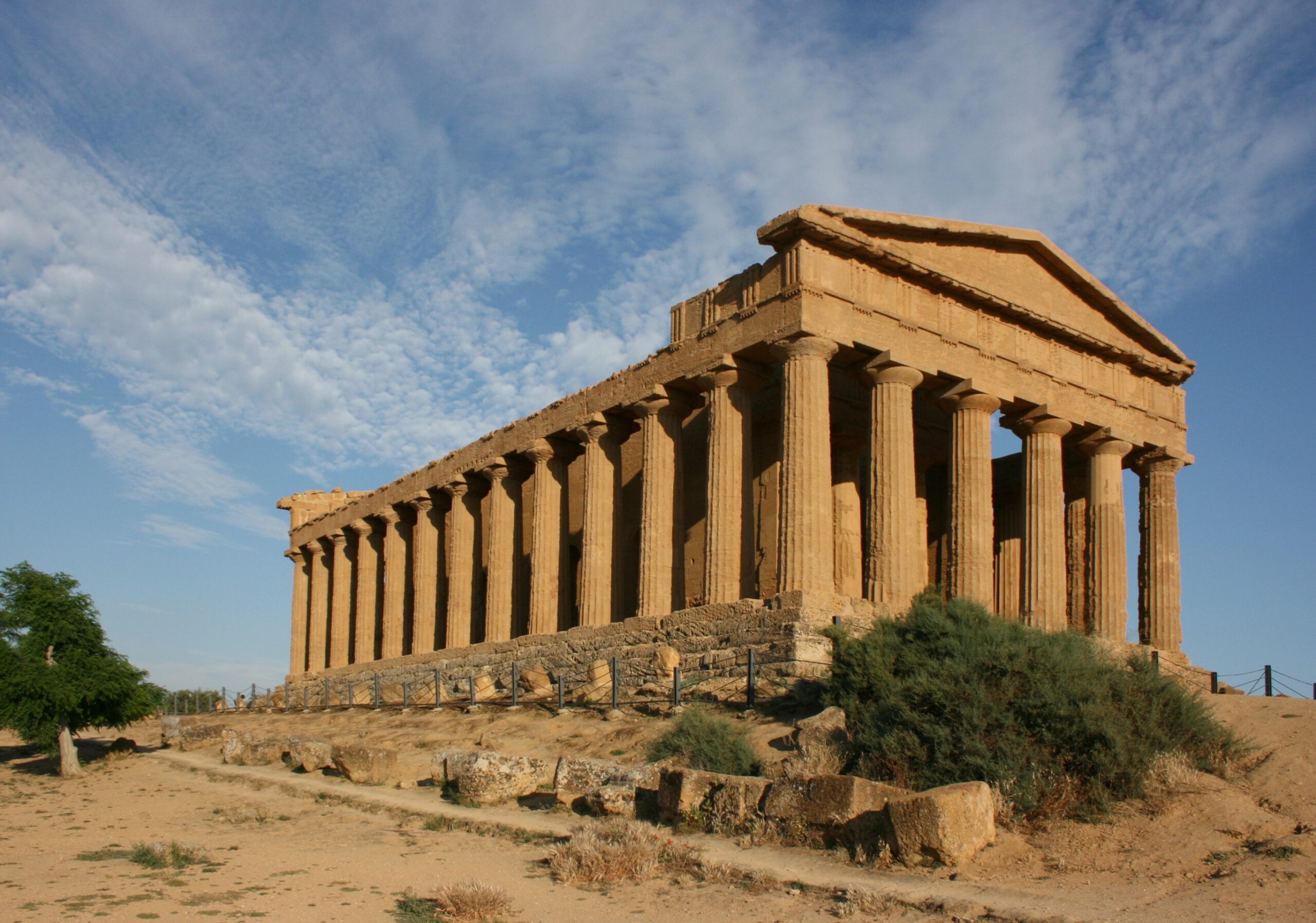
The Temple of Concordia stands as the undisputed highlight of the Valley of the Temples and ranks among the finest examples of ancient Greek architecture in the world. Greek builders constructed the temple between 440 and 430 BC, and its remarkable state of preservation makes it one of the best-preserved Doric temples outside Greece.

Although visitors know it today as the Temple of Concordia, historians believe the ancient Greeks dedicated it to a different deity. Archaeologists later adopted the current name after discovering an inscription nearby that mentioned “Concordia.” The temple’s original dedication, however, remains unknown.

Local craftsmen built the temple from the region’s distinctive golden sandstone using the traditional Doric style. The structure measures approximately 39.4 metres (129 feet) long and 16.9 metres (55 feet) wide. It features 34 fluted columns, with six at the front and rear and thirteen along each side. These balanced proportions demonstrate the precision and skill of ancient Greek architects.

The temple owes much of its exceptional preservation to an important change during the 6th century AD. Bishop Gregory of Agrigento converted the ancient temple into a Christian church, allowing later generations to preserve the structure instead of dismantling it for building materials, as happened to many other Greek temples.

As you explore the site, take time to admire the precision of the stonework and the subtle architectural refinements. Greek architects carefully adjusted the columns and horizontal lines to create the illusion of perfect symmetry when viewed from a distance. These techniques remain one of the defining features of Classical Greek architecture.

Many visitors choose to see the Temple of Concordia during the golden hour, shortly after sunrise or before sunset. At these times, warm Sicilian light illuminates the golden limestone and creates spectacular conditions for photography. After dark, carefully planned lighting highlights the temple and transforms it into one of Sicily’s most recognisable landmarks.

Today, the Temple of Concordia represents far more than an impressive ancient monument. It reflects the extraordinary craftsmanship, artistic vision, and engineering achievements of the ancient Greek world. Standing before its perfectly aligned columns, visitors can easily understand why the Valley of the Temples remains one of the Mediterranean’s greatest archaeological treasures.

Temple of Juno (Temple of Hera)

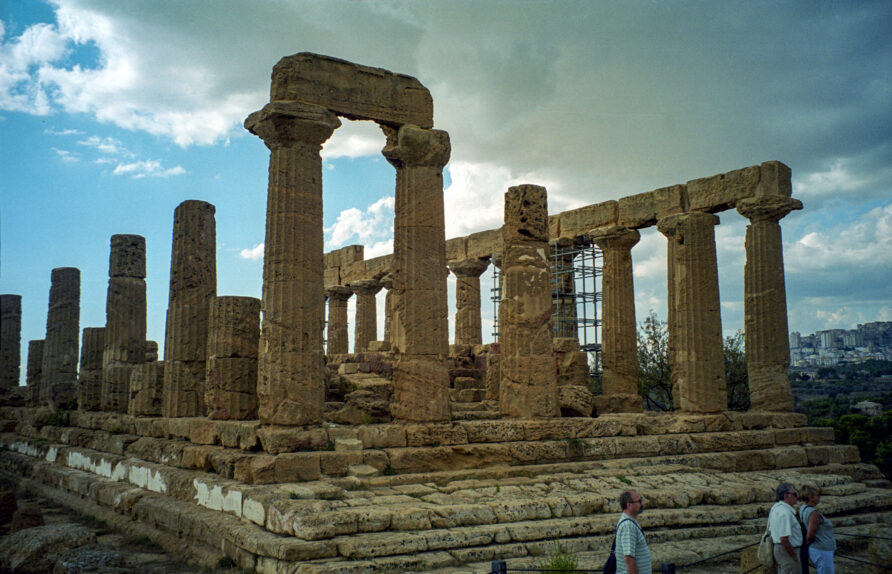
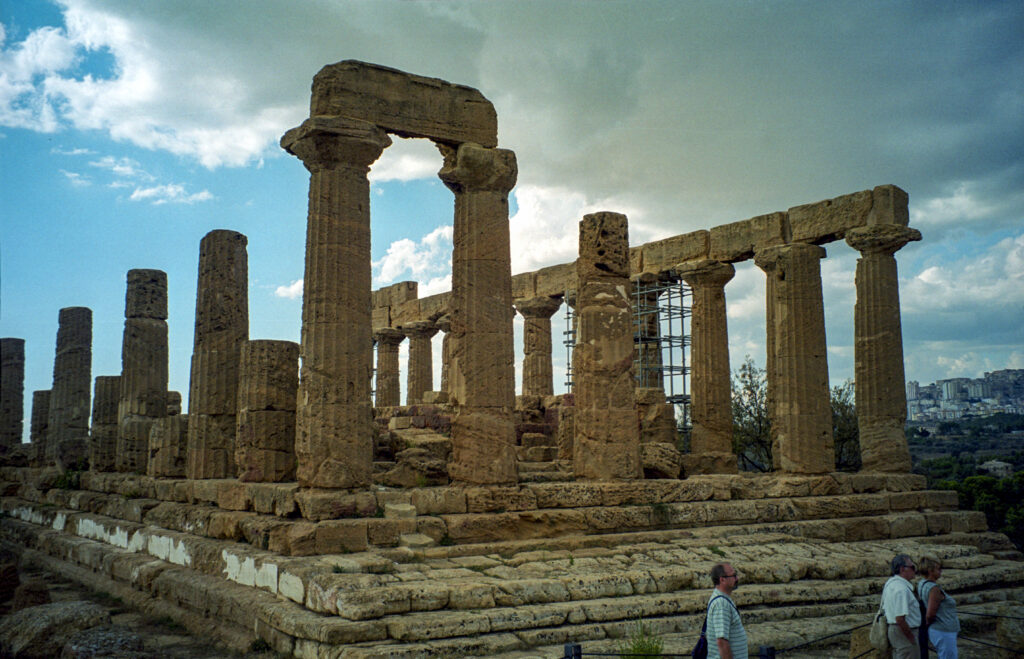
The Temple of Juno, also known as the Temple of Hera, stands at the eastern end of the Valley of the Temples. Its hilltop location offers some of the most spectacular views across the Sicilian countryside and the Mediterranean Sea. Builders completed the temple around 450 BC, making it one of the archaeological park’s most important monuments.

Although people traditionally associate the temple with Hera, the Greek goddess of marriage and family, archaeologists have found no definitive evidence that the ancient Greeks originally dedicated it to her. Historians gave the temple its modern name centuries after its construction, just as they did with several other monuments in the archaeological park.

The temple originally featured 34 Doric columns, many of which still stand today. These surviving columns allow visitors to admire the elegance, balance, and symmetry that define Classical Greek architecture. During the Carthaginian invasion of 406 BC, invading forces set fire to much of the structure. Today, visitors can still see traces of that destruction on parts of the original stone.

Today, the Temple of Juno is one of the most photographed landmarks in the archaeological park, particularly at sunrise and sunset when the golden limestone glows against the Sicilian landscape.

Temple of Heracles

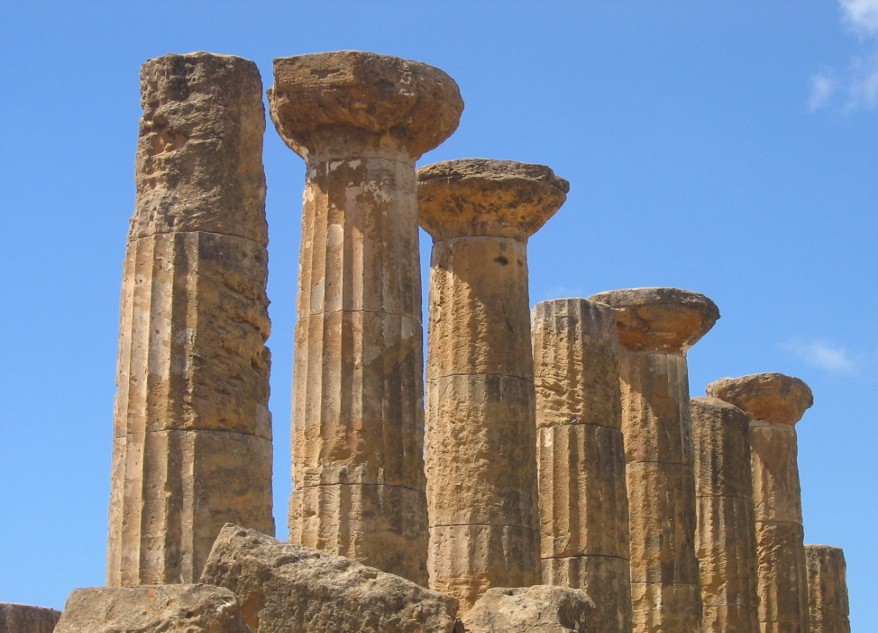
The Temple of Heracles is widely considered the oldest temple within the Valley of the Temples. Archaeologists believe construction began around the end of the 6th century BC, making it one of the earliest monumental buildings erected after the founding of Ancient Akragas.

Dedicated to Heracles, one of the most celebrated heroes of Greek mythology, the temple played an important role in the religious life of the ancient city. Historical sources suggest that it housed a famous bronze statue of Heracles that attracted pilgrims from across the Greek world.

Originally consisting of 38 Doric columns, the temple suffered extensive damage from earthquakes over many centuries. During the twentieth century, archaeologists carefully re-erected eight columns, giving visitors a better understanding of its original appearance.

Although only part of the temple survives today, its impressive scale and historical importance make it one of the archaeological park’s essential highlights.

Temple of Olympian Zeus

The Temple of Olympian Zeus, sometimes called the Temple of Jupiter Olympus, ranks among the largest Doric temples ever built in the ancient Greek world. Even in ruins, its enormous foundations reveal the scale and ambition of this remarkable monument.

Builders began construction shortly after the Greek victory over the Carthaginians at the Battle of Himera in 480 BC. At the time, Theron ruled Akragas, and the city enjoyed its greatest period of prosperity. Local leaders commissioned the temple to celebrate their military success and showcase the city’s growing wealth and influence.

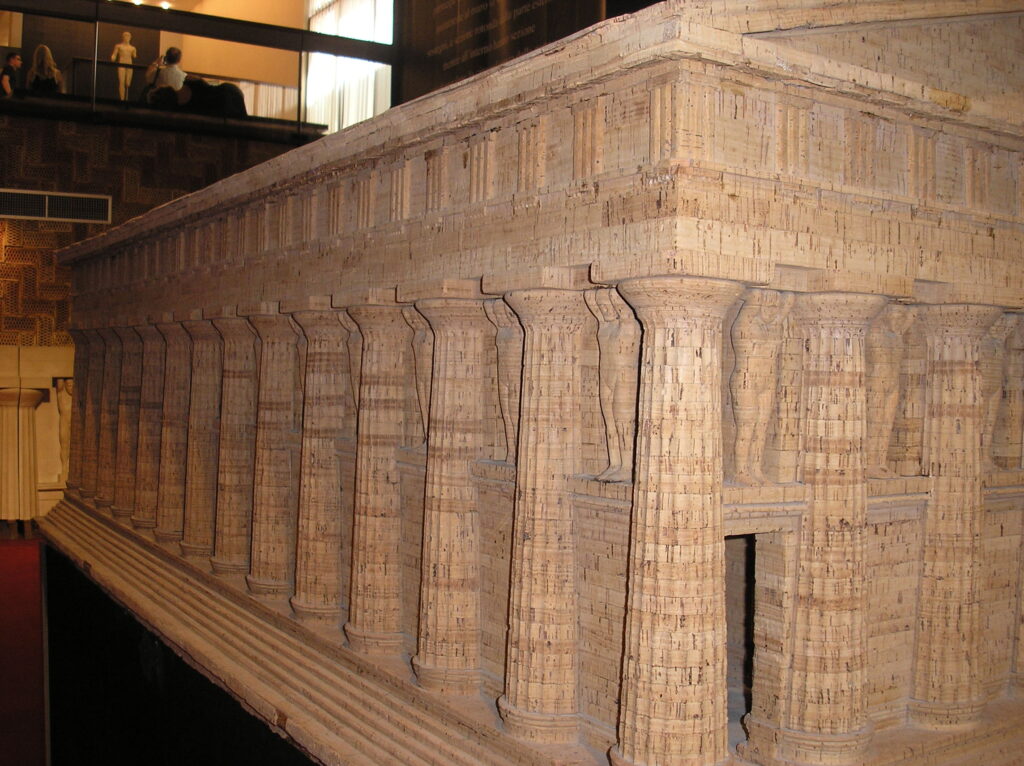
Unlike most Greek temples, the Temple of Olympian Zeus featured enormous stone figures known as Telamons. These giant sculpted male figures stood about 7.5 metres (25 feet) tall and appeared to support sections of the building. Today, visitors can admire an original Telamon at the Regional Archaeological Museum Pietro Griffo. A full-size replica also rests within the archaeological park.

Builders never completed the temple, and later earthquakes caused extensive damage. Over the centuries, people also removed much of its stone for other construction projects. Despite these losses, the remaining foundations still demonstrate the extraordinary scale of one of the ancient world’s most ambitious architectural achievements.

OLYMPUS DIGITAL CAMERA

Temple of Castor and Pollux

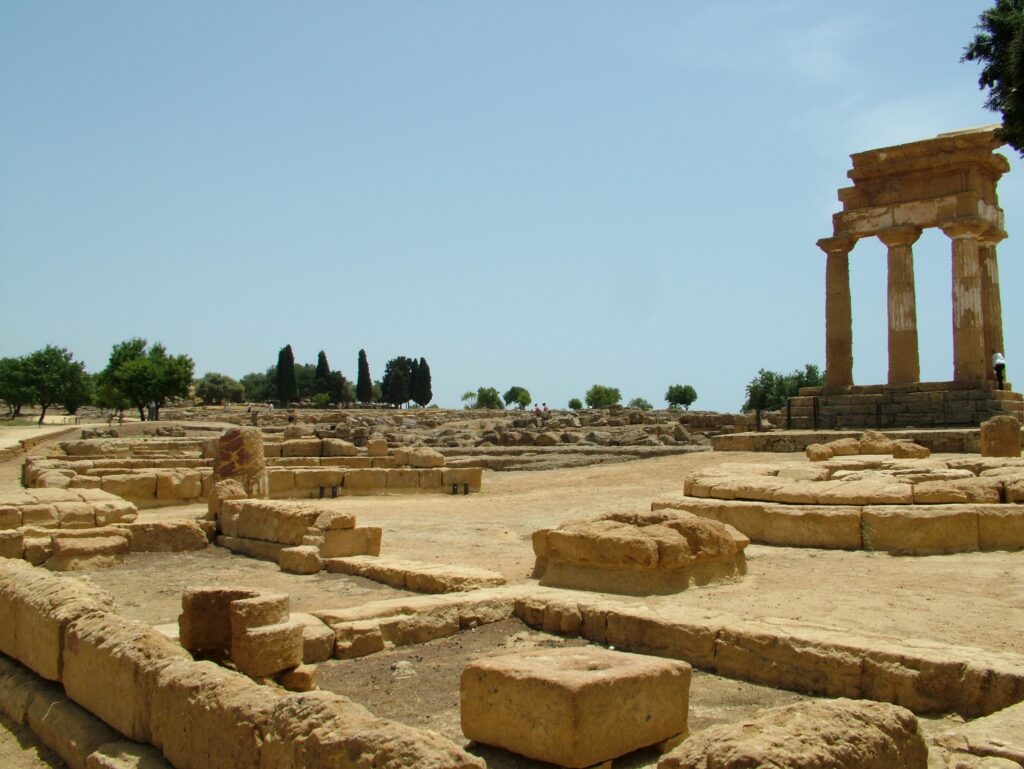
Although only four columns remain today, the Temple of Castor and Pollux has become one of Agrigento’s most recognisable landmarks. Visitors regularly photograph its elegant silhouette, and tourism campaigns.

Builders constructed the temple during the 5th century BC.This was part of a larger sacred sanctuary where the ancient Greeks held important religious ceremonies.

During archaeological excavations in the 19th century, experts reconstructed the famous four-column corner. They did this by using original architectural elements recovered from the site. Today, this striking reconstruction stands as one of the archaeological park’s most photographed monuments.

Its graceful silhouette against the Sicilian sky has made it one of the Valley of the Temples’ most iconic landmarks and a favourite stop for photographers exploring the park.

Sanctuary of the Chthonic Deities

Located near the Temple of Castor and Pollux, the Sanctuary of the Chthonic Deities is one of the oldest sacred areas within Ancient Akragas.

Before the construction of the city’s monumental temples, this sanctuary played a central role in the religious life of Ancient Akragas. Here, people worshipped deities associated with the earth, fertility, and the underworld.

Archaeologists have uncovered the remains of numerous altars, shrines, and ritual spaces that provide valuable insight into the spiritual life of the city’s earliest inhabitants.

Although less visually imposing than the larger temples, the sanctuary offers a fascinating glimpse into the evolution of Greek religious practices in Sicily.

The Garden of Kolymbethra

Hidden within the heart of the archaeological park lies the enchanting Garden of Kolymbethra, a peaceful oasis managed by the Italian Environment Fund (FAI).

Originally created more than 2,500 years ago as a vast water reservoir supplying Ancient Akragas, the area has evolved into a flourishing Mediterranean garden filled with citrus orchards, olive trees, almond trees, fragrant herbs, and traditional Sicilian vegetation.

Today, shaded walking paths wind through the garden, providing a refreshing contrast to the sunlit archaeological ruins above. Along the way, visitors can discover ancient irrigation systems, historic dry-stone walls, caves, and spectacular viewpoints overlooking the temples.

For many travellers, the Garden of Kolymbethra offers one of the most relaxing and picturesque experiences within the Valley of the Temples, combining archaeology, nature, and Sicily’s rich agricultural heritage in one unforgettable setting.


Planning Your Visit

The Valley of the Temples is one of Sicily’s most rewarding attractions and deserves at least three to four hours to explore comfortably. The archaeological park is extensive, with gently sloping paths connecting the major monuments, so comfortable walking shoes are highly recommended.

The best times to visit are early in the morning or late in the afternoon, particularly during the warmer months when temperatures can be high. Visiting during these quieter hours also offers softer light, making it an excellent time for photography. Spring and autumn are generally considered the most pleasant seasons, thanks to their mild weather and fewer crowds.

Be sure to bring water, sunscreen, a hat, and a camera, as there is limited shade throughout much of the archaeological area.

Tickets & Essential Visitor Information

Before travelling, it’s always advisable to check the official Valley of the Temples website. There you will find for the latest opening hours, admission prices, guided tours, and any temporary exhibitions or special events.

At the archaeological park you’ll find visitor facilities including parking areas, restrooms, cafés, gift shops, and information points. Audio guides and guided tours are also available. This is excellent for those wishing to gain a deeper understanding of the site’s fascinating history.

Ticket prices may vary depending on the season and special events. We suggest checking the official website before your visit is highly recommended.

Things to See Near the Valley of the Temples

Your visit to Agrigento doesn’t have to end at the archaeological park. Just a short distance away you’ll find the charming historic centre of Agrigento. Narrow streets, medieval churches, lively piazzas, and traditional Sicilian restaurants showcase another side of the city’s rich heritage.

History enthusiasts should also consider visiting the Regional Archaeological Museum Pietro Griffo. It is home to one of Sicily’s most important collections of Greek artefacts. Some of them including the famous Telamon from the Temple of Olympian Zeus.

If you’re looking to combine history with the coast, the spectacular white limestone cliffs of Scala dei Turchi are only a short drive away and are among Sicily’s most photographed natural landmarks.

Frequently Asked Questions

How long does it take to visit the Valley of the Temples?
Most visitors spend between three and four hours exploring the archaeological park, although history enthusiasts may wish to allow additional time.

Is the site suitable for families?
Yes. The park is family-friendly, although younger children may find parts of the walk challenging during the hottest summer months.

When is the best time to visit?
Spring and autumn generally offer the most comfortable temperatures. During summer, early morning or late afternoon visits are recommended.

Are guided tours available?
Yes. Visitors can choose from guided tours or audio guides to better understand the history and significance of the archaeological site.

Best Wedding Venues in Sicily: A Destination Wedding Guide

Searching for the best wedding venues in Sicily means choosing much more than a beautiful place to say “I do.”

Sicily offers historic villas, seaside estates, ancient settings and elegant countryside venues.

Yet every part of the island creates a completely different wedding experience.

Taormina offers dramatic sea views beneath Mount Etna. Palermo and Bagheria combine aristocratic villas with centuries of Sicilian history.

Cefalù brings medieval charm directly to the Mediterranean. Meanwhile, Noto and south-eastern Sicily offer spectacular Baroque landscapes and golden-stone architecture.

Recent celebrity weddings have brought even more attention to Sicily. However, international couples were choosing the island long before the latest headlines.

The reason is simple.

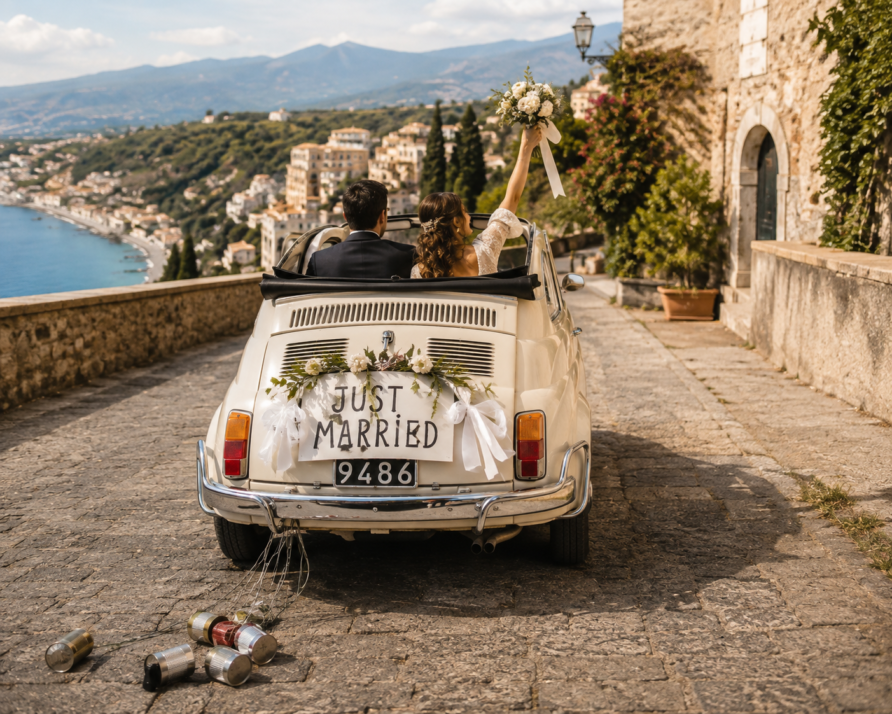
A wedding in Sicily can become an entire holiday.

Guests can stay together, explore nearby towns and enjoy several days around the main celebration.

Choosing a private Sicily villa can make that experience even more personal. Families can enjoy privacy while remaining close to the wedding destination.

So, where should you actually get married?

Here are the areas, settings and practical details worth considering before choosing your Sicilian wedding venue.

Where Are the Best Places to Get Married in Sicily?

The best wedding venues in Sicily are found around Taormina, Palermo, Bagheria, Cefalù, Noto, Ortigia and western Sicily. Each destination offers a different wedding experience.

Sicily isn’t a destination where one wedding location suits every couple.

The island changes dramatically from east to west.

Couples seeking glamour and spectacular views often begin with Taormina. Its terraces overlook the Ionian Sea, with Mount Etna creating an unforgettable backdrop.

Palermo and nearby Bagheria offer something different.

Historic villas, Mediterranean gardens and aristocratic architecture create a more traditional Sicilian atmosphere.

Cefalù combines a beautiful historic centre with the sea. This makes it particularly attractive for couples wanting a relaxed coastal celebration.

Further south, Noto and Ortigia offer elegant Baroque architecture and beautiful countryside.

Western Sicily provides another option.

Scopello, Castellammare del Golfo and the surrounding coastline offer dramatic scenery with a quieter Mediterranean atmosphere.

Choosing between them depends on your wedding style.

However, guest accommodation, airport access and travel times should also influence your decision.

That is especially important for international weddings.

Is Taormina One of the Best Places to Get Married in Sicily?

Yes. Taormina is one of Sicily’s leading wedding destinations, combining Ionian Sea views, historic architecture and dramatic Mount Etna scenery.

Couples can choose elegant hilltop venues, historic hotels and romantic settings near the sea.

Iconic choices include San Domenico Palace and Grand Hotel Timeo. Villa Sant’Andrea offers another atmosphere beside Mazzarò Bay.

Taormina works particularly well for destination weddings. Guests can combine the celebration with beaches, restaurants, boat trips and sightseeing.

Catania Airport is also the natural gateway for most international guests. Current wedding guides place the transfer at roughly 45–50 minutes by car.

Spring and early autumn are especially attractive. July and August bring higher temperatures, greater demand and larger crowds.

For a 2027 wedding, early planning is sensible for sought-after venues and accommodation.

A private villa near Taormina can also give families more space before and after the celebration.

Are Palermo and Bagheria Good for a Destination Wedding?

Yes. Palermo and Bagheria are excellent for destination weddings, combining historic villas, Mediterranean scenery and convenient access through Palermo Airport.

This part of Sicily feels very different from Taormina.

Grand villas and historic estates create an atmosphere rooted in Sicilian history.

Bagheria gained renewed international attention after Dua Lipa chose Villa Valguarnera for her Sicily wedding celebrations.

Yet the area’s appeal existed long before celebrity weddings.

Palermo gives guests restaurants, markets, architecture and nightlife. Nearby coastal areas add beaches and beautiful Mediterranean scenery.

Palermo Airport also makes the region practical for international guests.

Couples can stay near the city or choose a private villa around Palermo for greater privacy.

The result can feel less like a single wedding day.

Why Choose Cefalù for a Wedding in Sicily?

Cefalù suits couples looking for a romantic coastal wedding with beaches, historic streets and one of Sicily’s most beautiful old towns.

Its Norman cathedral and medieval centre sit only steps from the Mediterranean.

That creates excellent opportunities for wedding photography without moving guests between distant locations.

Cefalù also offers a more relaxed atmosphere than some of Sicily’s major luxury destinations.

Palermo Airport provides the most practical arrival point for many international guests.

The surrounding countryside offers another advantage.

Couples can stay outside the busy centre while remaining close enough to enjoy Cefalù.

A private villa near Cefalù can work particularly well for families or larger wedding groups.

Guests can enjoy the pool and countryside between scheduled events.

Are Noto and Ortigia Good for Destination Weddings?

Yes. Noto and Ortigia are excellent choices for couples drawn to Baroque architecture, warm Sicilian landscapes and elegant historic settings.

Noto is famous for its golden-stone architecture and dramatic Baroque streets.

Ortigia offers something different.

Its historic buildings, narrow streets and waterfront create beautiful opportunities for ceremonies and photographs.

Current Sicily wedding guides consistently identify Syracuse, Ortigia and Noto among the island’s important destination-wedding areas.

Catania Airport usually provides the most practical international gateway.

Couples should consider where guests will stay before choosing their final venue.

A countryside villa can offer privacy, while accommodation closer to Ortigia provides easier access to restaurants and nightlife.

Both options can create an exceptional wedding weekend.

Why Consider Scopello and Western Sicily?

Western Sicily is ideal for couples seeking dramatic coastline, historic settings and a more intimate Mediterranean atmosphere.

Scopello is one of the region’s strongest examples.

Its coastline, historic tonnara and nearby Zingaro landscape create an unmistakably Sicilian setting.

Further west, Trapani, Marsala and Erice offer completely different possibilities.

Current destination-wedding guides include all three among Sicily’s established wedding areas.

Western Sicily also lends itself beautifully to a longer stay.

Guests can combine the wedding with beaches, wineries, boat trips and historic towns.

This makes the region particularly interesting for couples who want the wedding to feel like a shared holiday.

Why Are Celebrity Weddings Bringing Attention to Sicily?

Celebrity weddings have increased Sicily’s international visibility. However, the island attracted destination celebrations long before recent headlines.

Historic villas, dramatic landscapes and privacy have attracted international celebrations for years.

Dua Lipa’s wedding celebrations in Bagheria introduced these qualities to an even wider international audience.

Historic villas, dramatic landscapes and privacy have attracted international celebrations for years.

Recent high-profile events, like Dua Lipas wedding in Bagheria have simply introduced those qualities to a wider audience.

Hidden Sicilian Towns for Beautiful Wedding Photos

Some of Sicily’s most romantic wedding settings are found beyond the island’s famous destinations. Small fishing villages and medieval towns can create unforgettable backdrops for wedding photographs.

Couples don’t need to travel far from their venue to find them.

Sant’Elia

Just outside Palermo, Sant’Elia is a tiny fishing village with colourful houses, clear water and a sheltered Mediterranean cove.

The viewpoint above the village looks towards Capo Zafferano and Solanto. Its waterfront houses have also attracted photographers over the years.

For wedding photographs, the setting feels intimate and unmistakably Sicilian.

Aspra

Close to Bagheria, Aspra offers a more authentic fishing-village atmosphere.

Think colourful boats, a working waterfront and the blue Tyrrhenian Sea rather than polished resort scenery.

It could work beautifully for couples wanting photographs that feel relaxed, local and genuinely Sicilian.

Porticello

Neighbouring Porticello brings another side of coastal Sicily.

Fishing remains central to the village’s identity, and its harbour connects this part of the coast with generations of Sicilian maritime tradition.

For photographs, it offers fishing boats, harbour scenes and a lived-in Sicilian atmosphere.

Castelbuono

For couples who prefer mountains to the sea, Castelbuono creates an entirely different setting.

This medieval town sits within the Madonie, centred around the historic Ventimiglia Castle. Stone streets and traditional architecture give photographs a romantic, old-Sicily character.

Marzamemi

In south-eastern Sicily, Marzamemi combines golden stone, fishermen’s houses and a beautiful historic piazza beside the sea.

The old Tonnara opens directly onto Piazza Regina Margherita and still hosts weddings and private events.

It gives couples a warmer, more relaxed alternative to the grand Baroque architecture of nearby Noto.

You don’t need to choose one of these villages as your wedding venue.

Instead, consider what surrounds the venue you already love.

A nearby fishing harbour, medieval street or quiet Sicilian piazza could become the setting for photographs you remember just as much as the ceremony itself.

How Much Does a Destination Wedding in Sicily Cost?

A Sicily wedding can cost from around €25,000 for an intimate celebration to €175,000 or more for a large luxury event.

Current 2026 planning estimates place 20–40 guest celebrations around €25,000–€45,000.

For 50–80 guests, estimates rise to approximately €45,000–€80,000. Larger exclusive celebrations can reach €85,000–€175,000 or more.

Location also matters.

Taormina sits firmly within Sicily’s premium wedding market.

Guest numbers, catering and venue exclusivity can quickly change the final figure.

Couples should also budget for photography, flowers, entertainment, transportation and planning.

A multi-day wedding may include a welcome dinner and farewell brunch.

These additions can transform the experience, but they also affect the budget.

What Should You Consider Before Booking a Wedding Venue in Sicily?

Which Airport Should Your Wedding Guests Use?

Choose the airport based on your wedding location, then clearly tell guests which airport you recommend.

Catania usually makes sense for Taormina and south-eastern Sicily.

Palermo works better for Cefalù, Palermo and much of western Sicily.

Don’t assume guests understand Sicily’s geography.

A cheaper flight can become expensive after a long private transfer.

For example, current Taormina wedding guidance warns that Palermo can mean roughly three hours by road.

Include recommended airports on your wedding website or invitations.

Your guests will thank you.

How Should You Organise Wedding Transport in Sicily?

Group transport can simplify a Sicily wedding, particularly when guests are staying across several villas or hotels.

Consider coaches or minibuses for the wedding day.

This removes concerns about parking and unfamiliar roads.

It also allows guests to enjoy the reception without worrying about driving afterwards.

Think about older guests too.

Historic Sicilian towns can include steps, cobbled streets and steep hills.

Taormina is a good example.

Its compact centre is walkable, but slopes and pedestrian areas can complicate guest movement.

Transport isn’t glamorous.

However, poor transport planning can quickly affect the guest experience.

Where Should Wedding Guests Stay in Sicily?

Keep guests reasonably close to the wedding venue and offer several accommodation options across different budgets.

Not everyone needs to stay in the same property.

However, spreading guests across distant parts of Sicily creates unnecessary transport problems.

Private villas work particularly well for families and close friends.

Hotels may suit couples or guests staying for shorter periods.

The wedding party could stay together in a larger villa.

That gives everyone somewhere to relax between events.

For destination weddings, accommodation is not an afterthought.

It forms part of the experience.

Do You Need a Wedding Planner in Sicily?

A local wedding planner can be extremely valuable when organising a Sicily wedding from another country.

Different languages no longer make destination planning impossible.

Video calls, digital mood boards and translation tools have transformed the process.

However, local knowledge still matters.

A good planner understands suppliers, venues, transport and local procedures.

Current 2026 Taormina guidance recommends looking for planners with specific local experience, international-client references and strong venue relationships.

They can also coordinate florists, caterers, musicians, photographers and transport.

This becomes increasingly valuable as guest numbers grow.

After more than 20 years working with guests and property owners across Sicily, Sicily4U has built relationships with trusted professionals throughout the island.

From wedding planners and photographers to transport providers, local knowledge can make planning from abroad considerably easier.

We recommend choosing professionals with proven local experience, particularly when coordinating an international wedding.

How Far in Advance Should You Plan a Sicily Wedding?

For popular venues and peak dates, begin planning around 12–18 months ahead.

Current 2026 Taormina wedding guidance recommends this window for high-demand venues.

Couples planning a 2027 Sicily wedding should begin enquiries as early as possible.

Start with four decisions:

  1. Approximate guest count.
  2. Preferred part of Sicily.
  3. Realistic total budget.
  4. Preferred month.

Then shortlist venues.

After that, secure the planner and photographer.

Accommodation should follow quickly for large groups.

Don’t wait until flights become available to think about where everyone will stay.

Is It Difficult to Plan a Wedding in Sicily From Abroad?

Planning a Sicily wedding from abroad takes organisation, but technology and experienced local suppliers make the process far easier than before.

Couples can tour venues by video.

Planning meetings happen online.

Mood boards, guest lists and seating plans can be shared digitally.

Translation tools also make everyday communication easier.

However, legal requirements deserve professional attention.

A symbolic ceremony and a legally recognised Italian marriage are not the same thing.

Current destination-wedding guides specifically distinguish paperwork for foreign couples and legally binding ceremonies.

Speak with your planner and relevant authorities early.

Never leave legal documentation until the final weeks.

Sicily Wedding FAQs

What is the best month to get married in Sicily?

May, June, September and early October offer warm weather without the strongest July and August heat. Exact conditions vary by location and year.

Is Sicily cheaper than other Italian wedding destinations?

It can be. Costs vary considerably by venue and wedding style, while premium Taormina celebrations can reach luxury mainland-Italy pricing.

How many days should guests stay for a Sicily wedding?

Five to seven days gives international guests time for the wedding, surrounding events and some exploration.

Do wedding guests need a car in Sicily?

Not necessarily. Organised transfers can be easier when guests stay close together, particularly around wedding-day celebrations.

For larger celebrations, private minibuses or coaches can also be arranged in advance for wedding-day transport.

Ready to Start Planning Your Wedding in Sicily?

A destination wedding doesn’t have to end when the last song plays.

For many couples, the most memorable moments happen around the celebration itself. A long lunch the day before. Breakfast together the following morning. An afternoon by the pool with family who travelled across the world to be there.

That is where Sicily comes into its own.

With more than 20 years of experience welcoming international guests to Sicily, Sicily4U understands how important the right accommodation can be.

Your wedding venue may host the celebration. Your villa becomes the place where everyone comes together.

Choose a property near your venue, keep important guests close and give yourselves time to actually enjoy being in Sicily.

Whether your wedding takes you to Taormina, Cefalù, Palermo, Noto or another corner of the island, make the journey part of the celebration.

Explore Sicily4U’s private villas and start planning your stay in Sicily.

When Does a Historic Villa in Taormina Become Part of History? The Story of Villa Mimì

The Enduring Story of Villa Don Mimì Taormina

Some villas impress you with beautiful architecture.

Others captivate you with breathtaking views.

Yet only a handful become part of history.

Not because they are larger.

Not because they are more luxurious.

Instead, they become unforgettable because extraordinary people once walked through their doors.

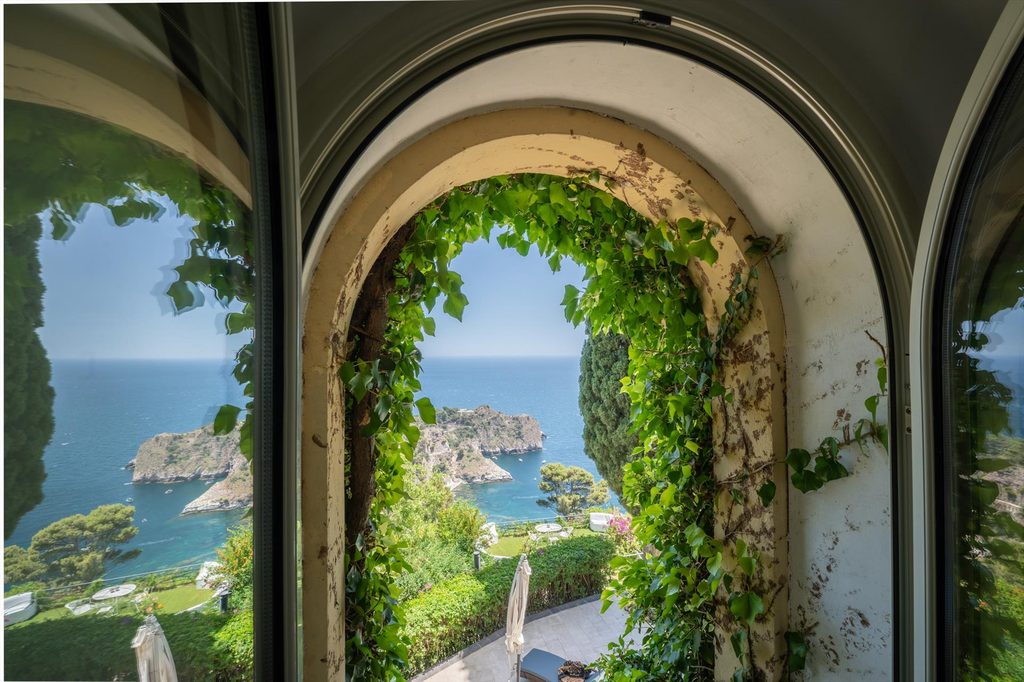
Perched above the sparkling waters of Isola Bella, Villa Mimì is one of those rare places. For more than a century, it has welcomed aristocrats, visionaries, celebrated architects, renowned artists and distinguished guests from around the world.

However, the villa’s remarkable story begins not with a king or a Hollywood star.

It begins with an extraordinary Englishwoman whose influence can still be felt throughout Taormina today.

Her name was Miss Mabel Hill.

Perhaps that is the true measure of a historic villa.

It is not simply the age of its walls.

It is the lives that unfold within them.

The English Woman Who Helped Shape Taormina

During the late nineteenth century, Taormina was quietly becoming one of Europe’s most fashionable destinations.

Artists travelled south seeking inspiration.

Writers searched for beauty.

Aristocrats escaped the long northern winters.

Among those visitors was Miss Mabel Hill, an Englishwoman who would leave a lasting mark on the town she came to love.

Unlike many wealthy travellers, she did not simply admire Sicily before returning home.

Instead, she embraced Taormina as her own.

She believed its greatest treasure was not only its landscape, but also its people.

Determined to preserve local craftsmanship, Miss Hill founded the famous School of Sicilian Lace, creating opportunities for local women to learn traditional embroidery while earning an independent income.

Her contribution transformed lives.

More importantly, it helped preserve one of Sicily’s most beautiful artistic traditions.

Today, her legacy continues throughout Taormina.

A street proudly bears her name.

Her work is remembered by historians.

Most remarkably, the villa she once called home continues welcoming guests from around the world.

Long before Villa Don Mimì became known for glamour, it was already a place where generosity, creativity and culture flourished.

A Villa Fit for Royalty

History often becomes even more captivating when it intertwines with mystery.

Villa Don Mimì Guarnaschelli is no exception.

According to long-standing local tradition, Miss Mabel Hill maintained a close friendship with King Edward VII of England.

Some stories suggest that friendship developed into a discreet romance.

Although historians have never conclusively confirmed those accounts, the story has remained woven into the villa’s history for generations.

The King is believed to have visited Taormina privately, seeking peace far from the responsibilities of royal life.

Family tradition tells of a room overlooking Isola Bella that was reserved especially for him.

From its windows, he reportedly watched the sunrise over the Ionian Sea while enjoying the tranquillity that first captivated Europe’s aristocracy.

Whether history or legend, the setting certainly explains why the story has endured.

As dawn breaks across Isola Bella, the sea gradually changes from deep sapphire to brilliant gold.

Fishing boats drift silently across the bay.

Mount Etna rises on the distant horizon.

Standing there today, visitors witness the very same landscape that has inspired travellers for generations.

Perhaps that timeless beauty explains why Taormina has never fallen out of fashion.

A New Chapter Begins

Every historic home evolves.

Villa Mimì entered a remarkable new chapter during the 1940s.

The estate was acquired by Count Vittorio Cini, one of Italy’s most respected industrialists, philanthropists and cultural patrons.

Rather than altering the villa beyond recognition, he chose to enhance its character.

To achieve that vision, he commissioned one of Italy’s greatest architects.

His name was Tomaso Buzzi.

Buzzi was far more than an architect.

He was an artist, designer and visionary whose work defined Italian elegance throughout the twentieth century.

Rather than following changing fashions, he created timeless interiors inspired by classical art, literature and history.

His philosophy perfectly suited Villa Don Mimì.

Instead of replacing its identity, he refined it.

Elegant proportions, thoughtful details and harmonious spaces elevated the villa while preserving its romantic character.

Many of those design elements remain beautifully preserved today.

Guests continue to enjoy the atmosphere created by one of Italy’s most celebrated creative minds.

The Golden Years of Taormina

If the walls of Villa Don Mimì Guarnaschelli could speak, they would probably tell stories of laughter before they spoke of history.

The villa entered a glamorous new chapter in 1955, when it was purchased by Cavaliere Domenico Guarnaschelli, affectionately known throughout Taormina as Don Mimì.

His ambition reached far beyond owning an exceptional residence.

He dreamed of creating an elegant destination where culture, entertainment and hospitality could flourish together.

During this remarkable period, Taormina became one of Europe’s most glamorous destinations. International celebrities, artists and distinguished guests gathered on its sunlit terraces and lively piazzas, creating an atmosphere that many still remember as Sicily’s own version of La Dolce Vita.

Villa Don Mimì stood proudly at the heart of that golden era.

Among the names associated with the villa are Marlene Dietrich, Gregory Peck, Kirk Douglas, Louis Armstrong and Domenico Modugno. According to the Guarnaschelli family, many guests were welcomed into rooms that later became known by their names, preserving memories of an extraordinary period in Taormina’s social history.

Even today, those stories continue to give the villa a remarkable sense of character.

Guests are not simply surrounded by beautiful furniture and elegant architecture.

They are immersed in a home where history feels wonderfully alive.

More Than a Beautiful Home

Luxury alone does not create history.

Instead, history grows through generations of remarkable lives.

Villa Mimì has welcomed visionaries, artists, royalty and travellers for well over one hundred years.

Each generation has added another chapter without erasing the last.

That continuity makes the villa truly exceptional.

Every room reflects more than refined architecture.

Every terrace offers more than breathtaking views.

Together, they tell the story of people who helped shape Taormina itself.

Discovering Taormina

Staying at Villa Don Mimì means experiencing far more than an extraordinary residence.

Taormina lies just moments away.

Its charming streets invite visitors to wander slowly between historic churches, elegant boutiques and welcoming cafés.

Meanwhile, Corso Umberto remains one of Sicily’s most celebrated promenades.

Just below the town, Isola Bella continues to enchant visitors with crystal-clear waters and one of Italy’s most photographed coastlines.

The Ancient Greek Theatre still hosts concerts beneath the stars while overlooking Mount Etna and the Ionian Sea.

Food lovers will discover family-run restaurants serving recipes passed from generation to generation.

Wine enthusiasts can explore vineyards growing on the fertile volcanic slopes of Mount Etna.

Nature lovers will find endless walking trails, hidden beaches and unforgettable coastal scenery.

Every day offers another reason to fall in love with Sicily.

Experience Villa Don Mimì with Sicily4U

Some holidays are quickly forgotten.

Others remain with us forever.

Villa Mimì offers much more than an exclusive place to stay.

It offers the opportunity to become part of a story that has unfolded for more than a century.

Guests wake each morning overlooking the same sea admired by English aristocrats.

They stroll through gardens once enjoyed by celebrated architects and distinguished visitors.

Later, they return from exploring Taormina knowing they are staying in one of Sicily’s most fascinating historic homes.

That experience cannot be recreated.

It can only be lived.

At Sicily4U, we believe every remarkable villa has a story worth telling.

Villa Mimì reminds us that history is not confined to museums or history books.

Sometimes, history welcomes you at the front door, invites you inside and asks you to stay a little longer.

Because the finest villas do more than offer luxury.

They become part of history.

In a World of Mass Production, Donna Pidda Reminds Us Why Handmade Still Matters

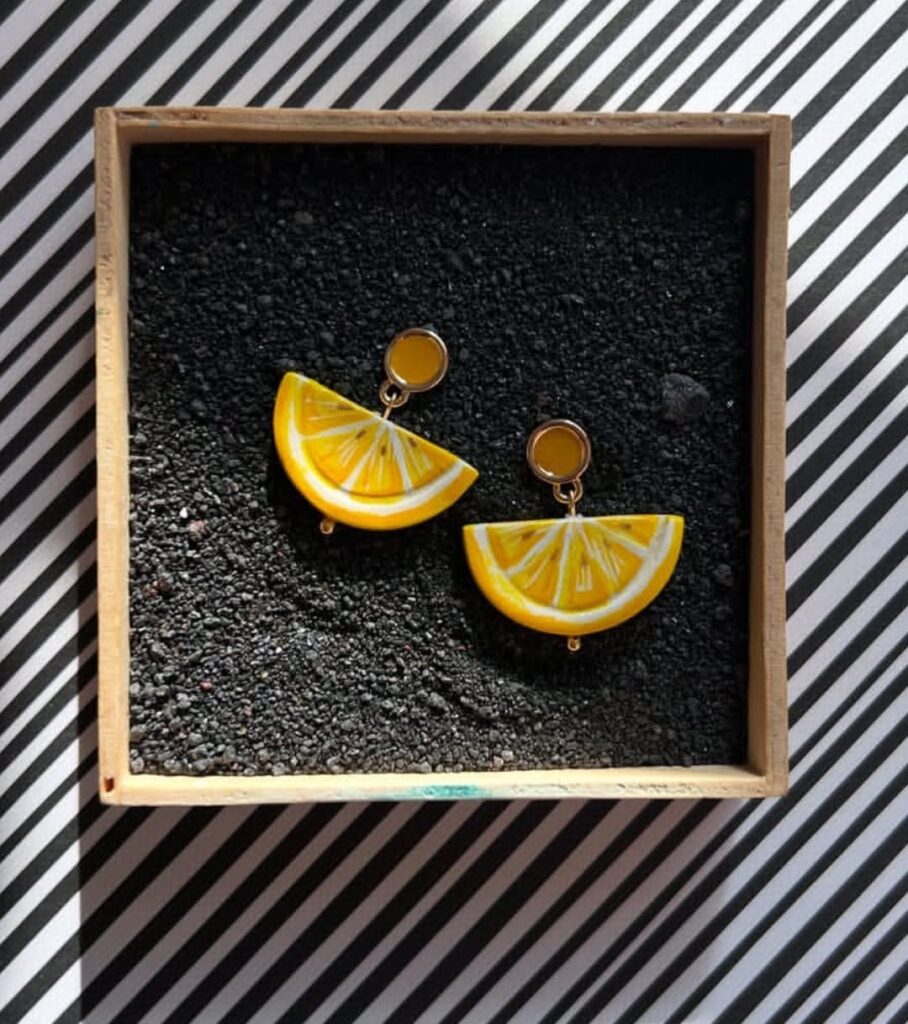
Walk through almost any tourist town in Italy and you’ll find beautiful jewelry displayed in elegant shop windows. Colorful Sicilian pinecones. Moor’s heads. Lemons. Majolica patterns. Sacred hearts.

They’re beautiful.

But here’s the question few of us stop to ask:

Who actually made them?

In today’s world, almost everything can be mass-produced. Even pieces that appear handmade. Even the earrings bought in Taormina or the necklace picked up during a holiday in Sicily may have been manufactured hundreds—or even thousands—of miles away before arriving in a souvenir shop.

That is what makes Donna Pidda in Cefalù so special.

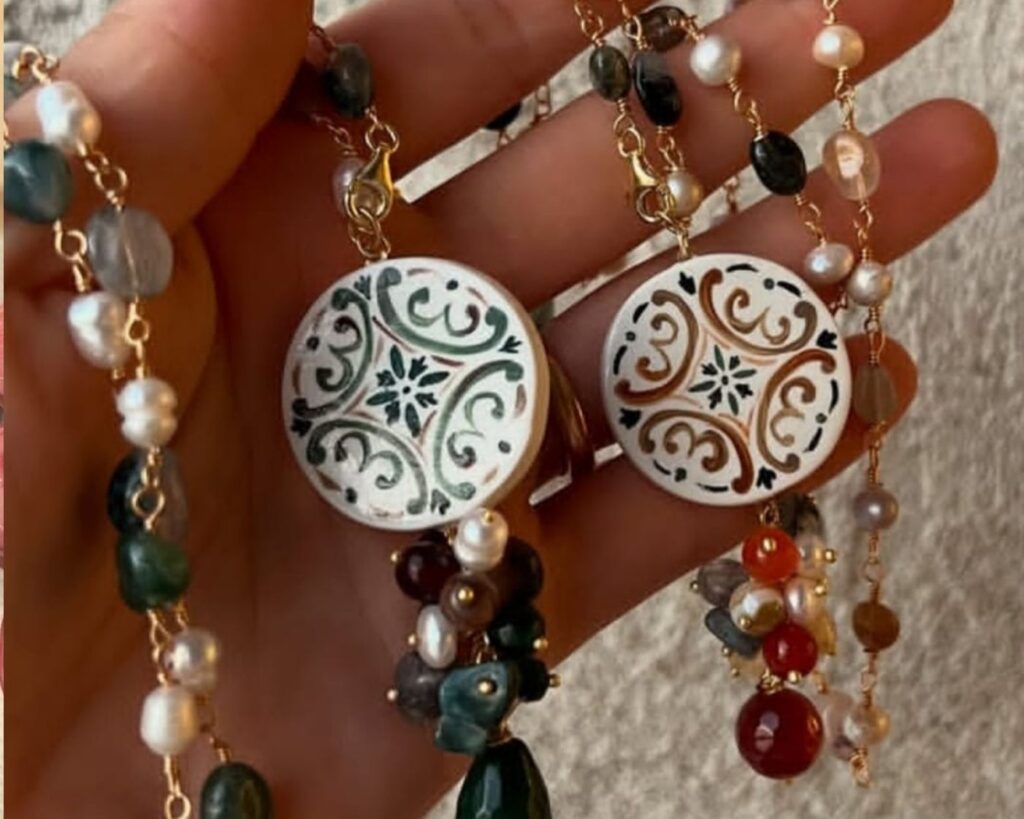
Here, Bruna, the founder and creative heart behind the brand, continues the tradition of creating handmade Sicilian jewelry inspired by the island’s folklore, history, and everyday beauty. Every piece is crafted with intention, preserving an art form that tells the story of Sicily rather than simply imitating it.

There is nothing wrong with buying something beautiful. But there is something extraordinary about knowing the hands that created it.

More Than Jewlery

Donna Pidda isn’t simply a jewelry shop.

It is Bruna’s love letter to Sicily.

Every piece begins with an idea inspired not by fashion trends or seasonal collections, but by the island itself—its stories, traditions, colours, folklore and the tiny details that many people walk past without ever noticing.

The faded ceramic tiles decorating an old doorway.

The lemons growing behind a stone wall.

The colourful fishing boats rocking gently in Cefalù’s harbour.

The intricate patterns painted on centuries-old majolica.

The legendary Teste di Moro that watch over balconies throughout Sicily.

The pinecone that has symbolised prosperity and hospitality for generations.

These aren’t simply decorative symbols.

They’re chapters of Sicily’s story.

And Bruna turns those stories into something you can wear.

Preserving More Than an Art Form.

Instead, Donna Pidda chooses something different.

Patience.

Every piece is assembled by hand.

Each colour is chosen with intention.

The tiny brushstrokes reflects hours of craftsmanship that no machine can truly replicate.

Mass production creates copies.

Craftsmanship creates character.

When you hold one of Bruna’s creations, you’re not holding something that rolled off an assembly line.

You’re holding a small piece of Sicilian identity.

An object that carries the fingerprints, imagination and passion of the person who made it.

The Beauty Hidden in Everyday Sicily

Perhaps what makes Donna Pidda so special is that Bruna doesn’t search for inspiration in grand monuments.

She finds it in everyday life.

In conversations between neighbours.

With old family traditions.

She is inspired by the colours hanging from laundry lines stretching across narrow streets.

As well as the scent of orange blossom carried through ancient alleyways.

The fishermen returning to the harbour before sunrise.

In grandmothers carefully preparing Sunday lunch.

In ceramic pots sitting outside weathered homes.

These are the moments that tourists often miss.

Yet they are the moments that define Sicily.

They are the memories locals carry with them long after they leave home.

Donna Pidda captures those quiet moments and transforms them into wearable art.

Every Piece Has a Story

Perhaps that’s why people are drawn to Donna Pidda.

Not because they’re simply buying jewelry.

They’re taking home a story.

A reminder of the afternoon they wandered through Cefalù’s medieval streets.

The smell of the sea.

The warmth of the Sicilian sun.

The laughter echoing through hidden courtyards.

The kindness of people who still greet strangers like neighbours.

Long after a holiday ends, a handcrafted piece becomes more than an accessory.

It becomes memory.

The Importance of Supporting Artisans

Places like Donna Pidda remind us why local artisans matter.

They protect traditions that cannot be automated.

They preserve techniques that machines cannot imitate.

Most importantly, they keep culture alive—not inside museums, but in everyday life.

When we choose handmade over mass-produced, we aren’t simply making a purchase.

We’re casting a vote for creativity.

For heritage.

For authenticity.

For the people who refuse to let centuries of craftsmanship disappear.

A Piece of Sicily You Can Wear

Sicily has never been defined solely by its beaches or its monuments.

It lives in its people.

Its traditions.

Its stories.

Its artisans.

Bruna has chosen to tell those stories through her hands.

Every earring, necklace, bracelet and pendant that leaves her workshop carries a small piece of Sicily with it—not because it was designed to look Sicilian, but because it was born here, inspired here and lovingly crafted here.

In a world where almost everything can be copied, there is still something deeply moving about owning something made by someone who poured a little of themselves into it.

That is the real beauty of Donna Pidda.

It isn’t just jewelry.

It’s Sicily, told one handcrafted piece at a time.

Sicily Summer Heat: What to Wear and How to Stay Safe in the Mediterranean Sun

If you’re planning a summer holiday in Sicily, one thing is certain: you’ll experience plenty of sunshine. Sicily’s Mediterranean climate is one of the reasons travelers fall in love with the island, but temperatures in July and August can regularly climb above 35°C (95°F).

Whether you’re staying in one of our handpicked Sicily villas, exploring charming towns, or spending long days by the sea, knowing what to wear and how to prepare will help you enjoy the island comfortably and safely.

Dress Like a Local: Light Fabrics Are Your Best Friend

Sicilians have lived with hot summers for centuries, and their wardrobes reflect it.

Forget heavy jeans and synthetic fabrics. Lightweight, breathable materials are essential during the hottest months.

Best Fabrics for Sicily in Summer
• Linen shirts and dresses
• Cotton tops
• Loose-fitting trousers
• Breathable sandals
• Wide-brimmed hats
• UV-protective sunglasses

Light colors such as white, beige, cream, and pale blue help reflect the sun and keep you cooler throughout the day.

What to Pack for a Summer Trip to Sicily

Packing smart can make a huge difference when temperatures rise.

Essentials to Bring

✓ Refillable water bottle

✓ SPF 50 sunscreen

✓ Wide-brimmed hat

✓ Portable fan

✓ Comfortable walking shoes

✓ Swimsuit and cover-up

✓ Electrolyte tablets

✓ Light sweater for evening sea breezes

Many travelers staying in our luxury Sicily villas enjoy relaxing by the pool during the hottest hours and heading out later in the day when temperatures become more pleasant.

How Hot Does Sicily Get?

July and August are Sicily’s hottest months.

Temperatures commonly range from:
• 30°C to 38°C (86°F–100°F)
• During African heat waves, temperatures can exceed 40°C (104°F)

Locals naturally adapt their schedules by:
• Going out early in the morning
• Taking it easy during the afternoon
• Enjoying long dinners after sunset

Embracing the slower Mediterranean rhythm is one of the secrets to enjoying Sicily.

Staying Cool at Your Sicily Villa

One of the biggest advantages of staying in private Sicily villas is flexibility.

Instead of rushing through sightseeing during the hottest hours, many visitors choose to:
• Relax beside the pool
• Enjoy shaded terraces
• Prepare leisurely lunches
• Take an afternoon siesta
• Explore towns and beaches later in the day

Having your own space allows you to experience Sicily at a slower, more authentic pace.

Summer Safety Tips for Children

Young children are especially vulnerable to dehydration and sun exposure.

Parents should:
• Offer water frequently
• Apply sunscreen regularly
• Dress children in lightweight cotton clothing
• Avoid direct sun between 11 a.m. and 4 p.m.
• Plan activities for mornings and evenings

Never leave children inside parked cars, even for a few minutes.

Warning signs of overheating include:
• Fatigue
• Irritability
• Dizziness
• Excessive sleepiness

Traveling to Sicily With Dogs and Pets

Many Sicily villas welcome pets, but animals also need protection from the summer heat.

To keep your pets comfortable:
• Walk dogs early in the morning
• Avoid hot pavement
• Provide constant access to water
• Seek shade whenever possible
• Never leave pets inside vehicles

Heatstroke can develop very quickly in animals.

Extra Care for Elderly Travelers

Older adults are more sensitive to high temperatures and dehydration.

Helpful precautions include:
• Drinking water regularly
• Staying indoors during peak heat
• Wearing loose clothing
• Taking frequent breaks
• Choosing air-conditioned accommodations

Many luxury Sicily villas offer pools, shaded gardens, and comfortable indoor spaces that make summer travel far more enjoyable.

Embrace the Sicilian Lifestyle

Embrace the Sicilian Lifestyle

The secret to surviving the Sicilian summer isn’t avoiding the heat—it’s embracing the Mediterranean lifestyle.

Slow down.

Enjoy long lunches.

Take an afternoon swim.

Stroll through beautiful piazzas after sunset.

Whether you’re exploring historic towns or relaxing in one of our carefully selected Sicily villas, summer in Sicily is about savoring life at a gentler pace.

Why Sicily Feels Different From Italy: History, Culture and Lifestyle Explained

One of the questions visitors ask most often is:

“Is Sicily part of Italy?”

At first glance, it’s an understandable question.

Open a map and you’ll see Italy, Sicily, Sardinia, and a collection of islands scattered throughout the Mediterranean.

To many visitors, Sicily feels so distinct that they begin to wonder.

Is it really part of Italy?

Then they arrive.

They notice the food is different.

The architecture is different.

The pace of life is different.

Even the conversations around them sound different.

Many travellers quickly discover why Sicily feels so different from Italy.

Suddenly, another question follows:

“Are Sicilians Italian?”

The answer is yes.

Yes, Sicily is part of Italy.

Yes, Sicilians are Italian citizens.

Yes, Sicilians speak Italian.

However, the story is far more interesting than that.

Top view of the beautiful beach of Punta Faro in Sicily. Messina, Italy.

It’s Not What You See. It’s What You Feel.

Visitors often arrive in Sicily expecting to fall in love with the scenery.

And they do.

The beaches are beautiful. The food is unforgettable. The villages seem frozen in time.

Yet when people talk about Sicily after they return home, they rarely talk about a single beach or a single meal.

Instead, they talk about a feeling.

A feeling they struggle to explain.

Some describe it as nostalgia for a place they had never visited before.

Others say they felt more connected, more present, or somehow more alive.

Many return home and find themselves missing things they never thought they would miss.

The sound of church bells drifting through a town square.

The old men sitting outside the same café every morning.

The way strangers stop to talk.

The smell of coffee and fresh bread on a quiet street.

The evening passeggiata when entire families emerge to walk, talk, and simply be together.

Sicily has a way of reminding people of something many of us have lost.

Time.

Not more time.

A different relationship with time.

Perhaps that is why so many visitors return again and again.

They come for the beaches, the food, and the history.

But they return for a feeling they cannot quite put into words.

sicilian ceramic trinkets for sale
Italy, Sicily, Taormina, sicilian ceramic gadgets for sale

Sicily Will Always Be Sicily

Perhaps that is why visitors ask the question so often.

Not because Sicily isn’t Italy.

But because Sicily feels like something entirely its own.

There is a spirit here that cannot be measured on a map, explained by borders, or defined by politics.

It lives in the family gatherings that last for hours. It lives in the stories passed from one generation to the next. It lives in the recipes, traditions, dialects, celebrations, and way of life that have survived for centuries.

Sicily may be part of Italy, but it has never lost its own identity.

And it never will.

Long before modern Italy existed, Sicily was Sicily.

Today, it remains Sicily.

Not better. Not worse. Simply different.

A place with its own character, its own rhythm, and its own soul.

Perhaps that is why so many visitors arrive expecting another Italian destination and leave feeling they have discovered something far more unique.

Because once you experience Sicily, you stop asking whether it is part of Italy.

You begin to understand that Sicily is something that can only truly be described as Sicily.

Cefalù Has It All: Why It’s the Perfect Home Base for Your Sicilian Adventure

Most travellers arrive in Sicily with the same challenge. How do you see as much of Sicily as possible in a short amount of time?

What location will help me get the most out of my stay?

From golden beaches and historic towns to incredible food, mountain villages, and authentic Sicilian culture, there is no shortage of places to discover.

The problem is choosing where to stay.

Many visitors spend their holiday constantly changing hotels. They pack, unpack, and spend valuable time on the road.

Cefalù offers a different approach.

Located on Sicily’s northern coast, Cefalù places you at the centre of everything.

It is easy to reach by train and well connected to Palermo and the rest of the island. Visitors can explore Sicily by day and return each evening to one of the island’s most beautiful seaside towns.

Aerial view of a coastline and big rock near Cefalu, Sicily, Italy.

A Town Where You Barely Need a Car

One of Cefalù’s greatest strengths is its walkability.

From the moment you arrive, much of what you need is within walking distance.

The beach sits beside the historic centre.

Restaurants line the waterfront and weave through the old town streets.

The train station is close enough to make day trips simple.

Many visitors spend days exploring without ever getting behind the wheel.

Beautiful view of the beach, Cefalu Cathedral and old town of coastal city Cefalu at sunset, Sicily, Italy

History at Every Turn

Few towns combine history and scenery as effortlessly as Cefalù.

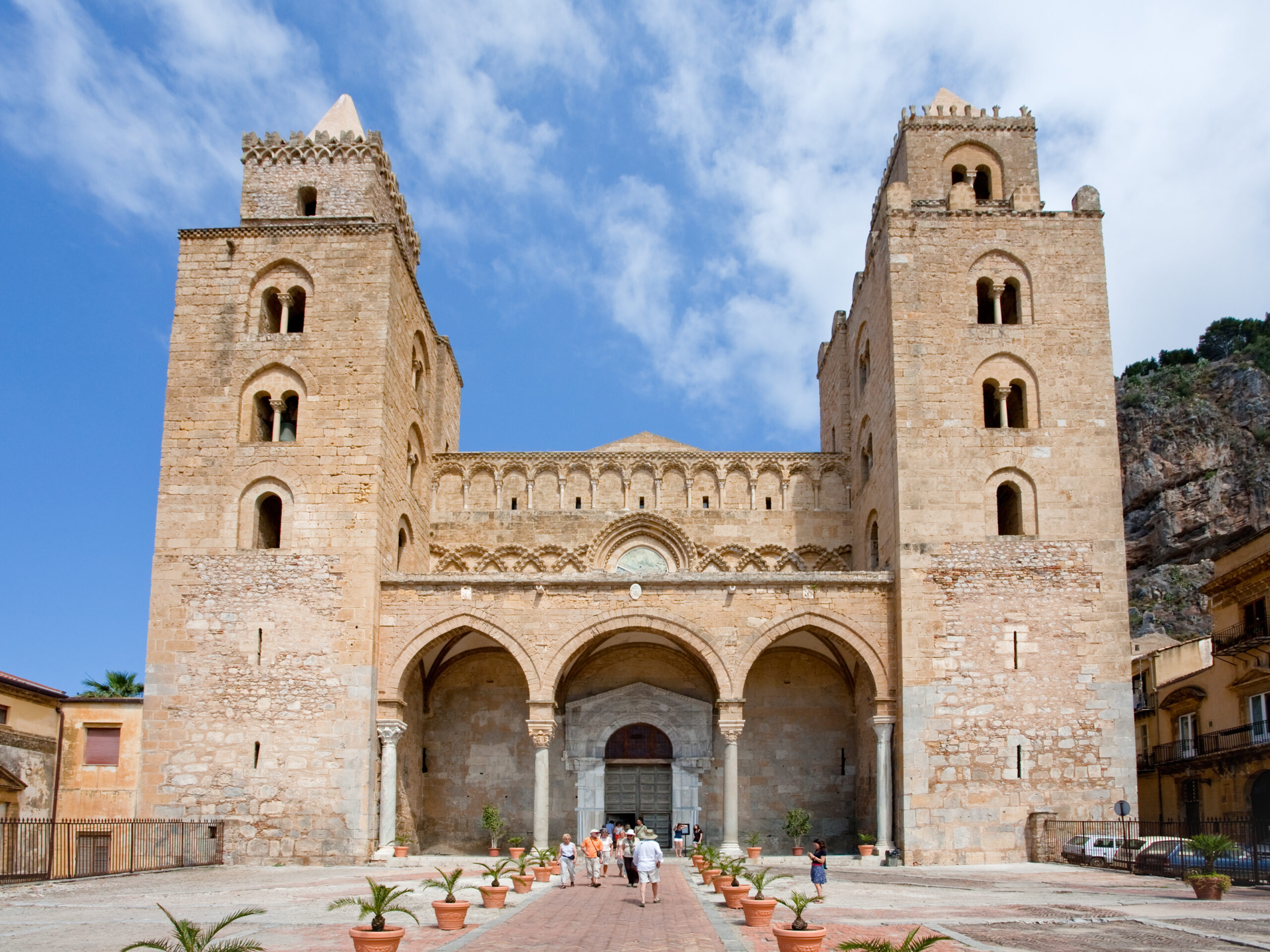
The town is dominated by its magnificent Norman Cathedral. Built in the twelfth century, it remains one of Sicily’s most important landmarks and is part of a UNESCO World Heritage site.

Just above the town rises La Rocca.

This dramatic rock formation towers above Cefalù and rewards visitors with breathtaking views across the coastline. The climb is one of the most memorable experiences in northern Sicily.

The Sicily Travellers Dream About

What makes Cefalù special is not only what it has.

It is what it has managed to keep.

Many destinations lose part of their character as tourism grows.

Cefalù remains unmistakably Sicilian.

Local families still gather in the piazzas.

Fishermen still work along the coast.

Life continues at a pace that feels authentic rather than manufactured.

This is the Sicily many travellers hope to find.

From Cinema to International Fame

Film lovers often recognise Cefalù immediately.

The town has appeared in several internationally known productions and continues to attract visitors drawn by its cinematic beauty. Some scenes connected to Giuseppe Tornatore’s work and other major productions have helped introduce Cefalù to audiences around the world.

Yet despite its popularity, Cefalù never feels like a movie set.

It remains a living town with real character.

Endless Sea Views and Waterfront Dining

Many coastal towns have one or two restaurants with a sea view.

Cefalù offers far more.

Throughout the historic centre and along the waterfront, visitors will find restaurants perched above the sea, terraces overlooking the beach, and cafés where the Mediterranean forms the backdrop to every meal.

Morning coffee, long lunches, sunset aperitivi, and fresh seafood dinners all come with a view.

Sandy beach and old houses by the sea in Cefalu, Sicily, Italy

Discover Sant’Ambrogio

Just a short drive from Cefalù lies one of the area’s hidden treasures.

Sant’Ambrogio is a small village overlooking the sea within the Madonie region. Narrow streets, local traditions, olive groves, and spectacular coastal views make it feel like a glimpse into another Sicily.

It is the kind of place many visitors remember long after their holiday ends.

Beaches, Mountains, and Day Trips

Few destinations offer such variety.

Spend the morning on Cefalù’s sandy beach.

Explore La Rocca in the afternoon or the Duomo di Cefalù.

Enjoy dinner overlooking the sea.

The following day, visit Palermo, discover the Madonie Mountains, or explore nearby villages such as Pollina and Castelbuono.

Everything is within reach.

medieval norman Cathedral in Cefalu, Sicily, Italy on June 25, 2011

Experience Sicily from a Luxury Villa in Cefalù

Choosing Cefalù as your base allows you to experience Sicily without compromise.

Not only do you remain close to beaches, history, restaurants, but you are also perfectly positioned for exploring the rest of the island.

In addition, many of Sicily’s most rewarding destinations can be reached easily on a day trip.

a result, travellers can enjoy the perfect balance between relaxation and exploration.

Ultimately, Cefalù offers everything needed for an unforgettable Sicilian adventure.

Luxury Sicily Villas, Award-Winning Restaurants & Beautiful Beaches: The Ultimate Sicilian Experience

Discover Sicily’s Finest Luxury Villas and Dining Experiences

Sicily combines breathtaking scenery, rich history, and exceptional cuisine. Few destinations offer such a complete travel experience. Staying in a luxury Sicily villa allows you to experience the island in comfort and style. Enjoy private pools, stunning views, and exclusive locations.

Across the island, luxury Sicily villas can be found beside golden beaches, historic towns, and beautiful countryside landscapes. Each day brings new discoveries. Explore ancient streets, visit charming coastal villages, or relax by the sea.

Sicilian cuisine is equally unforgettable. Fresh seafood, local ingredients, and traditional recipes define the island’s culinary heritage. Award-winning chefs continue to elevate Sicily’s reputation as one of Italy’s leading food destinations. Many of Sicily’s finest restaurants sit within easy reach of exceptional villas.

This combination creates the perfect setting for a memorable holiday. Imagine returning to your private villa after a day of sightseeing. Spend the evening enjoying outstanding food and local wines.

This guide highlights some of the best luxury Sicily villas located near acclaimed dining destinations. Each property offers comfort, character, and easy access to remarkable experiences. Whether planning a romantic escape, a family holiday, or a food-focused journey, these villas provide an ideal base for exploring Sicily.

Siracusa & Ortigia: Historic Beauty and Exceptional Dining

Few destinations in Sicily combine history, culture, and gastronomy as beautifully as Siracusa and Ortigia. This UNESCO-listed area is known for its ancient Greek heritage, stunning seaside views, vibrant markets, and some of Sicily’s most celebrated restaurants.

For guests staying in a luxury Sicily villa, Siracusa and Ortigia offer the perfect balance of relaxation and discovery. Spend the morning exploring centuries-old streets, enjoy an afternoon by your private pool, and finish the day with an unforgettable dining experience.

Cortile Spirito Santo

Located in the heart of Siracusa, Cortile Spirito Santo has earned recognition for its refined approach to Sicilian cuisine. The restaurant combines traditional flavours with modern techniques, creating dishes that showcase the very best of local ingredients.

Fresh seafood, seasonal produce, and carefully selected Sicilian wines make this one of the area’s most sought-after dining experiences.

Stay Nearby: Villa Acquamarina

Hidden within a private coastal reserve, Villa Acquamarina offers peace, privacy, and direct access to the sea.

Nature surrounds every corner of the property. Pine trees, eucalyptus, and Mediterranean vegetation create a tranquil setting.
A private path leads to a secluded sandy beach. A sea-view pagoda provides the perfect spot to relax.

Endless coastal views stretch across the horizon. Sunrises and sunsets are especially memorable here.
Outdoor living takes centre stage. Spacious terraces invite long lunches and quiet evenings.

The bio-designed swimming pool blends naturally into the landscape. Its design reflects the beauty of a natural lagoon.
Comfortable seating areas are thoughtfully placed throughout the grounds. Every space encourages relaxation.
Traditional Sicilian character meets modern comfort indoors. Warm interiors create a welcoming atmosphere.

Wildlife is part of the experience. Friendly donkeys, cats, and birds share this unique natural environment.
A scenic coastal walk leads to Marinella di Selinunte. Here, guests can enjoy excellent local cuisine beside the sea.
Villa Acquamarina is ideal for travellers seeking nature, privacy, and an authentic Sicilian escape.

Don Camillo

Nestled within Ortigia’s historic centre, Don Camillo is one of the area’s most respected restaurants. Known for its intimate atmosphere, exceptional wine selection, and sophisticated Sicilian cuisine, it has become a favourite among both locals and international visitors.

Dining here is more than a meal; it is an opportunity to experience Sicily’s rich culinary heritage in one of the island’s most beautiful settings.

Stay Nearby: Villa Feudale

Villa Feudale History, elegance, and space come together at Villa Feudale. This remarkable Sicilian estate welcomes up to 24 guests in a setting rich with character and tradition.

Dating back to the 13th century, the property has been carefully restored while preserving its historic charm. Original architectural features sit alongside modern comforts.

Sweeping views stretch across the countryside towards Mount Etna and the sea. The estate enjoys a peaceful position near Brucoli, yet remains within easy reach of Syracuse, Noto, and Taormina.

At the heart of the property lies a beautiful courtyard surrounded by elegant guest suites. Each bedroom offers privacy, comfort, and its own en-suite bathroom.

Grand reception rooms, a library, formal gardens, and inviting outdoor spaces create a unique atmosphere. Every corner reflects centuries of Sicilian heritage.

Days here are best spent outdoors. Guests can relax beside the large swimming pool, unwind in the Turkish bath and sauna, or gather for long meals outdoors.

Set within extensive private grounds, Villa Feudale offers space to celebrate, reconnect, and enjoy Sicily at a slower pace.

For travellers who value exceptional food and authentic experiences, Villa Feudale is an excellent choice.

Noto & San Lorenzo: Sicily’s Most Elegant Escape

Few places capture the essence of Sicily quite like Noto and San Lorenzo.

Known for their golden beaches, baroque architecture,this corner of southeastern Sicily has become a favourite destination for travellers seeking authenticity, luxury, and exceptional food.

Guests staying in a luxury Sicily villa in this region can enjoy the best of both worlds. Spend the day exploring historic towns, swimming in crystal-clear waters, or relaxing by your private pool. Then prepare for the evening for an unforgettable dining experience.

Crocifisso

Located in the heart of Noto, Crocifisso has earned a reputation as one of southeastern Sicily’s most respected dining destinations.

Chef Marco Baglieri’s innovative approach combines traditional Sicilian ingredients with contemporary techniques. They create dishes that celebrate the island’s culinary heritage while offering a fresh perspective.

The restaurant’s elegant setting and commitment to local flavours make it a must-visit for food lovers exploring the region.

Stay Nearby: Villa San Lorenzo Rosmarino

Villa San Lorenzo Rosmarino is a modern coastal retreat near the beautiful beaches of San Lorenzo and the charming fishing village of Marzamemi.

Designed for comfort and relaxation, the villa offers stylish interiors, generous outdoor spaces, and easy access to some of Sicily’s most sought-after destinations.

The property features three bedrooms, three bathrooms, and bright living areas that open onto spacious terraces. Outside, guests can enjoy a private swimming pool, landscaped gardens, and sunny spaces for dining and relaxing.

Just a short walk from the beach, the villa is perfectly positioned for days spent by the sea. The crystal-clear waters and golden sands of San Lorenzo are among the most beautiful in Sicily.

Marzamemi, with its waterfront restaurants and lively atmosphere, is only minutes away. The Baroque town of Noto, the Vendicari Nature Reserve, and Syracuse can all be easily reached for memorable day trips.
Villa San Lorenzo Rosmarino is an excellent choice for guests seeking comfort, privacy, and an authentic Sicilian coastal experience

Principe di Belludia

Situated in nearby Noto, Principe di Belludia offers a refined dining experience that reflects the sophistication of the region. Seasonal ingredients and expertly prepared seafood is part of thie identity. Combine this with carefully curated wine lists and you have one of the area’s most admired restaurants.

For food lovers visiting Sicily, it represents an excellent introduction to the flavours and traditions of the island.

Stay Nearby: Villa San Lorenzo Palma

Wake up to sea views and the scent of Mediterranean gardens.Villa San Lorenzo Palma.

Villa San Lorenzo Palma sits near the beautiful shores of San Lorenzo. The beach is only a short walk away.
Sunny terraces create the perfect setting for outdoor living. Every space is designed for comfort and relaxation.

A private swimming pool offers a welcome retreat on warm Sicilian afternoons.
Inside, bright interiors blend modern comfort with Mediterranean style. The atmosphere feels relaxed and welcoming.

Four bedrooms and four bathrooms provide plenty of space for families and groups.

Evenings are best spent in nearby Marzamemi. The village is famous for seafood, sunsets, and waterfront dining.

Adventure awaits beyond the coastline. Discover Noto, Syracuse, and the Vendicari Nature Reserve nearby.
Everything needed for an unforgettable Sicilian escape is within easy reach.

Europe Is Open- And Here’s What Travelers Deserve to Know Right Now

Is Europe safe to travel right now? Lately, many travelers are asking the same question: is it still safe to travel to Europe? We understand the concern, but most headlines miss an important part of the story.

At Sicily4U, we do not observe from a distance. We live and work here every day, and we welcome travelers constantly. The reality is clear: Europe is open.

Is Europe Safe to Travel Right Now For Tourist?

Whether people think Europe is safe right now or not the truth is flights are operating.

In fact guests are arriving, and experiences continue without interruption. Here in Sicily, the season is active. Villas are ready, restaurants are full, and travelers continue to book with confidence.

At the same time, global discussions about fuel and logistics continue. This reflects a wider economic situation. However, Europe is responding with coordination and control.

A System That Is Being Managed

Airlines and authorities are working together to manage capacity carefully. In some cases, they adjust the number of flights to protect long-term operations.

This approach helps keep routes consistent, align fuel supply with demand, and maintain reliable schedules.
This is not a crisis. It is a system being managed properly.

What We See on the Ground

We see the results every day. Flights continue to arrive, guests continue to travel, and demand for Sicily remains strong. Many travelers now choose to plan ahead because they prefer certainty over last-minute decisions.

Why the Headlines Feel Worse

Still, headlines often create confusion. News tends to focus on risk and rarely shows the full picture. The reality is more balanced. Travel has not stopped; it has adapted.

Our Commitment to You

At Sicily4U, we stay close to what matters. We speak daily with local partners and follow real conditions on the ground.

This allows us to guide our clients with clarity.

We do not rely on speculation. We rely on experience. That is our responsibility.

If you are planning a trip, stay informed but choose your sources carefully. Work with people who know the destination.

Sicily remains one of Europe’s most desired locations. It is open, welcoming, and fully operational.

Travel is still happening, and those who move forward are the ones who experience it fully.

If you have questions, reach out to us. We are here, informed, and ready to help.

Sicily4u: The Art of Traveling Sicily, Properly

There is the Sicily most visitors see, and then there is the Sicily discovered through truly curated luxury Sicily villa experiences, where every detail feels personal, effortless, and unforgettable.

The first is easy: postcard coastlines, baroque towns, and long lunches beneath the Mediterranean sun. The second is something else entirely. It is slower, more deliberate. It is knowing which road to take at dusk, which hidden seaside restaurant to reserve without asking, and which private villa becomes part of the journey itself.

This is the Sicily that Sicily4u curates.

Luxury Sicily Villa Experiences

At first glance, Sicily4u is a luxury villa rental company. And yes, the villas are exceptional, chosen for their beauty, their privacy, their sense of place. But to stop there is to miss the point.

Because what Sicily4u truly offers is not accommodation.

It is discernment.

Behind every recommendation for your luxury Sicily villa experiences, is a multi-international team, individuals who bring not only cultural fluency, but a refined instinct shaped by years of experience across hospitality, travel, and high-end client service. Their decisions are not based on popularity or algorithms, but on something rarer: knowledge of quality, of power, of value.

They understand the difference between what looks impressive and what truly is.

sicily villa cefalu

The Invisible Architecture of a Perfect Trip

What makes a journey feel effortless is often what you never see.

A driver who arrives not just on time, but already aware of your preferences. A private chef who understands that a birthday dinner is not about food alone, but about memory. A guide who knows when to speak, and when to let the silence of a place do its work.

Sicily4u has spent years building these relationships.

Over two decades, Christina, the driving force behind the brand, has cultivated a network not through transactions, but through trust. Each partner, from drivers to chefs to hosts and guides, has been chosen carefully, tested over time, and retained for one simple reason: they deliver experiences that feel both seamless and sincere.

Clients may never meet the team behind the screen, but they feel their presence everywhere.

Trust, Earned Quietly

In a world saturated with options, travel has become increasingly uncertain. The wrong tour can feel rushed or impersonal, and worse, inauthentic. The wrong recommendation can leave a lingering sense of having missed something real.

Sicily4U operates as a kind of filter.

They know which experiences are worth your time, and which are not. They undertsand the tours that will deepen your understanding of Sicily, rather than skim its surface.

This is not curation for its own sake. It is protection of your experience.

family vacation on the beach

Beyond the Villa

What ultimately distinguishes Sicily4u is not just what they provide, but what they believe.
That travel, at its best, should feel like an invitation, not a transaction.

That Sicily is not something to be consumed quickly, but something to be understood gradually, through its people, its rhythms, its contradictions.

And that luxury is not defined by excess, but by access to what is real, rare, and meaningful.
Yes, they will find you a remarkable villa. But more importantly, they will ensure that when you arrive, you are not just visiting Sicily.

You are experiencing it properly, deeply, and in a way that lingers.

The Sicily You Don’t Find Alone

There are places in Sicily you can discover on your own.
And then there are moments you simply cannot.
A table prepared just for you.
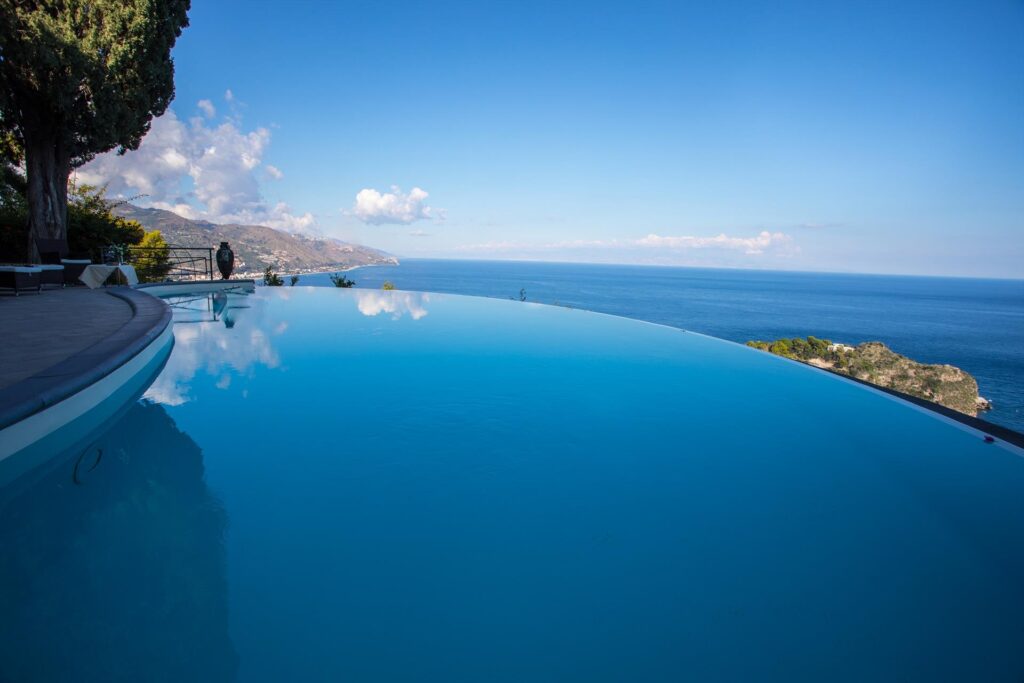
A road you would not have thought to take.

A connection that turns a visit into a story.
Sicily4u exists in that space, between what is visible and what is known.
Quietly, deliberately, and with a level of care that reveals itself not in promises, but in outcomes.
And for those who understand the difference, that is everything.