
The Valley of the Temples is one of the world’s most remarkable archaeological sites. Located in Agrigento, Sicily, this UNESCO World Heritage Site preserves some of the finest examples of ancient Greek architecture outside Greece.
The site formed part of the ancient city of Akragas, which Greek settlers founded around 580 BC. Over time, Akragas became one of the most prosperous cities in Magna Graecia. Its wealth allowed local craftsmen to build magnificent Doric temples that still dominate the landscape today.
Although people refer to it as a valley, the archaeological park stretches across a scenic ridge overlooking the Mediterranean countryside. Olive groves, almond trees, and rolling hills surround the ancient monuments. Together, they create one of Sicily’s most breathtaking historic landscapes.
Visitors can explore several impressive landmarks throughout the park. Highlights include the Temple of Concordia, the Temple of Juno, the Temple of Heracles, and the remains of the Temple of Olympian Zeus. The beautiful Garden of Kolymbethra also offers a peaceful escape among citrus trees and Mediterranean vegetation.
Every monument tells part of the story of Ancient Greece in Sicily. At the same time, the surrounding landscape reveals why this area has fascinated travellers for centuries. History, archaeology, nature, and spectacular views combine to create an unforgettable experience.
Whether you’re planning your first trip to Sicily or exploring Agrigento in greater depth, the Valley of the Temples deserves a place on your itinerary. This guide covers its history, most important monuments, practical visitor information, and essential travel tips to help you plan a memorable visit.
A Brief History of the Valley of the Temples
The story of the Valley of the Temples begins with the ancient Greek city of Akragas. Greek settlers founded the city around 580 BC after arriving from Gela, another Greek colony on Sicily’s southern coast.
Over the following decades, Akragas grew into one of the richest and most influential cities in Magna Graecia. Fertile farmland, successful trade, and a strategic location helped the city prosper. As wealth increased, local leaders commissioned magnificent temples that reflected both their power and their devotion to the Greek gods.
Many of the temples visitors admire today date from the 6th and 5th centuries BC. Skilled craftsmen built them from the region’s distinctive golden limestone. Their impressive scale and elegant Doric design continue to attract visitors from around the world.
The city’s golden age reached its peak under the ruler Theron, who governed Akragas from 488 to 472 BC. After the Greek victory at the Battle of Himera in 480 BC, the city experienced rapid growth. During this prosperous period, builders expanded several major temples, including the magnificent Temple of Concordia and the enormous Temple of Olympian Zeus.
Prosperity did not last forever. In 406 BC, Carthaginian forces attacked and captured Akragas after a lengthy siege. The invasion caused widespread destruction, and many residents fled the city. Although later rulers rebuilt parts of Akragas, it never regained the wealth and influence of its golden age.
Over the following centuries, earthquakes, changing civilizations, and the reuse of building materials damaged many ancient structures. Fortunately, the Temple of Concordia survived in remarkable condition because Bishop Gregory of Agrigento converted it into a Christian church during the 6th century AD.
Today, the archaeological park covers approximately 1,300 hectares (3,200 acres), making it one of Europe’s largest archaeological parks. Visitors can explore temples, ancient city walls, sanctuaries, necropolises, and residential areas while discovering more than 2,500 years of history.
In 1997, UNESCO recognised the Archaeological Area of Agrigento as a World Heritage Site. Today, the Valley of the Temples stands as one of Italy’s greatest cultural treasures and remains one of Sicily’s most visited attractions.
The Must-See Temples and Monuments
Temple of Concordia
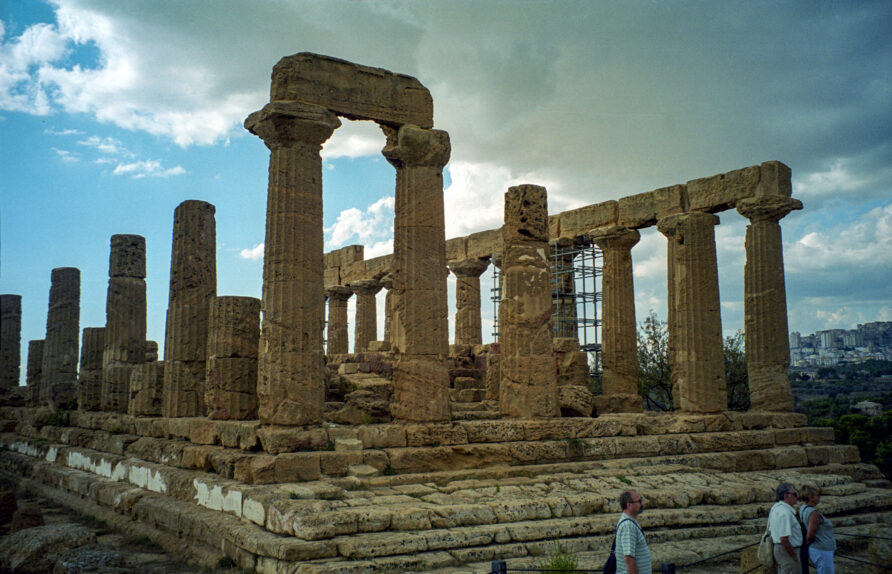
The Temple of Concordia stands as the undisputed highlight of the Valley of the Temples and ranks among the finest examples of ancient Greek architecture in the world. Greek builders constructed the temple between 440 and 430 BC, and its remarkable state of preservation makes it one of the best-preserved Doric temples outside Greece.
Although visitors know it today as the Temple of Concordia, historians believe the ancient Greeks dedicated it to a different deity. Archaeologists later adopted the current name after discovering an inscription nearby that mentioned “Concordia.” The temple’s original dedication, however, remains unknown.
Local craftsmen built the temple from the region’s distinctive golden sandstone using the traditional Doric style. The structure measures approximately 39.4 metres (129 feet) long and 16.9 metres (55 feet) wide. It features 34 fluted columns, with six at the front and rear and thirteen along each side. These balanced proportions demonstrate the precision and skill of ancient Greek architects.
The temple owes much of its exceptional preservation to an important change during the 6th century AD. Bishop Gregory of Agrigento converted the ancient temple into a Christian church, allowing later generations to preserve the structure instead of dismantling it for building materials, as happened to many other Greek temples.
As you explore the site, take time to admire the precision of the stonework and the subtle architectural refinements. Greek architects carefully adjusted the columns and horizontal lines to create the illusion of perfect symmetry when viewed from a distance. These techniques remain one of the defining features of Classical Greek architecture.
Many visitors choose to see the Temple of Concordia during the golden hour, shortly after sunrise or before sunset. At these times, warm Sicilian light illuminates the golden limestone and creates spectacular conditions for photography. After dark, carefully planned lighting highlights the temple and transforms it into one of Sicily’s most recognisable landmarks.
Today, the Temple of Concordia represents far more than an impressive ancient monument. It reflects the extraordinary craftsmanship, artistic vision, and engineering achievements of the ancient Greek world. Standing before its perfectly aligned columns, visitors can easily understand why the Valley of the Temples remains one of the Mediterranean’s greatest archaeological treasures.
Temple of Juno (Temple of Hera)
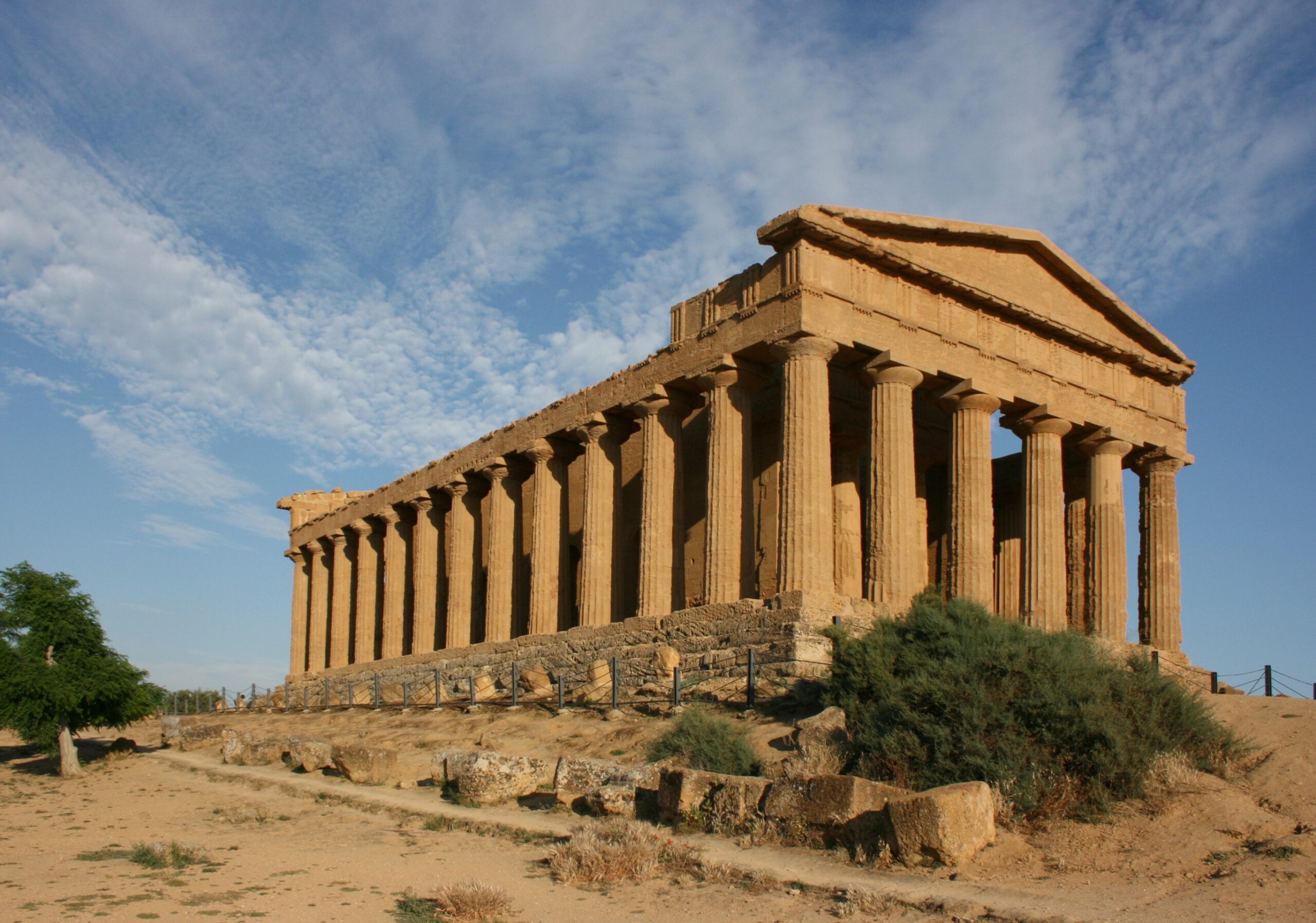
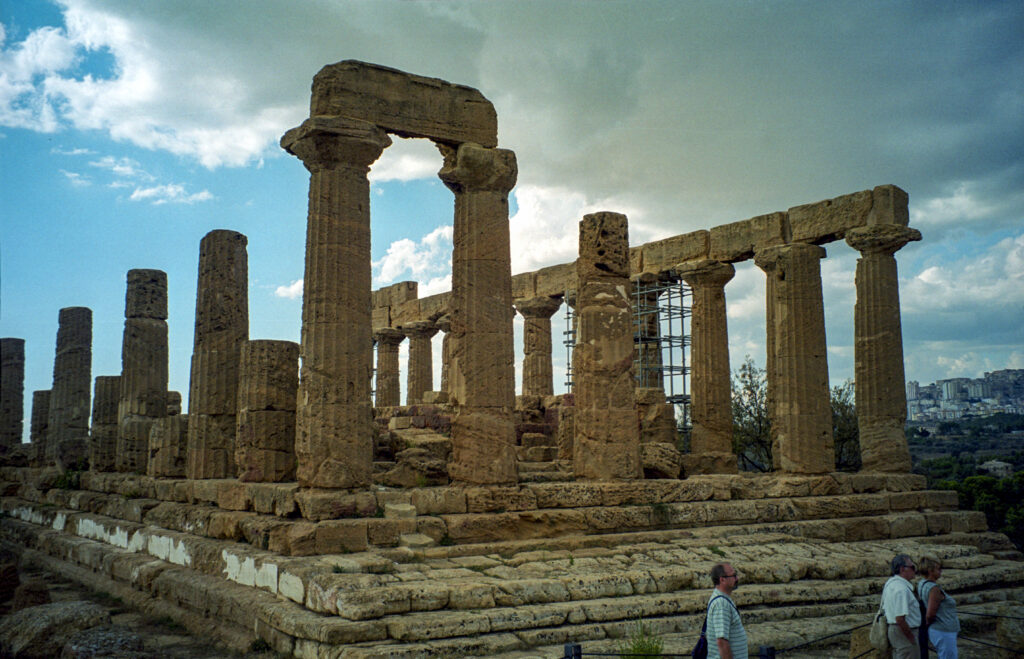
The Temple of Juno, also known as the Temple of Hera, stands at the eastern end of the Valley of the Temples. Its hilltop location offers some of the most spectacular views across the Sicilian countryside and the Mediterranean Sea. Builders completed the temple around 450 BC, making it one of the archaeological park’s most important monuments.
Although people traditionally associate the temple with Hera, the Greek goddess of marriage and family, archaeologists have found no definitive evidence that the ancient Greeks originally dedicated it to her. Historians gave the temple its modern name centuries after its construction, just as they did with several other monuments in the archaeological park.
The temple originally featured 34 Doric columns, many of which still stand today. These surviving columns allow visitors to admire the elegance, balance, and symmetry that define Classical Greek architecture. During the Carthaginian invasion of 406 BC, invading forces set fire to much of the structure. Today, visitors can still see traces of that destruction on parts of the original stone.
Today, the Temple of Juno is one of the most photographed landmarks in the archaeological park, particularly at sunrise and sunset when the golden limestone glows against the Sicilian landscape.
Temple of Heracles
The Temple of Heracles is widely considered the oldest temple within the Valley of the Temples. Archaeologists believe construction began around the end of the 6th century BC, making it one of the earliest monumental buildings erected after the founding of Ancient Akragas.
Dedicated to Heracles, one of the most celebrated heroes of Greek mythology, the temple played an important role in the religious life of the ancient city. Historical sources suggest that it housed a famous bronze statue of Heracles that attracted pilgrims from across the Greek world.
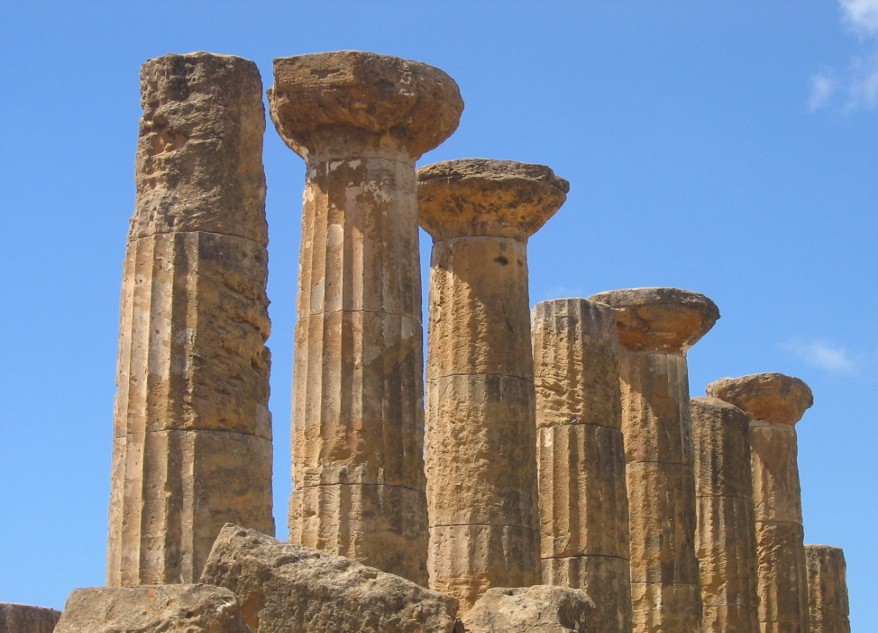
Originally consisting of 38 Doric columns, the temple suffered extensive damage from earthquakes over many centuries. During the twentieth century, archaeologists carefully re-erected eight columns, giving visitors a better understanding of its original appearance.
Although only part of the temple survives today, its impressive scale and historical importance make it one of the archaeological park’s essential highlights.
Temple of Olympian Zeus
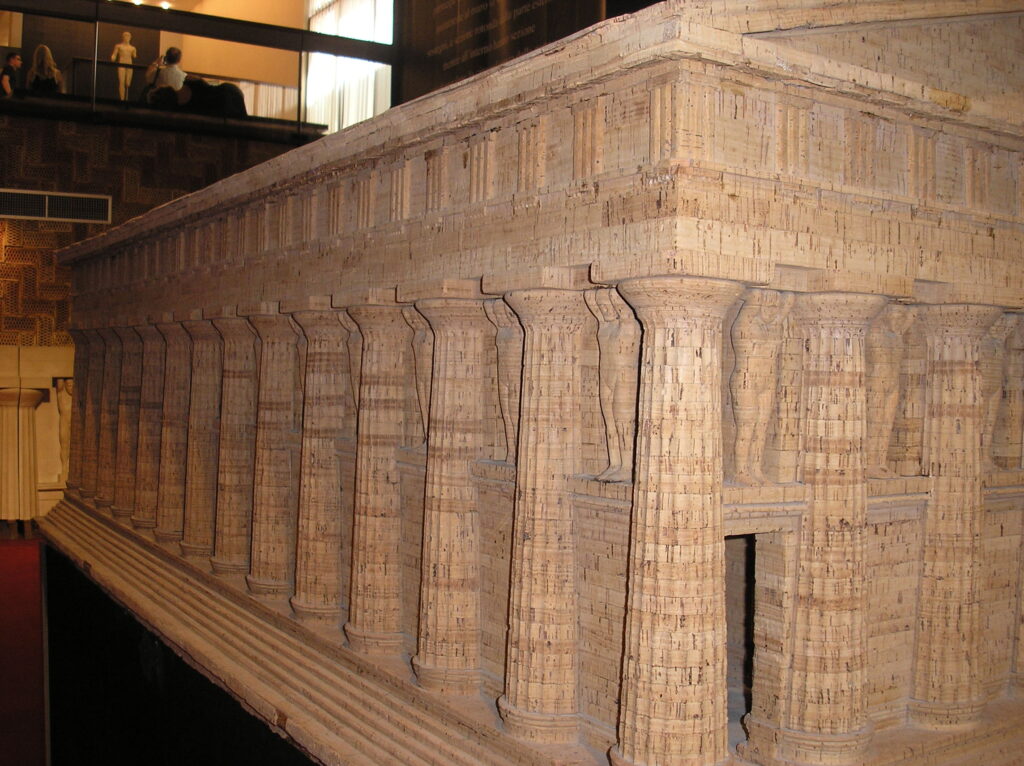
The Temple of Olympian Zeus, sometimes called the Temple of Jupiter Olympus, ranks among the largest Doric temples ever built in the ancient Greek world. Even in ruins, its enormous foundations reveal the scale and ambition of this remarkable monument.
Builders began construction shortly after the Greek victory over the Carthaginians at the Battle of Himera in 480 BC. At the time, Theron ruled Akragas, and the city enjoyed its greatest period of prosperity. Local leaders commissioned the temple to celebrate their military success and showcase the city’s growing wealth and influence.
Unlike most Greek temples, the Temple of Olympian Zeus featured enormous stone figures known as Telamons. These giant sculpted male figures stood about 7.5 metres (25 feet) tall and appeared to support sections of the building. Today, visitors can admire an original Telamon at the Regional Archaeological Museum Pietro Griffo. A full-size replica also rests within the archaeological park.
Builders never completed the temple, and later earthquakes caused extensive damage. Over the centuries, people also removed much of its stone for other construction projects. Despite these losses, the remaining foundations still demonstrate the extraordinary scale of one of the ancient world’s most ambitious architectural achievements.
Temple of Castor and Pollux
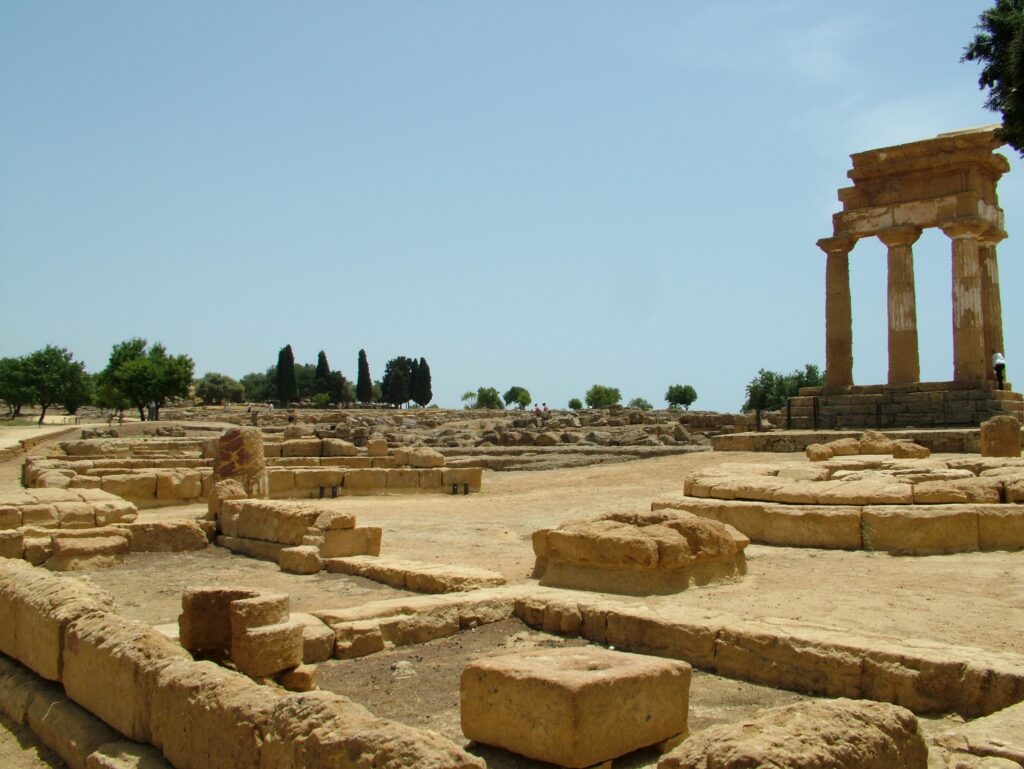
Although only four columns remain today, the Temple of Castor and Pollux has become one of Agrigento’s most recognisable landmarks. Visitors regularly photograph its elegant silhouette, and tourism campaigns.
Builders constructed the temple during the 5th century BC.This was part of a larger sacred sanctuary where the ancient Greeks held important religious ceremonies.
During archaeological excavations in the 19th century, experts reconstructed the famous four-column corner. They did this by using original architectural elements recovered from the site. Today, this striking reconstruction stands as one of the archaeological park’s most photographed monuments.
Its graceful silhouette against the Sicilian sky has made it one of the Valley of the Temples’ most iconic landmarks and a favourite stop for photographers exploring the park.
Sanctuary of the Chthonic Deities
Located near the Temple of Castor and Pollux, the Sanctuary of the Chthonic Deities is one of the oldest sacred areas within Ancient Akragas.
Before the construction of the city’s monumental temples, this sanctuary played a central role in the religious life of Ancient Akragas. Here, people worshipped deities associated with the earth, fertility, and the underworld.
Archaeologists have uncovered the remains of numerous altars, shrines, and ritual spaces that provide valuable insight into the spiritual life of the city’s earliest inhabitants.
Although less visually imposing than the larger temples, the sanctuary offers a fascinating glimpse into the evolution of Greek religious practices in Sicily.
The Garden of Kolymbethra
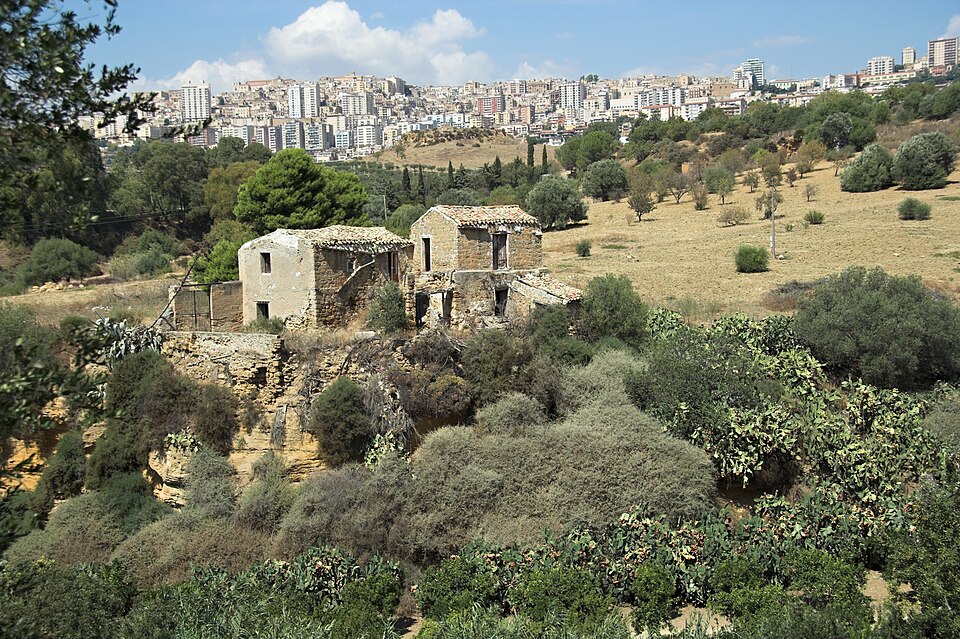
Hidden within the heart of the archaeological park lies the enchanting Garden of Kolymbethra, a peaceful oasis managed by the Italian Environment Fund (FAI).
Originally created more than 2,500 years ago as a vast water reservoir supplying Ancient Akragas, the area has evolved into a flourishing Mediterranean garden filled with citrus orchards, olive trees, almond trees, fragrant herbs, and traditional Sicilian vegetation.
Today, shaded walking paths wind through the garden, providing a refreshing contrast to the sunlit archaeological ruins above. Along the way, visitors can discover ancient irrigation systems, historic dry-stone walls, caves, and spectacular viewpoints overlooking the temples.
For many travellers, the Garden of Kolymbethra offers one of the most relaxing and picturesque experiences within the Valley of the Temples, combining archaeology, nature, and Sicily’s rich agricultural heritage in one unforgettable setting.
Planning Your Visit
The Valley of the Temples is one of Sicily’s most rewarding attractions and deserves at least three to four hours to explore comfortably. The archaeological park is extensive, with gently sloping paths connecting the major monuments, so comfortable walking shoes are highly recommended.
The best times to visit are early in the morning or late in the afternoon, particularly during the warmer months when temperatures can be high. Visiting during these quieter hours also offers softer light, making it an excellent time for photography. Spring and autumn are generally considered the most pleasant seasons, thanks to their mild weather and fewer crowds.
Be sure to bring water, sunscreen, a hat, and a camera, as there is limited shade throughout much of the archaeological area.
Tickets & Essential Visitor Information
Before travelling, it’s always advisable to check the official Valley of the Temples website. There you will find for the latest opening hours, admission prices, guided tours, and any temporary exhibitions or special events.
At the archaeological park you’ll find visitor facilities including parking areas, restrooms, cafés, gift shops, and information points. Audio guides and guided tours are also available. This is excellent for those wishing to gain a deeper understanding of the site’s fascinating history.
Ticket prices may vary depending on the season and special events. We suggest checking the official website before your visit is highly recommended.
Things to See Near the Valley of the Temples
Your visit to Agrigento doesn’t have to end at the archaeological park. Just a short distance away you’ll find the charming historic centre of Agrigento. Narrow streets, medieval churches, lively piazzas, and traditional Sicilian restaurants showcase another side of the city’s rich heritage.
History enthusiasts should also consider visiting the Regional Archaeological Museum Pietro Griffo. It is home to one of Sicily’s most important collections of Greek artefacts. Some of them including the famous Telamon from the Temple of Olympian Zeus.
If you’re looking to combine history with the coast, the spectacular white limestone cliffs of Scala dei Turchi are only a short drive away and are among Sicily’s most photographed natural landmarks.
Frequently Asked Questions
How long does it take to visit the Valley of the Temples?
Most visitors spend between three and four hours exploring the archaeological park, although history enthusiasts may wish to allow additional time.
Is the site suitable for families?
Yes. The park is family-friendly, although younger children may find parts of the walk challenging during the hottest summer months.
When is the best time to visit?
Spring and autumn generally offer the most comfortable temperatures. During summer, early morning or late afternoon visits are recommended.
Are guided tours available?
Yes. Visitors can choose from guided tours or audio guides to better understand the history and significance of the archaeological site.