Sicily Travel Update 2026: What Is Happening Right Now?

Sicily Travel Update 2026: Mount Etna, Catania Airport & What Tourists Need to Know

Last updated: 19 August 2026

If you are travelling to Sicily this year, recent headlines about Mount Etna may have raised some questions. Our Sicily travel update 2026 explains what visitors need to know before arriving.

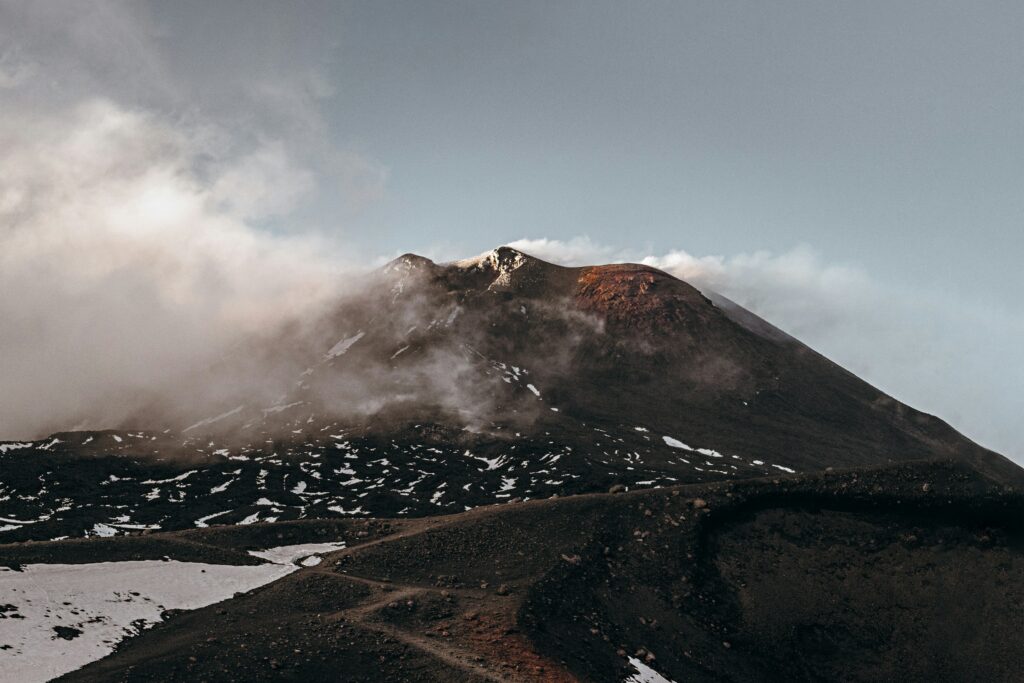
Mount Etna has experienced significant volcanic activity during August. As a result, volcanic ash has caused closures, cancellations and diversions at Catania Fontanarossa Airport.

The disruption has been significant. However, this does not mean that Sicily itself is closed to visitors.

Flights at Catania resumed on 15 August after the volcanic aviation alert was lowered from red to orange. However, flight operations remain subject to change, and further restrictions may be introduced at short notice if volcanic ash affects the airport or surrounding airspace.

For travellers, preparation is more important than panic.

Before leaving for the airport, check your flight directly with your airline. Keep your accommodation details available and understand your alternative airport options.

Most importantly, don’t assume that activity at Mount Etna means your entire Sicily holiday must be cancelled.

Here’s what is happening and how you can prepare.

Is It Safe to Travel to Sicily Right Now?

For most visitors, the current situation is primarily a transport issue rather than an island-wide tourism shutdown.

Mount Etna sits on Sicily’s eastern side, near Catania. Therefore, volcanic ash can have a significant impact on aviation around Catania.

Other parts of Sicily can experience very different conditions.

Visitors staying around Palermo, Cefalù, Trapani or western Sicily may see little direct effect from Etna’s activity. Nevertheless, transport disruption can spread when flights are diverted to other airports.

The important distinction is between volcanic activity and aviation disruption.

Etna is one of the world’s most active volcanoes. Its activity does not automatically mean that Sicily becomes unsafe for tourists.

Visitors should follow official instructions around the volcano and avoid restricted areas.

Mount Etna Eruption 2026: What Tourists Should Know

Mount Etna’s latest eruptive phase began in early August. The volcano produced sustained ash emissions alongside explosive and effusive activity.

The persistence of the ash has created particular problems for aviation.

Volcanic ash can damage aircraft engines and reduce visibility. Therefore, aviation authorities may restrict airspace even when conditions appear normal from the ground.

This explains why a beautiful sunny day in Catania can still coincide with flight delays.

Conditions can also change quickly.

Wind direction plays an important role because it determines where the volcanic ash travels. During the August activity, ash travelled well beyond eastern Sicily.

For visitors, this means yesterday’s airport information may not apply today.
Catania Airport Update: Are Flights Operating?

Catania Fontanarossa Airport is currently open and operating, following the resumption of flights on 15 August after Etna’s aviation alert was lowered from red to orange.

However, passengers should not assume that every scheduled flight will operate normally. Mount Etna remains active, and flight operations can still be affected at short notice if volcanic ash reaches the airport or surrounding airspace.

Therefore, always check your individual flight.

The official Catania Airport website provides live arrival and departure information. Your airline should remain your primary source for changes to your booking.

Avoid travelling to the airport simply because your original departure time still appears on an old confirmation email.

Check again before leaving your accommodation.

Why Does Mount Etna Affect Catania Airport?

Catania Fontanarossa is located close to Mount Etna.

That location makes Catania extremely convenient for eastern Sicily. However, it also leaves the airport vulnerable when volcanic ash moves towards its airspace.

Ash presents a serious aviation hazard.

Consequently, authorities may reduce arrivals, close sections of airspace or temporarily suspend operations.

These decisions can sometimes appear sudden. In reality, they are safety measures based on changing volcanic and atmospheric conditions.

What Happens If Your Catania Flight Is Cancelled?

First, contact your airline before making expensive alternative arrangements yourself.

Depending on your circumstances, the airline may offer another flight, rerouting or a refund.

EU passenger protection rules continue to provide important rights when flights are cancelled.

However, volcanic eruptions and volcanic ash generally fall under extraordinary circumstances. Therefore, standard cash compensation may not apply.

That does not necessarily remove your rights to assistance.

Passengers affected by cancellations can still have rights concerning rerouting, reimbursement and care.

Keep every receipt if you need to purchase essential meals, accommodation or transport.

Also keep screenshots of cancellation notices and airline communications.

These records can become important when requesting reimbursement later.

Should You Fly Into Palermo Instead?

Palermo can provide an excellent alternative, particularly for travellers staying in northern or western Sicily.

During the recent disruption, Palermo Airport absorbed a large number of flights diverted from Catania.

However, don’t automatically change your flight without considering your final destination.

Palermo is particularly convenient for:

  • Palermo
  • Cefalù
  • Scopello
  • Castellammare del Golfo
  • San Vito Lo Capo
  • Trapani
  • Marsala
  • Western and northwestern Sicily

Catania usually remains more convenient for:

  • Taormina
  • Mount Etna
  • Catania
  • Syracuse
  • Ortigia
  • Noto
  • Southeastern Sicily

If your airline offers Palermo as an alternative, calculate the onward journey before accepting the change.

Is Palermo Airport Affected by Mount Etna?

Palermo Airport is much farther from Mount Etna than Catania.

During the major August disruption, Palermo became an important alternative for diverted flights.

However, increased traffic can create secondary problems.

More passengers may mean greater demand for rental cars, taxis and onward transport. Therefore, travellers diverted to Palermo should organise ground transportation quickly.

If your flight changes airport, contact your villa company or accommodation provider as soon as possible.

A changed arrival airport can also affect your planned transfer or car rental.

What About Comiso and Trapani Airports?

Sicily has more airport options than many first-time visitors realise.

Comiso Airport can provide an alternative for southeastern Sicily. Trapani Airport can work particularly well for western destinations.

However, Comiso has also experienced temporary disruption during the recent Etna activity.

Therefore, don’t assume another Sicilian airport will always remain unaffected.

Check the airport and airline information before changing your plans.

Can You Still Visit Mount Etna?

Seeing an active volcano can be extraordinary. However, increased activity is not an invitation to approach restricted areas independently.

Conditions on Etna can change rapidly.

Access restrictions may change according to volcanic activity, weather and civil protection instructions.

If you plan to visit, use an authorised guide and follow current official restrictions.

Never cross barriers or enter closed areas simply to get a better photograph.

An eruption may look spectacular from a distance. The conditions closer to active areas can be very different.

What Should You Do If Volcanic Ash Falls During Your Holiday?

Light volcanic ash can occasionally reach towns around Etna.

If ash is falling, avoid unnecessary exposure and follow instructions from local authorities.

Keep windows closed when necessary. Protect your eyes if conditions become dusty.

Drivers should also take additional care.

Ash can reduce visibility and make roads slippery. It can also affect vehicles.

If you have a rental car, follow instructions from the rental company regarding ash contamination or cleaning.

Travelling Between Palermo and Catania

When Catania Airport experiences disruption, travelling across Sicily becomes an important backup option.

Rail services connect Palermo, Messina and Catania. Coaches and private transfers provide additional alternatives.

During the recent airport disruption, additional trains were introduced to help passengers move across the island.

Travellers should also be aware that planned infrastructure works are currently affecting part of the Palermo–Catania railway route. Services may therefore be modified or replaced by buses on some sections, and journey times may be longer than usual. Check the latest Trenitalia information before travelling.

However, Sicily is larger than many visitors expect.

A diversion to Palermo does not mean Catania is just a short taxi ride away.

Allow several hours for cross-island travel and confirm your route before booking an alternative flight.

Don’t Forget Your Rental Car

Flight disruption can create another problem that travellers sometimes overlook.

Your rental car reservation may be tied to a specific airport and arrival time.

If your flight moves from Catania to Palermo, contact the rental company immediately.

Don’t assume the same booking will automatically transfer between airport branches.

During major disruption, demand for vehicles can also increase quickly.

The same applies to private airport transfers.

Tell your driver or villa representative about any changes as soon as your airline confirms them.

Should You Cancel Your Sicily Holiday?

For most travellers, an Etna-related flight disruption alone is not a reason to cancel an entire Sicily holiday.

Instead, consider where you are staying and which airport you are using.

Someone flying into Palermo for a holiday in Cefalù faces a very different situation from someone flying into Catania.

Travellers heading towards Taormina, Etna or southeastern Sicily should monitor Catania Airport more closely.

Flexibility is particularly valuable during periods of increased volcanic activity.

Where possible, avoid tightly connecting your arrival with expensive activities or events on the same day.

Give yourself some breathing room.

What Should You Check Before Flying to Sicily?

A few minutes of preparation can prevent hours of unnecessary stress.

Before travelling:

  • Check your flight directly with your airline.
  • Check your departure and arrival airports.
  • Monitor Catania Airport if travelling through CTA.
  • Keep your villa or accommodation contact details available.
  • Confirm your airport transfer.
  • Check your rental car reservation.
  • Save your airline booking details offline.
  • Keep essential medication in your hand luggage.
  • Consider appropriate travel insurance.
  • Keep receipts if disruption creates additional essential expenses.

Most importantly, don’t rely solely on social media for airport information.

Conditions around Etna can change quickly.

Sicily Travel Advice for Families

Families should allow additional flexibility when travelling through Catania during periods of volcanic activity.

Keep snacks, water and children’s essentials easily accessible.

Medication should remain in hand luggage rather than checked baggage.

If travelling with a baby, keep enough supplies for a longer journey than originally planned.

Families staying in private accommodation should also keep their host’s contact details available.

A good local contact can become extremely useful when arrival plans change unexpectedly.

Sicily Travel Advice for Villa Guests

Guests staying in private villas have one significant advantage during unexpected travel disruption: local support.

If your flight is delayed, cancelled or diverted, contact your villa company as soon as possible.

Your original check-in time may need to change.

Airport transfers, car collection and keyholder arrangements may also need adjusting.

Early communication gives everyone more time to find a solution.

At Sicily4U, we always recommend keeping your booking information and local contacts accessible throughout your journey.

Is Sicily Still Worth Visiting in 2026?

Absolutely.

Mount Etna is part of Sicily’s extraordinary natural landscape. Its presence has shaped the island’s geography, agriculture and identity for thousands of years.

However, travelling near one of Europe’s most active volcanoes occasionally requires flexibility.

The recent disruption at Catania Airport has understandably frustrated thousands of travellers.

Yet Catania represents one gateway to a very large island.

Palermo, Trapani and Comiso provide additional options. Ferries, trains, coaches and road connections can also help travellers adapt.

The key is staying informed.

Planning Your Sicily Holiday With Confidence

Headlines about volcanic eruptions can sound alarming, particularly when you’re thousands of kilometres away planning a holiday.

The reality on the ground can be much more localised.

Sicily remains one of Europe’s most extraordinary destinations. Its beaches, historic towns, archaeological sites, countryside and villages continue to welcome visitors.

If you’re travelling through Catania, monitor your flight closely and prepare an alternative plan.

If you’re arriving elsewhere, remain informed without allowing dramatic headlines to define your entire holiday.

Travel has always required a little flexibility. Sicily in 2026 is no different.

At Sicily4U, our local knowledge helps guests understand not only where to stay, but how to experience Sicily with confidence.

Plan carefully, stay informed and then enjoy the island.

Sicily is still waiting for you.
The Valley of the Temples: The Complete Visitor’s Guide to Agrigento’s Ancient Greek Wonders

The Valley of the Temples is one of the world’s most remarkable archaeological sites. Located in Agrigento, Sicily, this UNESCO World Heritage Site preserves some of the finest examples of ancient Greek architecture outside Greece.

The site formed part of the ancient city of Akragas, which Greek settlers founded around 580 BC. Over time, Akragas became one of the most prosperous cities in Magna Graecia. Its wealth allowed local craftsmen to build magnificent Doric temples that still dominate the landscape today.

Although people refer to it as a valley, the archaeological park stretches across a scenic ridge overlooking the Mediterranean countryside. Olive groves, almond trees, and rolling hills surround the ancient monuments. Together, they create one of Sicily’s most breathtaking historic landscapes.

Visitors can explore several impressive landmarks throughout the park. Highlights include the Temple of Concordia, the Temple of Juno, the Temple of Heracles, and the remains of the Temple of Olympian Zeus. The beautiful Garden of Kolymbethra also offers a peaceful escape among citrus trees and Mediterranean vegetation.

Every monument tells part of the story of Ancient Greece in Sicily. At the same time, the surrounding landscape reveals why this area has fascinated travellers for centuries. History, archaeology, nature, and spectacular views combine to create an unforgettable experience.

Whether you’re planning your first trip to Sicily or exploring Agrigento in greater depth, the Valley of the Temples deserves a place on your itinerary. This guide covers its history, most important monuments, practical visitor information, and essential travel tips to help you plan a memorable visit.

A Brief History of the Valley of the Temples

The story of the Valley of the Temples begins with the ancient Greek city of Akragas. Greek settlers founded the city around 580 BC after arriving from Gela, another Greek colony on Sicily’s southern coast.

Over the following decades, Akragas grew into one of the richest and most influential cities in Magna Graecia. Fertile farmland, successful trade, and a strategic location helped the city prosper. As wealth increased, local leaders commissioned magnificent temples that reflected both their power and their devotion to the Greek gods.

Many of the temples visitors admire today date from the 6th and 5th centuries BC. Skilled craftsmen built them from the region’s distinctive golden limestone. Their impressive scale and elegant Doric design continue to attract visitors from around the world.

The city’s golden age reached its peak under the ruler Theron, who governed Akragas from 488 to 472 BC. After the Greek victory at the Battle of Himera in 480 BC, the city experienced rapid growth. During this prosperous period, builders expanded several major temples, including the magnificent Temple of Concordia and the enormous Temple of Olympian Zeus.

Prosperity did not last forever. In 406 BC, Carthaginian forces attacked and captured Akragas after a lengthy siege. The invasion caused widespread destruction, and many residents fled the city. Although later rulers rebuilt parts of Akragas, it never regained the wealth and influence of its golden age.

Over the following centuries, earthquakes, changing civilizations, and the reuse of building materials damaged many ancient structures. Fortunately, the Temple of Concordia survived in remarkable condition because Bishop Gregory of Agrigento converted it into a Christian church during the 6th century AD.

Today, the archaeological park covers approximately 1,300 hectares (3,200 acres), making it one of Europe’s largest archaeological parks. Visitors can explore temples, ancient city walls, sanctuaries, necropolises, and residential areas while discovering more than 2,500 years of history.

In 1997, UNESCO recognised the Archaeological Area of Agrigento as a World Heritage Site. Today, the Valley of the Temples stands as one of Italy’s greatest cultural treasures and remains one of Sicily’s most visited attractions.

The Must-See Temples and Monuments

Temple of Concordia

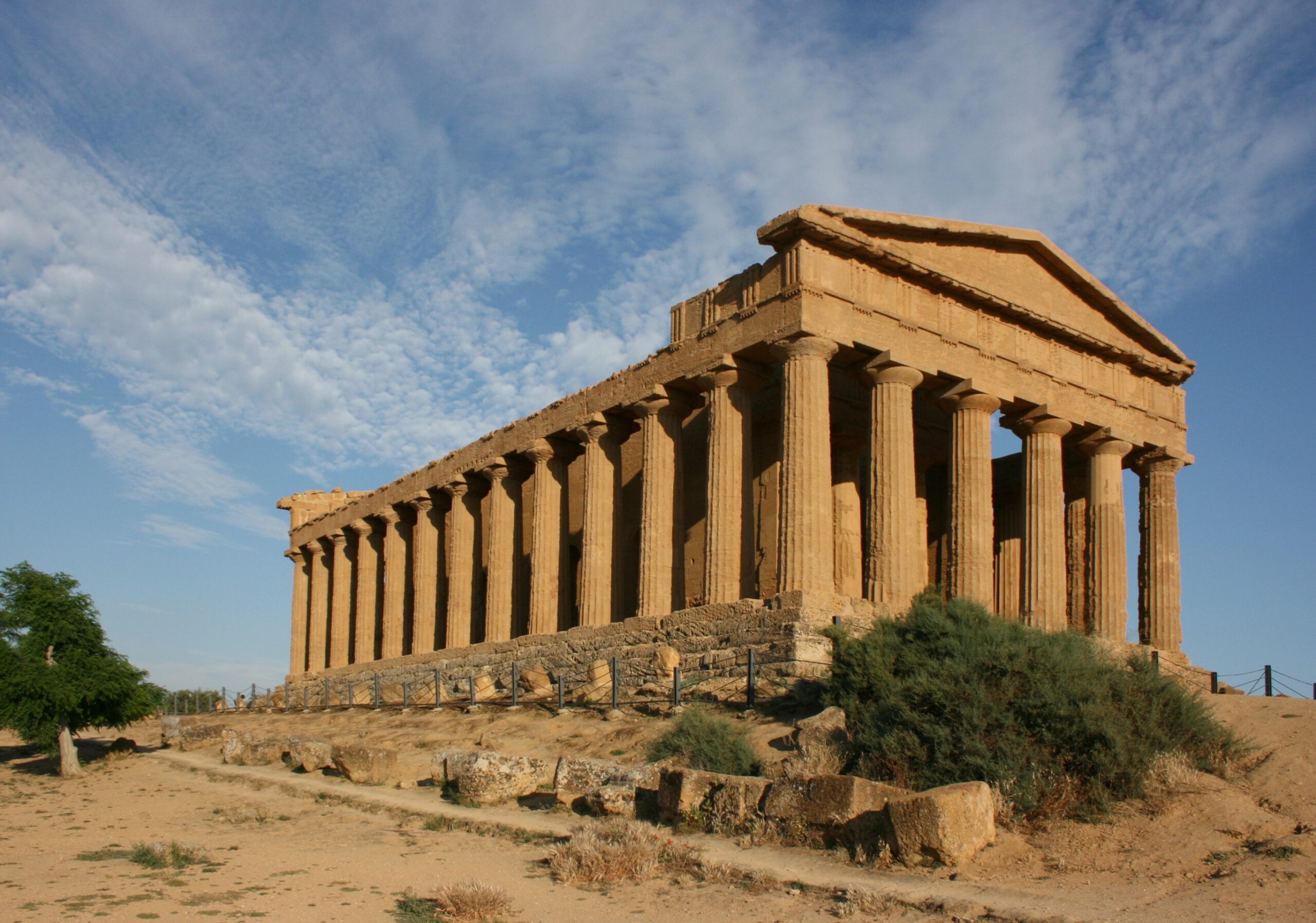
The Temple of Concordia stands as the undisputed highlight of the Valley of the Temples and ranks among the finest examples of ancient Greek architecture in the world. Greek builders constructed the temple between 440 and 430 BC, and its remarkable state of preservation makes it one of the best-preserved Doric temples outside Greece.

Although visitors know it today as the Temple of Concordia, historians believe the ancient Greeks dedicated it to a different deity. Archaeologists later adopted the current name after discovering an inscription nearby that mentioned “Concordia.” The temple’s original dedication, however, remains unknown.

Local craftsmen built the temple from the region’s distinctive golden sandstone using the traditional Doric style. The structure measures approximately 39.4 metres (129 feet) long and 16.9 metres (55 feet) wide. It features 34 fluted columns, with six at the front and rear and thirteen along each side. These balanced proportions demonstrate the precision and skill of ancient Greek architects.

The temple owes much of its exceptional preservation to an important change during the 6th century AD. Bishop Gregory of Agrigento converted the ancient temple into a Christian church, allowing later generations to preserve the structure instead of dismantling it for building materials, as happened to many other Greek temples.

As you explore the site, take time to admire the precision of the stonework and the subtle architectural refinements. Greek architects carefully adjusted the columns and horizontal lines to create the illusion of perfect symmetry when viewed from a distance. These techniques remain one of the defining features of Classical Greek architecture.

Many visitors choose to see the Temple of Concordia during the golden hour, shortly after sunrise or before sunset. At these times, warm Sicilian light illuminates the golden limestone and creates spectacular conditions for photography. After dark, carefully planned lighting highlights the temple and transforms it into one of Sicily’s most recognisable landmarks.

Today, the Temple of Concordia represents far more than an impressive ancient monument. It reflects the extraordinary craftsmanship, artistic vision, and engineering achievements of the ancient Greek world. Standing before its perfectly aligned columns, visitors can easily understand why the Valley of the Temples remains one of the Mediterranean’s greatest archaeological treasures.

Temple of Juno (Temple of Hera)

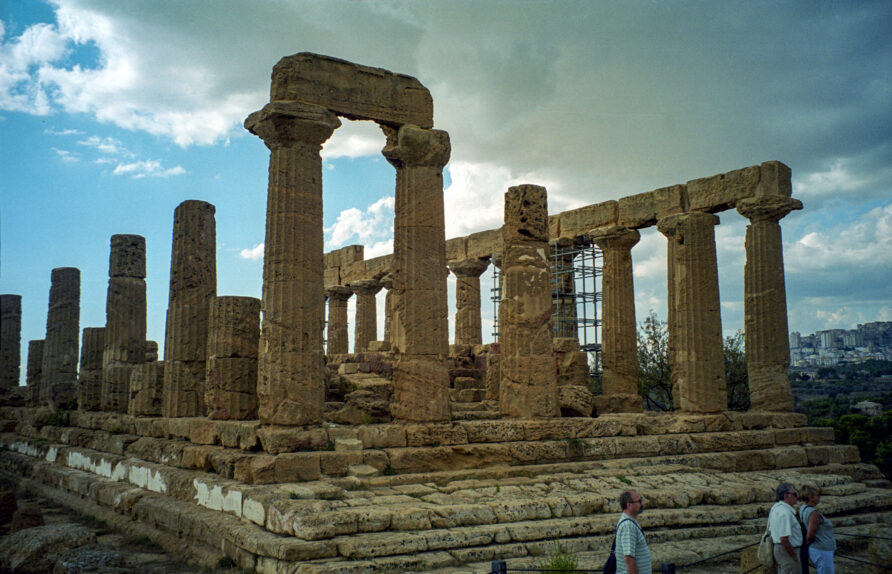
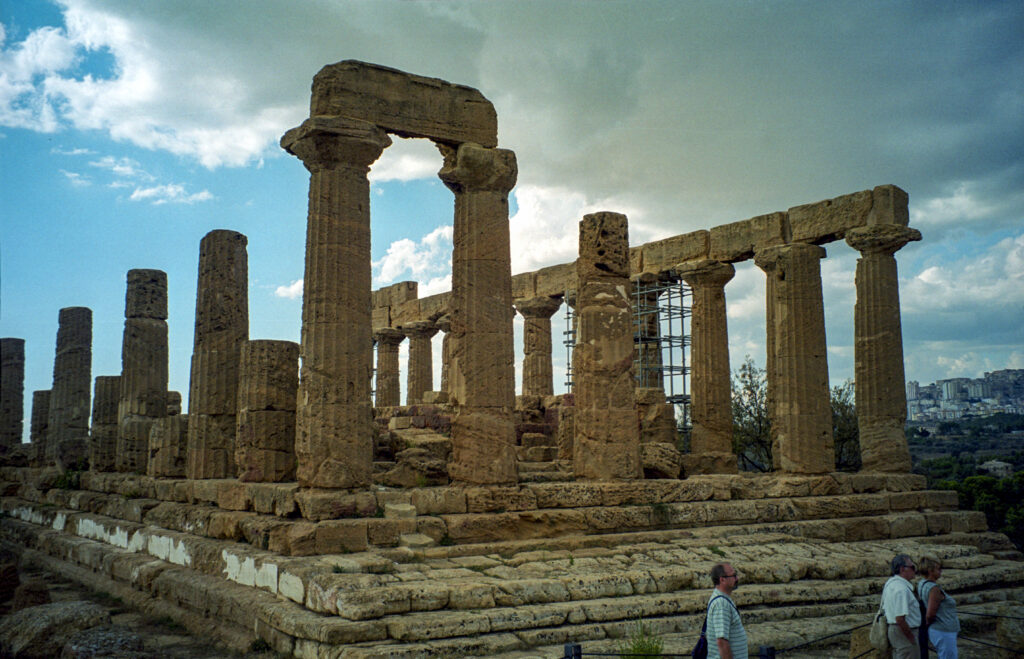
The Temple of Juno, also known as the Temple of Hera, stands at the eastern end of the Valley of the Temples. Its hilltop location offers some of the most spectacular views across the Sicilian countryside and the Mediterranean Sea. Builders completed the temple around 450 BC, making it one of the archaeological park’s most important monuments.

Although people traditionally associate the temple with Hera, the Greek goddess of marriage and family, archaeologists have found no definitive evidence that the ancient Greeks originally dedicated it to her. Historians gave the temple its modern name centuries after its construction, just as they did with several other monuments in the archaeological park.

The temple originally featured 34 Doric columns, many of which still stand today. These surviving columns allow visitors to admire the elegance, balance, and symmetry that define Classical Greek architecture. During the Carthaginian invasion of 406 BC, invading forces set fire to much of the structure. Today, visitors can still see traces of that destruction on parts of the original stone.

Today, the Temple of Juno is one of the most photographed landmarks in the archaeological park, particularly at sunrise and sunset when the golden limestone glows against the Sicilian landscape.

Temple of Heracles

The Temple of Heracles is widely considered the oldest temple within the Valley of the Temples. Archaeologists believe construction began around the end of the 6th century BC, making it one of the earliest monumental buildings erected after the founding of Ancient Akragas.

Dedicated to Heracles, one of the most celebrated heroes of Greek mythology, the temple played an important role in the religious life of the ancient city. Historical sources suggest that it housed a famous bronze statue of Heracles that attracted pilgrims from across the Greek world.

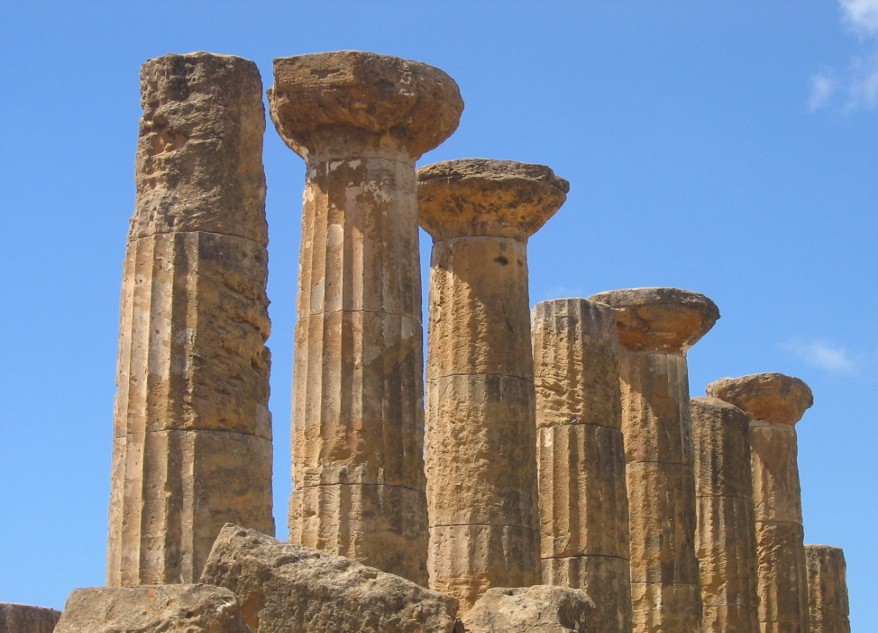
Originally consisting of 38 Doric columns, the temple suffered extensive damage from earthquakes over many centuries. During the twentieth century, archaeologists carefully re-erected eight columns, giving visitors a better understanding of its original appearance.

Although only part of the temple survives today, its impressive scale and historical importance make it one of the archaeological park’s essential highlights.

Temple of Olympian Zeus

The Temple of Olympian Zeus, sometimes called the Temple of Jupiter Olympus, ranks among the largest Doric temples ever built in the ancient Greek world. Even in ruins, its enormous foundations reveal the scale and ambition of this remarkable monument.

Builders began construction shortly after the Greek victory over the Carthaginians at the Battle of Himera in 480 BC. At the time, Theron ruled Akragas, and the city enjoyed its greatest period of prosperity. Local leaders commissioned the temple to celebrate their military success and showcase the city’s growing wealth and influence.

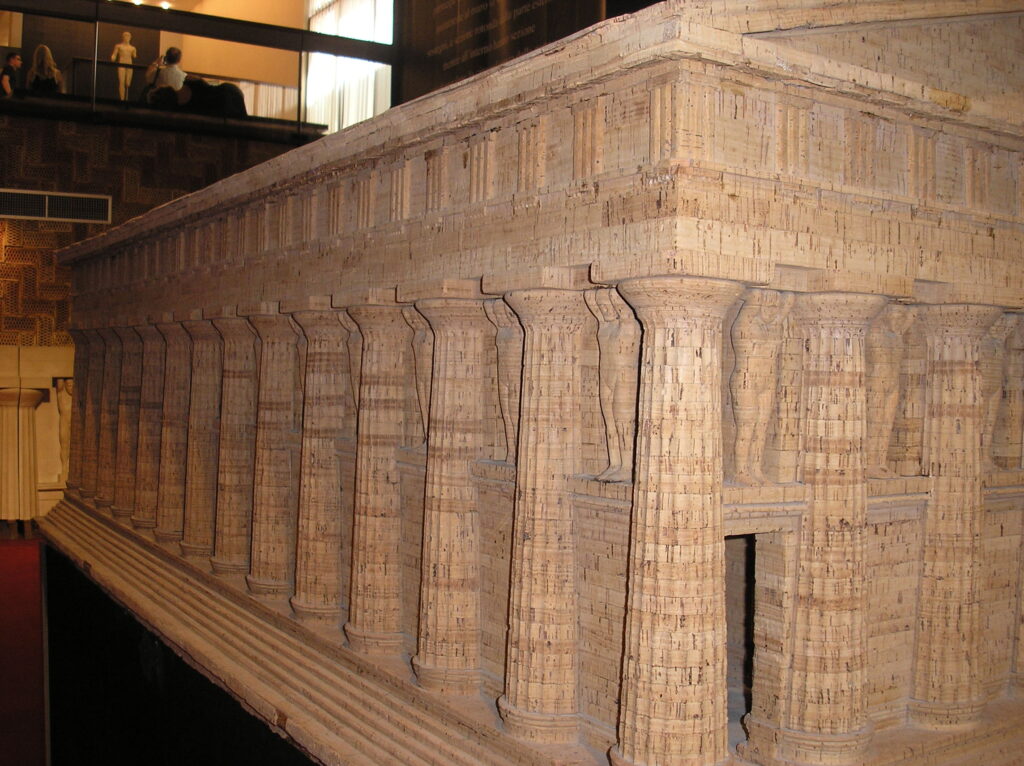
Unlike most Greek temples, the Temple of Olympian Zeus featured enormous stone figures known as Telamons. These giant sculpted male figures stood about 7.5 metres (25 feet) tall and appeared to support sections of the building. Today, visitors can admire an original Telamon at the Regional Archaeological Museum Pietro Griffo. A full-size replica also rests within the archaeological park.

Builders never completed the temple, and later earthquakes caused extensive damage. Over the centuries, people also removed much of its stone for other construction projects. Despite these losses, the remaining foundations still demonstrate the extraordinary scale of one of the ancient world’s most ambitious architectural achievements.

OLYMPUS DIGITAL CAMERA

Temple of Castor and Pollux

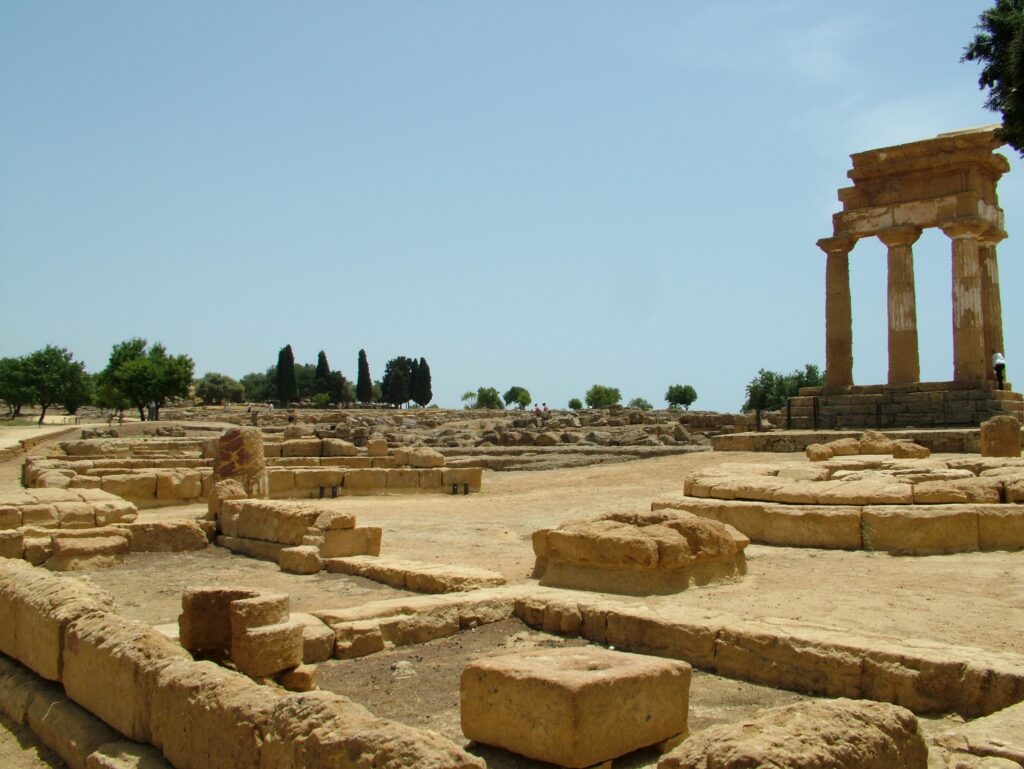
Although only four columns remain today, the Temple of Castor and Pollux has become one of Agrigento’s most recognisable landmarks. Visitors regularly photograph its elegant silhouette, and tourism campaigns.

Builders constructed the temple during the 5th century BC.This was part of a larger sacred sanctuary where the ancient Greeks held important religious ceremonies.

During archaeological excavations in the 19th century, experts reconstructed the famous four-column corner. They did this by using original architectural elements recovered from the site. Today, this striking reconstruction stands as one of the archaeological park’s most photographed monuments.

Its graceful silhouette against the Sicilian sky has made it one of the Valley of the Temples’ most iconic landmarks and a favourite stop for photographers exploring the park.

Sanctuary of the Chthonic Deities

Located near the Temple of Castor and Pollux, the Sanctuary of the Chthonic Deities is one of the oldest sacred areas within Ancient Akragas.

Before the construction of the city’s monumental temples, this sanctuary played a central role in the religious life of Ancient Akragas. Here, people worshipped deities associated with the earth, fertility, and the underworld.

Archaeologists have uncovered the remains of numerous altars, shrines, and ritual spaces that provide valuable insight into the spiritual life of the city’s earliest inhabitants.

Although less visually imposing than the larger temples, the sanctuary offers a fascinating glimpse into the evolution of Greek religious practices in Sicily.

The Garden of Kolymbethra

Hidden within the heart of the archaeological park lies the enchanting Garden of Kolymbethra, a peaceful oasis managed by the Italian Environment Fund (FAI).

Originally created more than 2,500 years ago as a vast water reservoir supplying Ancient Akragas, the area has evolved into a flourishing Mediterranean garden filled with citrus orchards, olive trees, almond trees, fragrant herbs, and traditional Sicilian vegetation.

Today, shaded walking paths wind through the garden, providing a refreshing contrast to the sunlit archaeological ruins above. Along the way, visitors can discover ancient irrigation systems, historic dry-stone walls, caves, and spectacular viewpoints overlooking the temples.

For many travellers, the Garden of Kolymbethra offers one of the most relaxing and picturesque experiences within the Valley of the Temples, combining archaeology, nature, and Sicily’s rich agricultural heritage in one unforgettable setting.


Planning Your Visit

The Valley of the Temples is one of Sicily’s most rewarding attractions and deserves at least three to four hours to explore comfortably. The archaeological park is extensive, with gently sloping paths connecting the major monuments, so comfortable walking shoes are highly recommended.

The best times to visit are early in the morning or late in the afternoon, particularly during the warmer months when temperatures can be high. Visiting during these quieter hours also offers softer light, making it an excellent time for photography. Spring and autumn are generally considered the most pleasant seasons, thanks to their mild weather and fewer crowds.

Be sure to bring water, sunscreen, a hat, and a camera, as there is limited shade throughout much of the archaeological area.

Tickets & Essential Visitor Information

Before travelling, it’s always advisable to check the official Valley of the Temples website. There you will find for the latest opening hours, admission prices, guided tours, and any temporary exhibitions or special events.

At the archaeological park you’ll find visitor facilities including parking areas, restrooms, cafés, gift shops, and information points. Audio guides and guided tours are also available. This is excellent for those wishing to gain a deeper understanding of the site’s fascinating history.

Ticket prices may vary depending on the season and special events. We suggest checking the official website before your visit is highly recommended.

Things to See Near the Valley of the Temples

Your visit to Agrigento doesn’t have to end at the archaeological park. Just a short distance away you’ll find the charming historic centre of Agrigento. Narrow streets, medieval churches, lively piazzas, and traditional Sicilian restaurants showcase another side of the city’s rich heritage.

History enthusiasts should also consider visiting the Regional Archaeological Museum Pietro Griffo. It is home to one of Sicily’s most important collections of Greek artefacts. Some of them including the famous Telamon from the Temple of Olympian Zeus.

If you’re looking to combine history with the coast, the spectacular white limestone cliffs of Scala dei Turchi are only a short drive away and are among Sicily’s most photographed natural landmarks.

Frequently Asked Questions

How long does it take to visit the Valley of the Temples?
Most visitors spend between three and four hours exploring the archaeological park, although history enthusiasts may wish to allow additional time.

Is the site suitable for families?
Yes. The park is family-friendly, although younger children may find parts of the walk challenging during the hottest summer months.

When is the best time to visit?
Spring and autumn generally offer the most comfortable temperatures. During summer, early morning or late afternoon visits are recommended.

Are guided tours available?
Yes. Visitors can choose from guided tours or audio guides to better understand the history and significance of the archaeological site.