Sicily Travel Update 2026: What Is Happening Right Now?

Sicily Travel Update 2026: Mount Etna, Catania Airport & What Tourists Need to Know

Last updated: 19 August 2026

If you are travelling to Sicily this year, recent headlines about Mount Etna may have raised some questions. Our Sicily travel update 2026 explains what visitors need to know before arriving.

Mount Etna has experienced significant volcanic activity during August. As a result, volcanic ash has caused closures, cancellations and diversions at Catania Fontanarossa Airport.

The disruption has been significant. However, this does not mean that Sicily itself is closed to visitors.

Flights at Catania resumed on 15 August after the volcanic aviation alert was lowered from red to orange. However, flight operations remain subject to change, and further restrictions may be introduced at short notice if volcanic ash affects the airport or surrounding airspace.

For travellers, preparation is more important than panic.

Before leaving for the airport, check your flight directly with your airline. Keep your accommodation details available and understand your alternative airport options.

Most importantly, don’t assume that activity at Mount Etna means your entire Sicily holiday must be cancelled.

Here’s what is happening and how you can prepare.

Is It Safe to Travel to Sicily Right Now?

For most visitors, the current situation is primarily a transport issue rather than an island-wide tourism shutdown.

Mount Etna sits on Sicily’s eastern side, near Catania. Therefore, volcanic ash can have a significant impact on aviation around Catania.

Other parts of Sicily can experience very different conditions.

Visitors staying around Palermo, Cefalù, Trapani or western Sicily may see little direct effect from Etna’s activity. Nevertheless, transport disruption can spread when flights are diverted to other airports.

The important distinction is between volcanic activity and aviation disruption.

Etna is one of the world’s most active volcanoes. Its activity does not automatically mean that Sicily becomes unsafe for tourists.

Visitors should follow official instructions around the volcano and avoid restricted areas.

Mount Etna Eruption 2026: What Tourists Should Know

Mount Etna’s latest eruptive phase began in early August. The volcano produced sustained ash emissions alongside explosive and effusive activity.

The persistence of the ash has created particular problems for aviation.

Volcanic ash can damage aircraft engines and reduce visibility. Therefore, aviation authorities may restrict airspace even when conditions appear normal from the ground.

This explains why a beautiful sunny day in Catania can still coincide with flight delays.

Conditions can also change quickly.

Wind direction plays an important role because it determines where the volcanic ash travels. During the August activity, ash travelled well beyond eastern Sicily.

For visitors, this means yesterday’s airport information may not apply today.

Catania Airport Update: Are Flights Operating?

Catania Fontanarossa Airport is currently open and operating, following the resumption of flights on 15 August after Etna’s aviation alert was lowered from red to orange.

However, passengers should not assume that every scheduled flight will operate normally. Mount Etna remains active, and flight operations can still be affected at short notice if volcanic ash reaches the airport or surrounding airspace.

Therefore, always check your individual flight.

The official Catania Airport website provides live arrival and departure information. Your airline should remain your primary source for changes to your booking.

Avoid travelling to the airport simply because your original departure time still appears on an old confirmation email.

Check again before leaving your accommodation.

Why Does Mount Etna Affect Catania Airport?

Catania Fontanarossa is located close to Mount Etna.

That location makes Catania extremely convenient for eastern Sicily. However, it also leaves the airport vulnerable when volcanic ash moves towards its airspace.

Ash presents a serious aviation hazard.

Consequently, authorities may reduce arrivals, close sections of airspace or temporarily suspend operations.

These decisions can sometimes appear sudden. In reality, they are safety measures based on changing volcanic and atmospheric conditions.

What Happens If Your Catania Flight Is Cancelled?

First, contact your airline before making expensive alternative arrangements yourself.

Depending on your circumstances, the airline may offer another flight, rerouting or a refund.

EU passenger protection rules continue to provide important rights when flights are cancelled.

However, volcanic eruptions and volcanic ash generally fall under extraordinary circumstances. Therefore, standard cash compensation may not apply.

That does not necessarily remove your rights to assistance.

Passengers affected by cancellations can still have rights concerning rerouting, reimbursement and care.

Keep every receipt if you need to purchase essential meals, accommodation or transport.

Also keep screenshots of cancellation notices and airline communications.

These records can become important when requesting reimbursement later.

Should You Fly Into Palermo Instead?

Palermo can provide an excellent alternative, particularly for travellers staying in northern or western Sicily.

During the recent disruption, Palermo Airport absorbed a large number of flights diverted from Catania.

However, don’t automatically change your flight without considering your final destination.

Palermo is particularly convenient for:

  • Palermo
  • Cefalù
  • Scopello
  • Castellammare del Golfo
  • San Vito Lo Capo
  • Trapani
  • Marsala
  • Western and northwestern Sicily

Catania usually remains more convenient for:

  • Taormina
  • Mount Etna
  • Catania
  • Syracuse
  • Ortigia
  • Noto
  • Southeastern Sicily

If your airline offers Palermo as an alternative, calculate the onward journey before accepting the change.

Is Palermo Airport Affected by Mount Etna?

Palermo Airport is much farther from Mount Etna than Catania.

During the major August disruption, Palermo became an important alternative for diverted flights.

However, increased traffic can create secondary problems.

More passengers may mean greater demand for rental cars, taxis and onward transport. Therefore, travellers diverted to Palermo should organise ground transportation quickly.

If your flight changes airport, contact your villa company or accommodation provider as soon as possible.

A changed arrival airport can also affect your planned transfer or car rental.

What About Comiso and Trapani Airports?

Sicily has more airport options than many first-time visitors realise.

Comiso Airport can provide an alternative for southeastern Sicily. Trapani Airport can work particularly well for western destinations.

However, Comiso has also experienced temporary disruption during the recent Etna activity.

Therefore, don’t assume another Sicilian airport will always remain unaffected.

Check the airport and airline information before changing your plans.

Can You Still Visit Mount Etna?

Seeing an active volcano can be extraordinary. However, increased activity is not an invitation to approach restricted areas independently.

Conditions on Etna can change rapidly.

Access restrictions may change according to volcanic activity, weather and civil protection instructions.

If you plan to visit, use an authorised guide and follow current official restrictions.

Never cross barriers or enter closed areas simply to get a better photograph.

An eruption may look spectacular from a distance. The conditions closer to active areas can be very different.

What Should You Do If Volcanic Ash Falls During Your Holiday?

Light volcanic ash can occasionally reach towns around Etna.

If ash is falling, avoid unnecessary exposure and follow instructions from local authorities.

Keep windows closed when necessary. Protect your eyes if conditions become dusty.

Drivers should also take additional care.

Ash can reduce visibility and make roads slippery. It can also affect vehicles.

If you have a rental car, follow instructions from the rental company regarding ash contamination or cleaning.

Travelling Between Palermo and Catania

When Catania Airport experiences disruption, travelling across Sicily becomes an important backup option.

Rail services connect Palermo, Messina and Catania. Coaches and private transfers provide additional alternatives.

During the recent airport disruption, additional trains were introduced to help passengers move across the island.

Travellers should also be aware that planned infrastructure works are currently affecting part of the Palermo–Catania railway route. Services may therefore be modified or replaced by buses on some sections, and journey times may be longer than usual. Check the latest Trenitalia information before travelling.

However, Sicily is larger than many visitors expect.

A diversion to Palermo does not mean Catania is just a short taxi ride away.

Allow several hours for cross-island travel and confirm your route before booking an alternative flight.

Don’t Forget Your Rental Car

Flight disruption can create another problem that travellers sometimes overlook.

Your rental car reservation may be tied to a specific airport and arrival time.

If your flight moves from Catania to Palermo, contact the rental company immediately.

Don’t assume the same booking will automatically transfer between airport branches.

During major disruption, demand for vehicles can also increase quickly.

The same applies to private airport transfers.

Tell your driver or villa representative about any changes as soon as your airline confirms them.

Should You Cancel Your Sicily Holiday?

For most travellers, an Etna-related flight disruption alone is not a reason to cancel an entire Sicily holiday.

Instead, consider where you are staying and which airport you are using.

Someone flying into Palermo for a holiday in Cefalù faces a very different situation from someone flying into Catania.

Travellers heading towards Taormina, Etna or southeastern Sicily should monitor Catania Airport more closely.

Flexibility is particularly valuable during periods of increased volcanic activity.

Where possible, avoid tightly connecting your arrival with expensive activities or events on the same day.

Give yourself some breathing room.

What Should You Check Before Flying to Sicily?

A few minutes of preparation can prevent hours of unnecessary stress.

Before travelling:

  • Check your flight directly with your airline.
  • Check your departure and arrival airports.
  • Monitor Catania Airport if travelling through CTA.
  • Keep your villa or accommodation contact details available.
  • Confirm your airport transfer.
  • Check your rental car reservation.
  • Save your airline booking details offline.
  • Keep essential medication in your hand luggage.
  • Consider appropriate travel insurance.
  • Keep receipts if disruption creates additional essential expenses.

Most importantly, don’t rely solely on social media for airport information.

Conditions around Etna can change quickly.

Sicily Travel Advice for Families

Families should allow additional flexibility when travelling through Catania during periods of volcanic activity.

Keep snacks, water and children’s essentials easily accessible.

Medication should remain in hand luggage rather than checked baggage.

If travelling with a baby, keep enough supplies for a longer journey than originally planned.

Families staying in private accommodation should also keep their host’s contact details available.

A good local contact can become extremely useful when arrival plans change unexpectedly.

Sicily Travel Advice for Villa Guests

Guests staying in private villas have one significant advantage during unexpected travel disruption: local support.

If your flight is delayed, cancelled or diverted, contact your villa company as soon as possible.

Your original check-in time may need to change.

Airport transfers, car collection and keyholder arrangements may also need adjusting.

Early communication gives everyone more time to find a solution.

At Sicily4U, we always recommend keeping your booking information and local contacts accessible throughout your journey.

Is Sicily Still Worth Visiting in 2026?

Absolutely.

Mount Etna is part of Sicily’s extraordinary natural landscape. Its presence has shaped the island’s geography, agriculture and identity for thousands of years.

However, travelling near one of Europe’s most active volcanoes occasionally requires flexibility.

The recent disruption at Catania Airport has understandably frustrated thousands of travellers.

Yet Catania represents one gateway to a very large island.

Palermo, Trapani and Comiso provide additional options. Ferries, trains, coaches and road connections can also help travellers adapt.

The key is staying informed.

Planning Your Sicily Holiday With Confidence

Headlines about volcanic eruptions can sound alarming, particularly when you’re thousands of kilometres away planning a holiday.

The reality on the ground can be much more localised.

Sicily remains one of Europe’s most extraordinary destinations. Its beaches, historic towns, archaeological sites, countryside and villages continue to welcome visitors.

If you’re travelling through Catania, monitor your flight closely and prepare an alternative plan.

If you’re arriving elsewhere, remain informed without allowing dramatic headlines to define your entire holiday.

Travel has always required a little flexibility. Sicily in 2026 is no different.

At Sicily4U, our local knowledge helps guests understand not only where to stay, but how to experience Sicily with confidence.

Plan carefully, stay informed and then enjoy the island.

Sicily is still waiting for you.
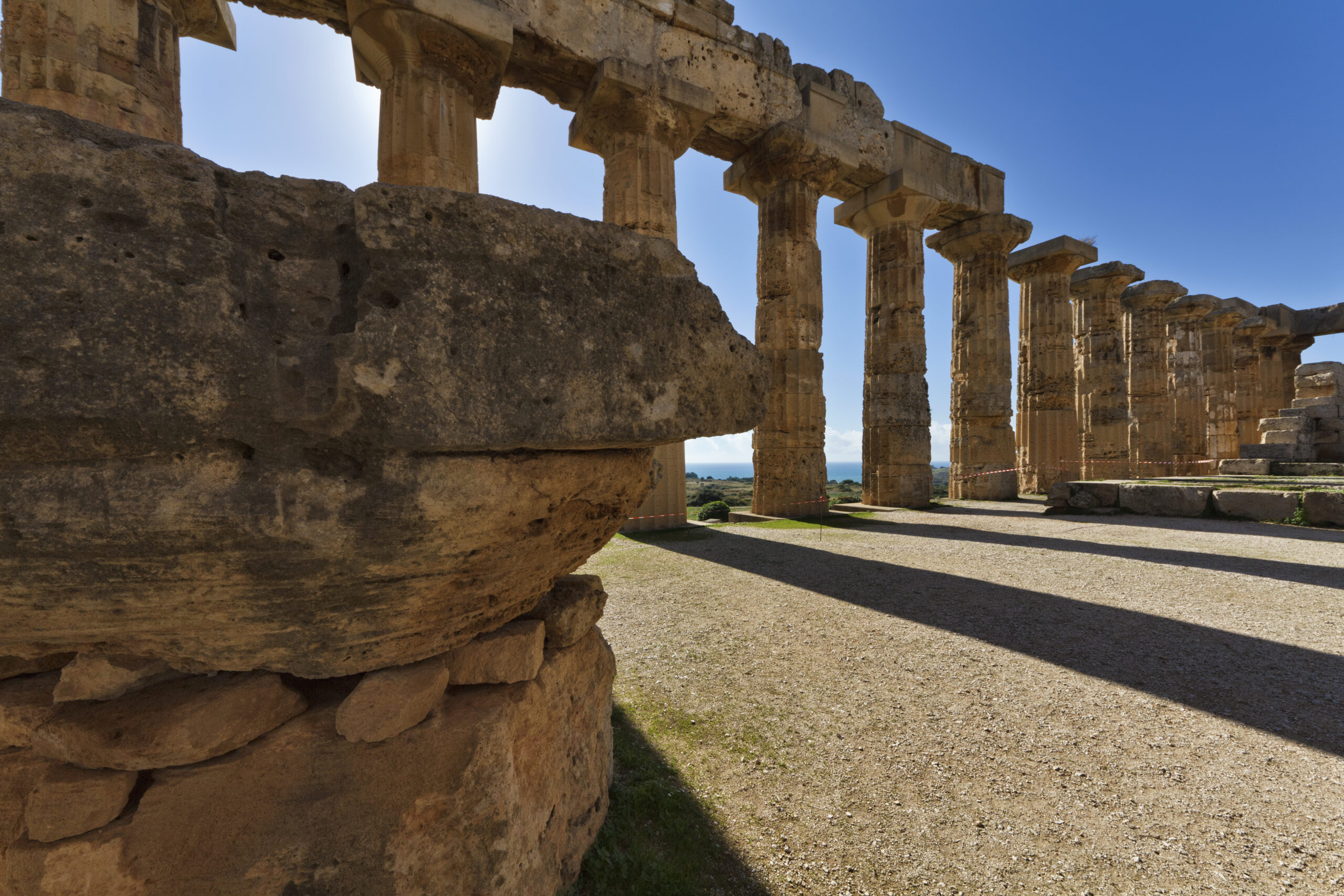
The Valley of the Temples: The Complete Visitor’s Guide to Agrigento’s Ancient Greek Wonders

The Valley of the Temples is one of the world’s most remarkable archaeological sites. Located in Agrigento, Sicily, this UNESCO World Heritage Site preserves some of the finest examples of ancient Greek architecture outside Greece.

The site formed part of the ancient city of Akragas, which Greek settlers founded around 580 BC. Over time, Akragas became one of the most prosperous cities in Magna Graecia. Its wealth allowed local craftsmen to build magnificent Doric temples that still dominate the landscape today.

Although people refer to it as a valley, the archaeological park stretches across a scenic ridge overlooking the Mediterranean countryside. Olive groves, almond trees, and rolling hills surround the ancient monuments. Together, they create one of Sicily’s most breathtaking historic landscapes.

Visitors can explore several impressive landmarks throughout the park. Highlights include the Temple of Concordia, the Temple of Juno, the Temple of Heracles, and the remains of the Temple of Olympian Zeus. The beautiful Garden of Kolymbethra also offers a peaceful escape among citrus trees and Mediterranean vegetation.

Every monument tells part of the story of Ancient Greece in Sicily. At the same time, the surrounding landscape reveals why this area has fascinated travellers for centuries. History, archaeology, nature, and spectacular views combine to create an unforgettable experience.

Whether you’re planning your first trip to Sicily or exploring Agrigento in greater depth, the Valley of the Temples deserves a place on your itinerary. This guide covers its history, most important monuments, practical visitor information, and essential travel tips to help you plan a memorable visit.

A Brief History of the Valley of the Temples

The story of the Valley of the Temples begins with the ancient Greek city of Akragas. Greek settlers founded the city around 580 BC after arriving from Gela, another Greek colony on Sicily’s southern coast.

Over the following decades, Akragas grew into one of the richest and most influential cities in Magna Graecia. Fertile farmland, successful trade, and a strategic location helped the city prosper. As wealth increased, local leaders commissioned magnificent temples that reflected both their power and their devotion to the Greek gods.

Many of the temples visitors admire today date from the 6th and 5th centuries BC. Skilled craftsmen built them from the region’s distinctive golden limestone. Their impressive scale and elegant Doric design continue to attract visitors from around the world.

The city’s golden age reached its peak under the ruler Theron, who governed Akragas from 488 to 472 BC. After the Greek victory at the Battle of Himera in 480 BC, the city experienced rapid growth. During this prosperous period, builders expanded several major temples, including the magnificent Temple of Concordia and the enormous Temple of Olympian Zeus.

Prosperity did not last forever. In 406 BC, Carthaginian forces attacked and captured Akragas after a lengthy siege. The invasion caused widespread destruction, and many residents fled the city. Although later rulers rebuilt parts of Akragas, it never regained the wealth and influence of its golden age.

Over the following centuries, earthquakes, changing civilizations, and the reuse of building materials damaged many ancient structures. Fortunately, the Temple of Concordia survived in remarkable condition because Bishop Gregory of Agrigento converted it into a Christian church during the 6th century AD.

Today, the archaeological park covers approximately 1,300 hectares (3,200 acres), making it one of Europe’s largest archaeological parks. Visitors can explore temples, ancient city walls, sanctuaries, necropolises, and residential areas while discovering more than 2,500 years of history.

In 1997, UNESCO recognised the Archaeological Area of Agrigento as a World Heritage Site. Today, the Valley of the Temples stands as one of Italy’s greatest cultural treasures and remains one of Sicily’s most visited attractions.

The Must-See Temples and Monuments

Temple of Concordia

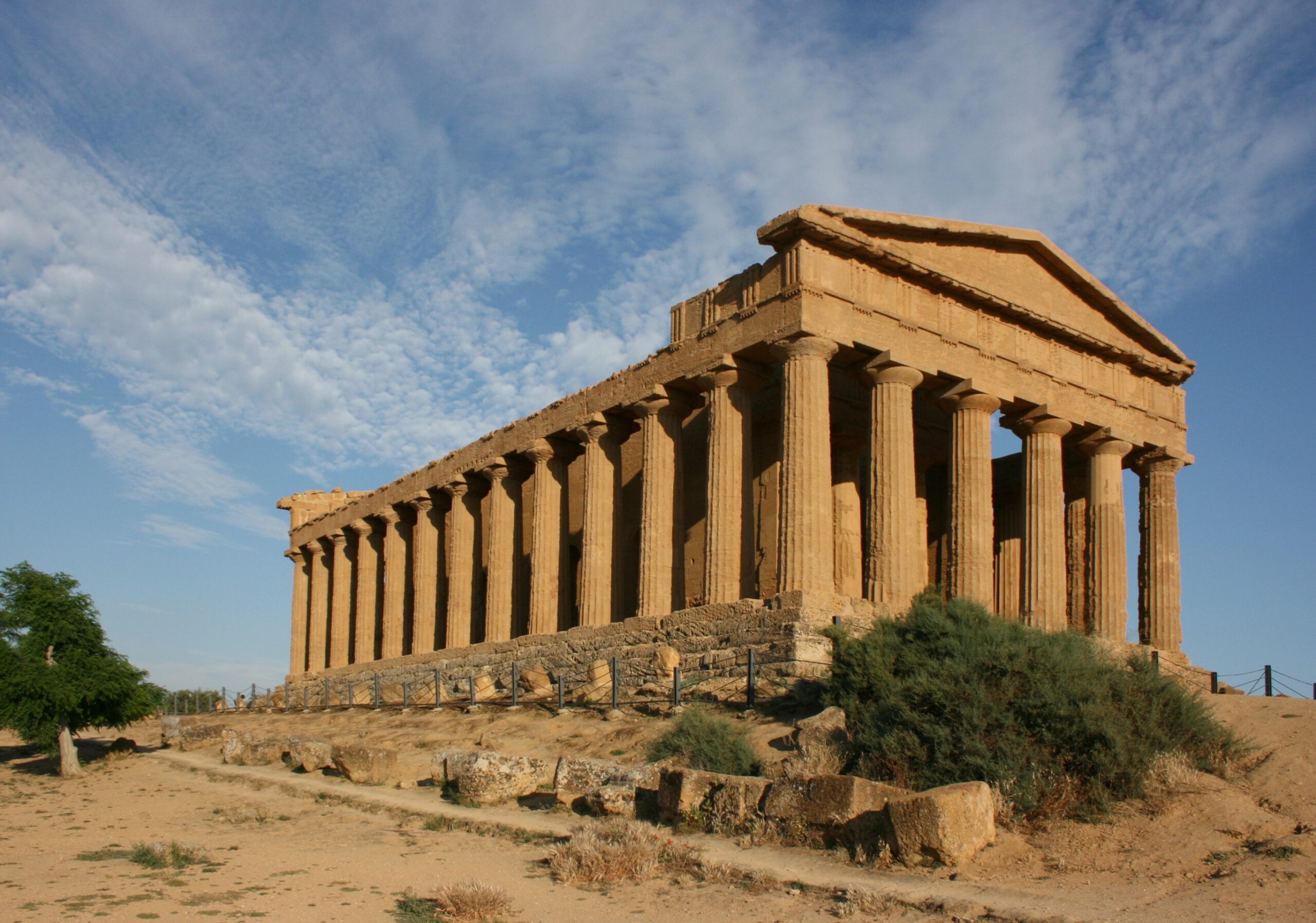
The Temple of Concordia stands as the undisputed highlight of the Valley of the Temples and ranks among the finest examples of ancient Greek architecture in the world. Greek builders constructed the temple between 440 and 430 BC, and its remarkable state of preservation makes it one of the best-preserved Doric temples outside Greece.

Although visitors know it today as the Temple of Concordia, historians believe the ancient Greeks dedicated it to a different deity. Archaeologists later adopted the current name after discovering an inscription nearby that mentioned “Concordia.” The temple’s original dedication, however, remains unknown.

Local craftsmen built the temple from the region’s distinctive golden sandstone using the traditional Doric style. The structure measures approximately 39.4 metres (129 feet) long and 16.9 metres (55 feet) wide. It features 34 fluted columns, with six at the front and rear and thirteen along each side. These balanced proportions demonstrate the precision and skill of ancient Greek architects.

The temple owes much of its exceptional preservation to an important change during the 6th century AD. Bishop Gregory of Agrigento converted the ancient temple into a Christian church, allowing later generations to preserve the structure instead of dismantling it for building materials, as happened to many other Greek temples.

As you explore the site, take time to admire the precision of the stonework and the subtle architectural refinements. Greek architects carefully adjusted the columns and horizontal lines to create the illusion of perfect symmetry when viewed from a distance. These techniques remain one of the defining features of Classical Greek architecture.

Many visitors choose to see the Temple of Concordia during the golden hour, shortly after sunrise or before sunset. At these times, warm Sicilian light illuminates the golden limestone and creates spectacular conditions for photography. After dark, carefully planned lighting highlights the temple and transforms it into one of Sicily’s most recognisable landmarks.

Today, the Temple of Concordia represents far more than an impressive ancient monument. It reflects the extraordinary craftsmanship, artistic vision, and engineering achievements of the ancient Greek world. Standing before its perfectly aligned columns, visitors can easily understand why the Valley of the Temples remains one of the Mediterranean’s greatest archaeological treasures.

Temple of Juno (Temple of Hera)

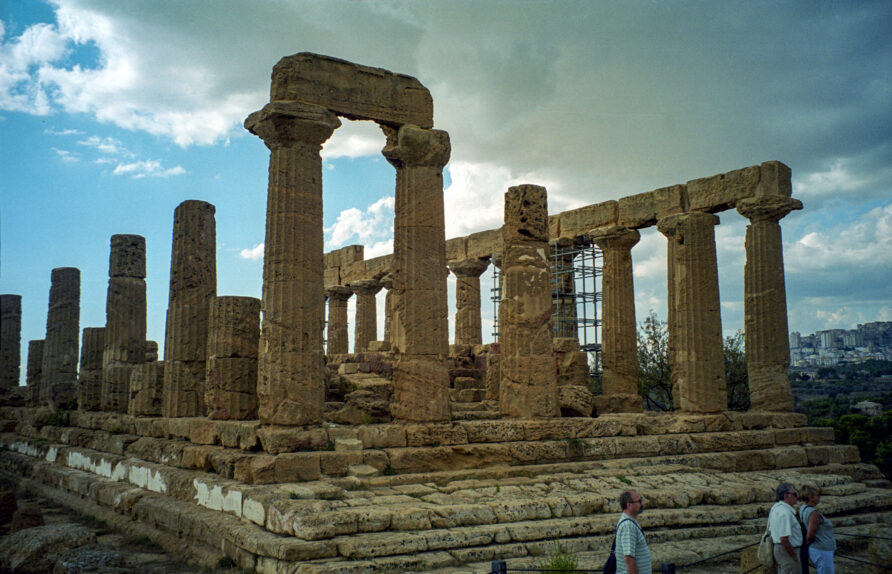
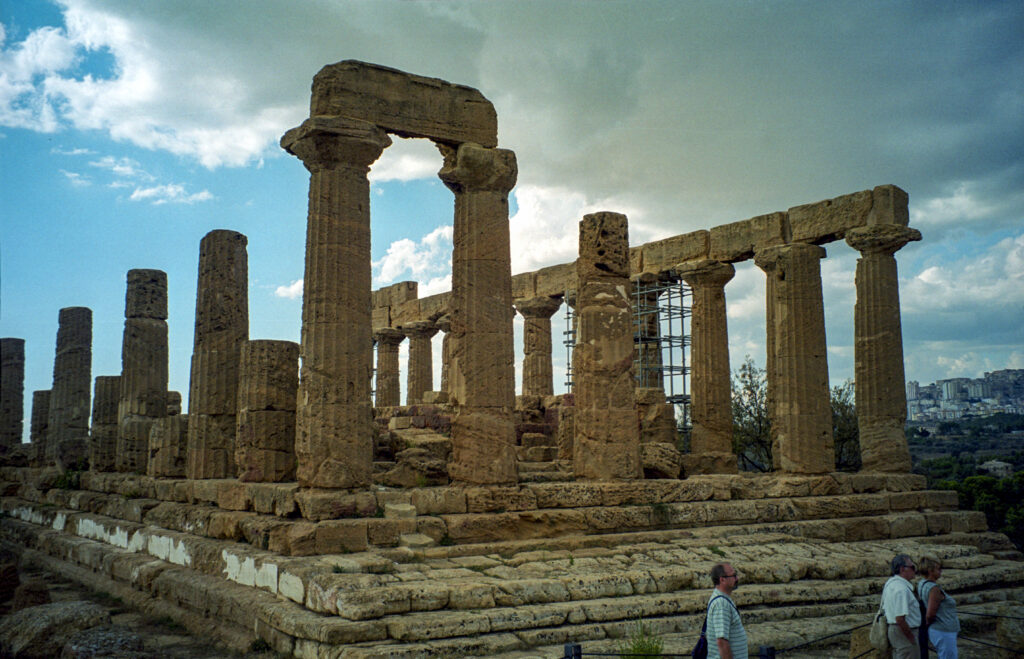
The Temple of Juno, also known as the Temple of Hera, stands at the eastern end of the Valley of the Temples. Its hilltop location offers some of the most spectacular views across the Sicilian countryside and the Mediterranean Sea. Builders completed the temple around 450 BC, making it one of the archaeological park’s most important monuments.

Although people traditionally associate the temple with Hera, the Greek goddess of marriage and family, archaeologists have found no definitive evidence that the ancient Greeks originally dedicated it to her. Historians gave the temple its modern name centuries after its construction, just as they did with several other monuments in the archaeological park.

The temple originally featured 34 Doric columns, many of which still stand today. These surviving columns allow visitors to admire the elegance, balance, and symmetry that define Classical Greek architecture. During the Carthaginian invasion of 406 BC, invading forces set fire to much of the structure. Today, visitors can still see traces of that destruction on parts of the original stone.

Today, the Temple of Juno is one of the most photographed landmarks in the archaeological park, particularly at sunrise and sunset when the golden limestone glows against the Sicilian landscape.

Temple of Heracles

The Temple of Heracles is widely considered the oldest temple within the Valley of the Temples. Archaeologists believe construction began around the end of the 6th century BC, making it one of the earliest monumental buildings erected after the founding of Ancient Akragas.

Dedicated to Heracles, one of the most celebrated heroes of Greek mythology, the temple played an important role in the religious life of the ancient city. Historical sources suggest that it housed a famous bronze statue of Heracles that attracted pilgrims from across the Greek world.

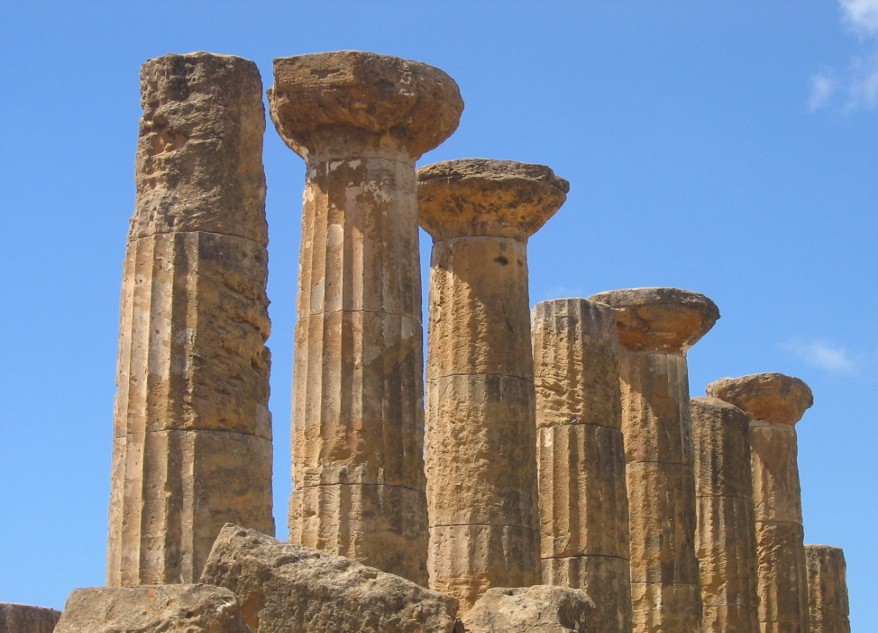
Originally consisting of 38 Doric columns, the temple suffered extensive damage from earthquakes over many centuries. During the twentieth century, archaeologists carefully re-erected eight columns, giving visitors a better understanding of its original appearance.

Although only part of the temple survives today, its impressive scale and historical importance make it one of the archaeological park’s essential highlights.

Temple of Olympian Zeus

The Temple of Olympian Zeus, sometimes called the Temple of Jupiter Olympus, ranks among the largest Doric temples ever built in the ancient Greek world. Even in ruins, its enormous foundations reveal the scale and ambition of this remarkable monument.

Builders began construction shortly after the Greek victory over the Carthaginians at the Battle of Himera in 480 BC. At the time, Theron ruled Akragas, and the city enjoyed its greatest period of prosperity. Local leaders commissioned the temple to celebrate their military success and showcase the city’s growing wealth and influence.

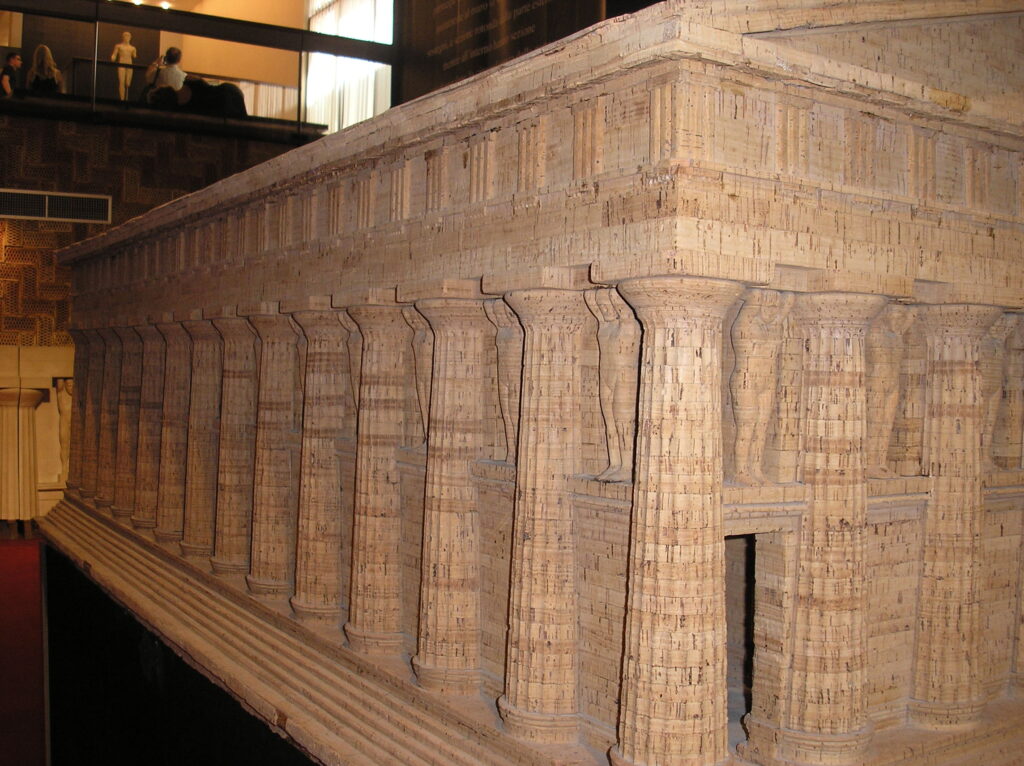
Unlike most Greek temples, the Temple of Olympian Zeus featured enormous stone figures known as Telamons. These giant sculpted male figures stood about 7.5 metres (25 feet) tall and appeared to support sections of the building. Today, visitors can admire an original Telamon at the Regional Archaeological Museum Pietro Griffo. A full-size replica also rests within the archaeological park.

Builders never completed the temple, and later earthquakes caused extensive damage. Over the centuries, people also removed much of its stone for other construction projects. Despite these losses, the remaining foundations still demonstrate the extraordinary scale of one of the ancient world’s most ambitious architectural achievements.

OLYMPUS DIGITAL CAMERA

Temple of Castor and Pollux

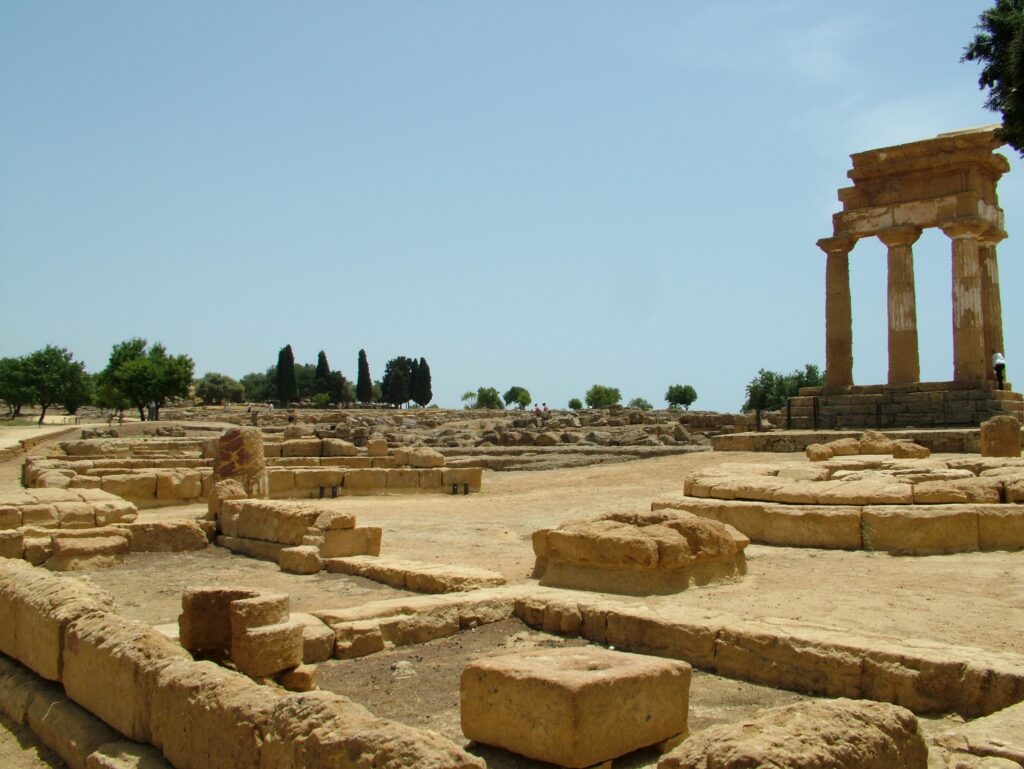
Although only four columns remain today, the Temple of Castor and Pollux has become one of Agrigento’s most recognisable landmarks. Visitors regularly photograph its elegant silhouette, and tourism campaigns.

Builders constructed the temple during the 5th century BC.This was part of a larger sacred sanctuary where the ancient Greeks held important religious ceremonies.

During archaeological excavations in the 19th century, experts reconstructed the famous four-column corner. They did this by using original architectural elements recovered from the site. Today, this striking reconstruction stands as one of the archaeological park’s most photographed monuments.

Its graceful silhouette against the Sicilian sky has made it one of the Valley of the Temples’ most iconic landmarks and a favourite stop for photographers exploring the park.

Sanctuary of the Chthonic Deities

Located near the Temple of Castor and Pollux, the Sanctuary of the Chthonic Deities is one of the oldest sacred areas within Ancient Akragas.

Before the construction of the city’s monumental temples, this sanctuary played a central role in the religious life of Ancient Akragas. Here, people worshipped deities associated with the earth, fertility, and the underworld.

Archaeologists have uncovered the remains of numerous altars, shrines, and ritual spaces that provide valuable insight into the spiritual life of the city’s earliest inhabitants.

Although less visually imposing than the larger temples, the sanctuary offers a fascinating glimpse into the evolution of Greek religious practices in Sicily.

The Garden of Kolymbethra

Hidden within the heart of the archaeological park lies the enchanting Garden of Kolymbethra, a peaceful oasis managed by the Italian Environment Fund (FAI).

Originally created more than 2,500 years ago as a vast water reservoir supplying Ancient Akragas, the area has evolved into a flourishing Mediterranean garden filled with citrus orchards, olive trees, almond trees, fragrant herbs, and traditional Sicilian vegetation.

Today, shaded walking paths wind through the garden, providing a refreshing contrast to the sunlit archaeological ruins above. Along the way, visitors can discover ancient irrigation systems, historic dry-stone walls, caves, and spectacular viewpoints overlooking the temples.

For many travellers, the Garden of Kolymbethra offers one of the most relaxing and picturesque experiences within the Valley of the Temples, combining archaeology, nature, and Sicily’s rich agricultural heritage in one unforgettable setting.


Planning Your Visit

The Valley of the Temples is one of Sicily’s most rewarding attractions and deserves at least three to four hours to explore comfortably. The archaeological park is extensive, with gently sloping paths connecting the major monuments, so comfortable walking shoes are highly recommended.

The best times to visit are early in the morning or late in the afternoon, particularly during the warmer months when temperatures can be high. Visiting during these quieter hours also offers softer light, making it an excellent time for photography. Spring and autumn are generally considered the most pleasant seasons, thanks to their mild weather and fewer crowds.

Be sure to bring water, sunscreen, a hat, and a camera, as there is limited shade throughout much of the archaeological area.

Tickets & Essential Visitor Information

Before travelling, it’s always advisable to check the official Valley of the Temples website. There you will find for the latest opening hours, admission prices, guided tours, and any temporary exhibitions or special events.

At the archaeological park you’ll find visitor facilities including parking areas, restrooms, cafés, gift shops, and information points. Audio guides and guided tours are also available. This is excellent for those wishing to gain a deeper understanding of the site’s fascinating history.

Ticket prices may vary depending on the season and special events. We suggest checking the official website before your visit is highly recommended.

Things to See Near the Valley of the Temples

Your visit to Agrigento doesn’t have to end at the archaeological park. Just a short distance away you’ll find the charming historic centre of Agrigento. Narrow streets, medieval churches, lively piazzas, and traditional Sicilian restaurants showcase another side of the city’s rich heritage.

History enthusiasts should also consider visiting the Regional Archaeological Museum Pietro Griffo. It is home to one of Sicily’s most important collections of Greek artefacts. Some of them including the famous Telamon from the Temple of Olympian Zeus.

If you’re looking to combine history with the coast, the spectacular white limestone cliffs of Scala dei Turchi are only a short drive away and are among Sicily’s most photographed natural landmarks.

Frequently Asked Questions

How long does it take to visit the Valley of the Temples?
Most visitors spend between three and four hours exploring the archaeological park, although history enthusiasts may wish to allow additional time.

Is the site suitable for families?
Yes. The park is family-friendly, although younger children may find parts of the walk challenging during the hottest summer months.

When is the best time to visit?
Spring and autumn generally offer the most comfortable temperatures. During summer, early morning or late afternoon visits are recommended.

Are guided tours available?
Yes. Visitors can choose from guided tours or audio guides to better understand the history and significance of the archaeological site.

12 Best Wedding Venues in Sicily: A Complete Destination Wedding Guide

Searching for the best wedding venues in Sicily means choosing much more than a beautiful place to say “I do.” The island offers dramatic coastlines, centuries-old towns, and countryside estates — and every region creates a completely different wedding experience, from Taormina’s cliffside sea views to the wild coastline of the west.

Here’s the part most couples planning from abroad don’t realize until they’re deep into it: a Sicilian wedding usually runs three to five days, not one. Your ceremony happens in one place; your guests need somewhere to actually stay, gather, and unwind for the days around it.

That’s where Sicily4U comes in — private villas near every region on this list, close enough to your ceremony to matter, with their own pools and terraces for the welcome dinner and the morning-after nobody wants to spend checking out of a hotel room.

Jump to a Section

  1. The Best Regions for a Sicily Wedding
  2. Hidden Sicilian Towns for Wedding Photos
  3. How Much Does a Destination Wedding in Sicily Cost?
  4. What to Consider Before Choosing a Region
  5. Do You Need a Wedding Planner in Sicily?
  6. How Far in Advance Should You Plan?
  7. Planning From Abroad Sicily
  8. Wedding FAQs

The Best Regions for a Sicily Wedding

Taormina: Sea Views Beneath Mount Etna

Taormina is Sicily’s most photographed wedding backdrop — the Ionian Sea on one side, Mount Etna smoking gently on the other, and a hill town wrapped around both.

It’s reached via Catania Airport, roughly 45–50 minutes by car. Most Taormina ceremonies happen on a terrace above the sea, often at one of the town’s historic hotels or converted monasteries with sweeping Etna views.

Taormina is the postcard version of a Sicilian wedding. Say your vows with Mount Etna smoking quietly in the distance, the Ionian Sea stretched out below, and centuries of stone streets behind you. It’s the region most couples picture first when they imagine getting married in Sicily, and that’s exactly why it books out the furthest in advance.
A few of the most requested by name:

1. San Domenico Palace

A former 14th century monastery turned Four Seasons hotel, set on a clifftop with views of Mount Etna and the Ionian Sea.

2. Grand Hotel Timeo

A Belmond property overlooking the Ionian Sea with Mount Etna as a backdrop.

3. Villa Sant’Andrea

A beachfront Belmond property on Mazzarò Bay, just below Taormina.

Where to stay: whichever ceremony setting you choose, your group needs a base for the rest of the week. Browse Sicily4U villas near Taormina — several with sea views and private pools, a short drive from the town center.

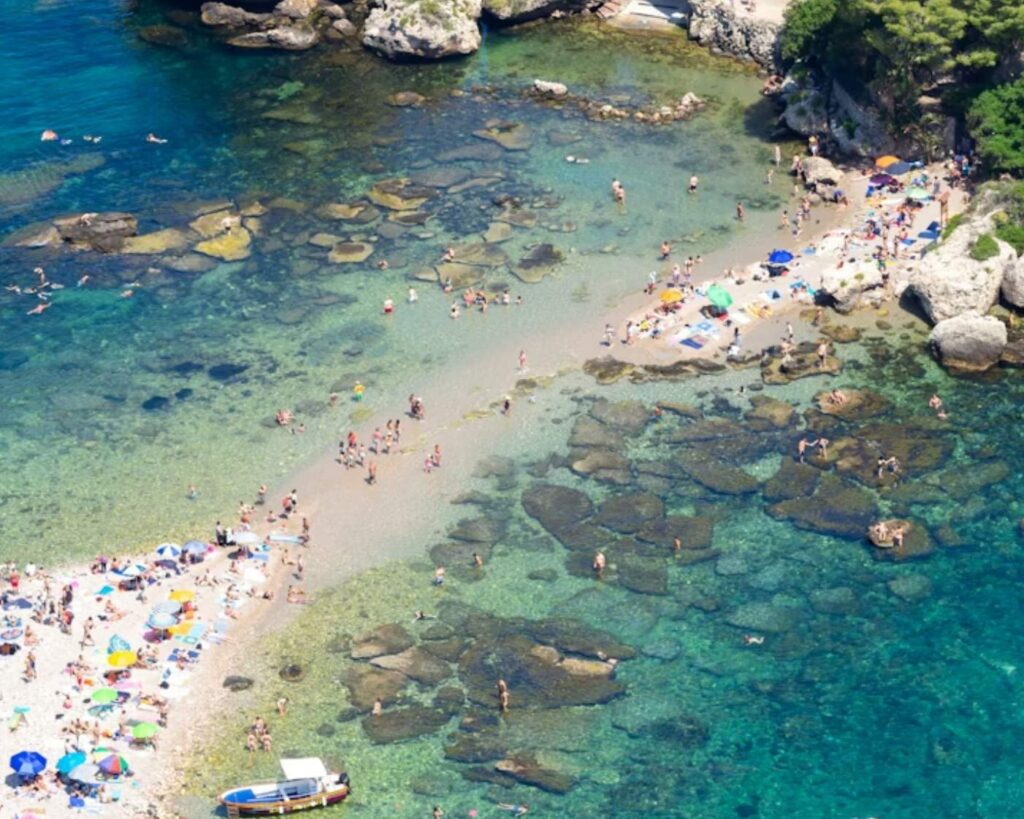
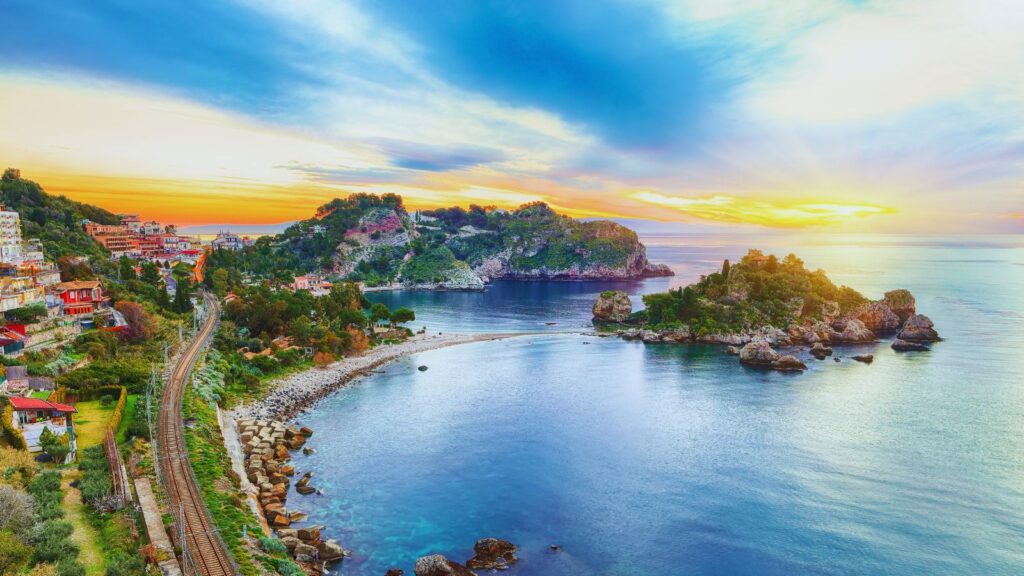
Aerial view of Isola Bella and the coastline near Taormina, Sicily

Palermo & Bagheria: Aristocratic Villas and Centuries of History

Palermo’s wedding profile jumped in 2024 when Dua Lipa chose the area for her wedding celebrations, joining a growing list of couples choosing Sicily over the Amalfi Coast or Tuscany.

The region is known for grand historic estates and formal gardens, particularly around Bagheria, where several private 18th-century villas host ceremonies for couples working with a local planner. Served by Palermo Airport.

A few names that keep turning up in the save-the-dates:

4. Villa Igiea

A Rocco Forte hotel set in a Belle Époque palazzo with tiered gardens over the Gulf of Palermo.

5. Villa Valguarnera

An 18th century aristocratic villa in Bagheria, one of the town’s grandest historic residences.

Where to stay: Sicily4U villas near Palermo put your guests close to both the city and Bagheria’s countryside estates, without everyone needing to relocate mid-celebration.

Sea-view terrace at Villa Elaia, a Sicily4u villa near Cefalù

Cefalù: A Cathedral Town Between Mountains and Sea

Cefalù pairs a Norman cathedral and medieval old town with genuine beach access — a combination few Sicilian wedding towns offer in one place.

A handful of boutique coastal hotels host beachfront ceremonies right along the town’s waterfront. It’s also where Sicily4U is based, so if a Cefalù wedding is on your shortlist, we’re not just pointing you to a villa down the road — we know this coastline personally.

One name that keeps coming up:

6. Le Calette

A seafront wedding hotel just outside Cefalù’s old town, with private bay access.

Where to stay: Sicily4U villas near Cefalù, many within walking distance of the old town.

Poolside terrace with sea views at Villa Provenza, a private Sicily4u villa near Cefalù

Noto & Ortigia: Baroque Gold and Seaside Stone

Slip south to Noto and its sister town Ortigia and the light itself seems to change — honeyed stone, wrought-iron balconies, and a baroque skyline that UNESCO didn’t protect so much as fall in love with. This is Sicily at its most theatrical, all grand staircases and golden facades, and it photographs like nowhere else on the island.

For couples chasing that stone-and-lace backdrop, Noto’s cathedral steps and Ortigia’s seafront piazzas are near-mythical among wedding photographers — golden hour here doesn’t need much help. Both towns are compact enough to walk between ceremony, dinner, and afterparty, and close enough to Syracuse airport for guests flying in just for the weekend.

A few names couples ask for again and again:

7. Dimora delle Balze

A design-forward boutique hotel just outside Noto, built into an 18th-century masseria and listed in the Michelin Guide — a favourite for couples who want architecture as striking as their guest list.

8. Villa Dorata (Seven Rooms Villadorata)

An intimate seven-room countryside retreat near Noto, prized by wedding planners for its private grounds and old-Sicily charm — book it and you effectively have the whole property to yourselves.

9. Ortea Palace Hotel, Autograph Collection

A grand seafront hotel on Ortigia’s edge, part of Marriott’s Autograph Collection, with sweeping views over the Ionian Sea — a polished choice for couples who want five-star comfort a short stroll from the baroque old town.

Wherever you say “I do” in Noto or Ortigia, your guests will want a comfortable base nearby — browse Sicily4U’s villas near Noto & Ortigia for private houses with pools and room for the whole wedding party.

Where to stay: Sicily4U villas near Noto & Ortigia, for couples who want their wedding party close to the baroque streets and seafront without giving up space or privacy.

Seafront infinity pool with sea views at Villa Meraviglia, a private Sicily4u villa in Noto

Western Sicily: Scopello, Trapani, and Marsala

The west coast trades polish for drama — rugged cliffs, salt flats, and a slower pace suited to smaller, more intimate celebrations. A former centuries-old tuna fishery on the water is one of the region’s best-known ceremony settings, framed by the faraglioni sea stacks just offshore.

10. Tonnara di Scopello

A centuries-old former tuna fishery right on the water, its rustic stone buildings and the offshore faraglioni sea stacks making it one of Sicily’s most photographed wedding backdrops.

11. Baglio Sorìa

A Firriato-run wine resort just outside Trapani, set among vineyards with its own restaurant and spa — a favourite for couples who want their ceremony and wine-country dinner in the same place.

12. Baglio Oneto dei Principi di San Lorenzo

A five-star wine resort in Marsala with a Belvedere Garden overlooking the Egadi Islands, where couples exchange vows among olive groves and historic vineyards.

Where to stay: Sicily4U villas in the West-Southwest region, for couples who want their whole wedding week away from the more touristed east coast.

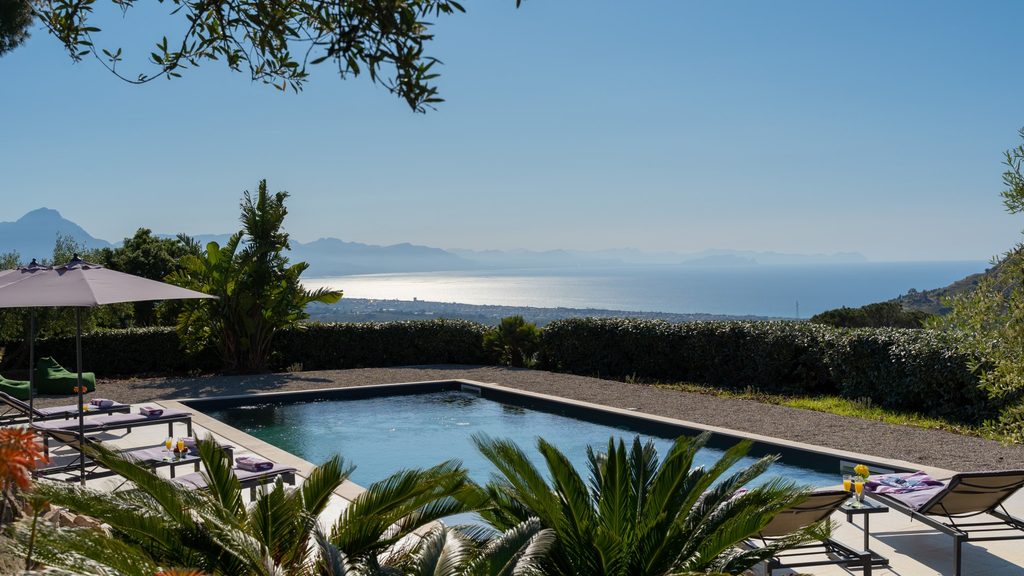
Poolside terrace with thatched umbrella at Villa Baya Blu, a private Sicily4u villa in San Vito Lo Capo, Western Sicily

A note on ceremony venues: many of the historic properties above are private residences or boutique hotels that work through wedding planners rather than public booking pages — see the planner section below before you fall in love with a specific setting.

Hidden Sicilian Towns for Wedding Photos

Beyond the well-known ceremony settings, a handful of smaller towns are becoming favorites with wedding photographers for engagement shoots and the day-after session:

1. Sant’Elia

Just outside Palermo, Sant’Elia is a tiny fishing village with colourful houses, clear water and a sheltered Mediterranean cove.

The viewpoint above the village looks towards Capo Zafferano and Solanto. Its waterfront houses have also attracted photographers over the years.

For wedding photographs, the setting feels intimate and unmistakably Sicilian.

2. Aspra

Close to Bagheria, Aspra offers a more authentic fishing-village atmosphere.

Think colourful boats, a working waterfront and the blue Tyrrhenian Sea rather than polished resort scenery.

It could work beautifully for couples wanting photographs that feel relaxed, local and genuinely Sicilian.

3. Porticello

Neighbouring Porticello brings another side of coastal Sicily.

Fishing remains central to the village’s identity, and its harbour connects this part of the coast with generations of Sicilian maritime tradition.

For photographs, it offers fishing boats, harbour scenes and a lived-in Sicilian atmosphere.

4. Castelbuono

For couples who prefer mountains to the sea, Castelbuono creates an entirely different setting.

This medieval town sits within the Madonie, centred around the historic Ventimiglia Castle. Stone streets and traditional architecture give photographs a romantic, old-Sicily character.

5. Marzamemi

In south-eastern Sicily, Marzamemi combines golden stone, fishermen’s houses and a beautiful historic piazza beside the sea.

The old Tonnara opens directly onto Piazza Regina Margherita and still hosts weddings and private events.

A nearby fishing harbour, medieval street or quiet Sicilian piazza could become the setting for photographs you remember just as much as the ceremony itself.

How Much Does a Destination Wedding in Sicily Cost?

Budgets vary enormously by guest count, region, and season, but as a rough guide: intimate celebrations of 20–40 guests typically start around €25,000, while large luxury events can run €175,000 or more once venue, catering, accommodation, and vendors are all included.

Villa rental for your guest group is one of the more controllable pieces of that budget — renting one or two private villas for the week is often more cost-effective than blocking hotel rooms individually, and it keeps everyone together for the parts of the celebration that happen outside the ceremony itself.

What Should You Consider Before Choosing a Region?

Which Airport Should Your Wedding Guests Use?

Guest accommodation should be treated as part of the decision from day one, not an afterthought — where your guests sleep shapes the whole weekend, not just the ceremony day.

Airport choice matters too: Catania serves Taormina and the east coast; Palermo serves Bagheria, Cefalù, and the west.

And because several ceremony venues are private properties without public booking systems, organizing group transportation and confirming access windows early avoids last-minute logistics stress.

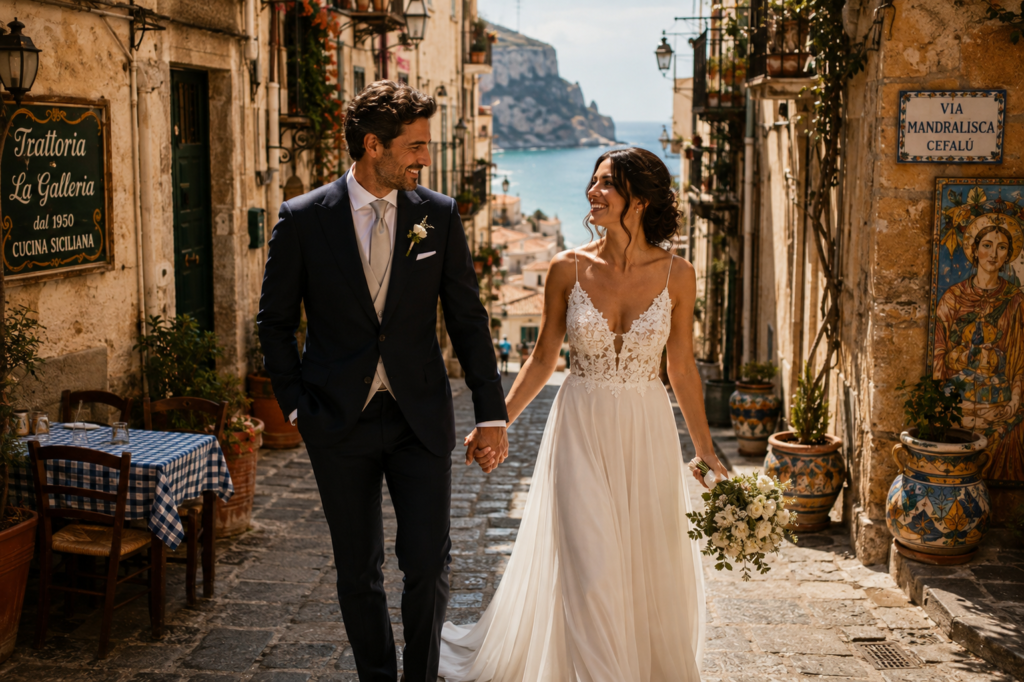
Bride and groom walking hand in hand through a cobblestone street in Cefalù, Sicily

How Should You Organise Wedding Transport in Sicily?

Group transport is one of those unglamorous details that quietly makes or breaks a Sicily wedding — arrange coaches or minibuses for the wedding day itself, and you spare your guests the parking hunt, the unfamiliar roads, and the temptation to skip the dance floor because someone has to drive home.

Spare a thought for older guests, too. Sicily’s most beautiful towns weren’t built with wheels in mind — Taormina’s compact centre is a joy to wander, but its steps, cobbled streets, and steep pedestrian lanes can turn a short walk into a small expedition. A little planning here goes a long way toward keeping the whole guest list comfortable, not just the photogenic half.

Where Should Wedding Guests Stay in Sicily?

Keep your guests reasonably close to the venue, and offer a mix of accommodation across a few different budgets — not everyone needs, or wants, to stay under the same roof, but scattering guests across distant corners of Sicily just creates transport headaches nobody asked for.

Private villas tend to suit families and close friends particularly well, while hotels work nicely for couples or anyone staying just a short stretch. Many couples keep their core wedding party together in one larger villa, giving everyone a shared space to unwind between the ceremony, the welcome dinner, and the inevitable morning-after recovery. For a destination wedding, where your guests sleep isn’t a footnote — it’s part of the experience you’re actually giving them.

Do You Need a Wedding Planner in Sicily?

For most of the historic and private-residence venues mentioned above, yes.

A planner based in Sicily brings supplier relationships, familiarity with local permitting, and — critically for couples planning from abroad — someone who can visit a venue in person before you commit.

If you’re staying with us, ask when you enquire about a villa; we work alongside planners in each of these regions and can point you toward one.

Planning a wedding abroad comes with a hundred small details you can’t manage from another country — local vendors, permits, language, logistics — and that’s exactly where a wedding planner earns their keep.

A good one turns the stress of planning long-distance into a smooth, guided process, handling everything from venue coordination to décor so you can actually enjoy the lead-up to your big day. Cefalù-based planner Simona Filastó is a great example, bringing years of experience creating elegant, Sicilian-themed celebrations for couples marrying on the island.

How Far in Advance Should You Plan a Sicily Wedding?

Twelve to eighteen months is the realistic window for premium ceremony venues, especially for a summer Saturday.

Popular properties book out well over a year ahead for peak season; boutique or off-season dates can sometimes be secured with less notice.

The same applies to villa accommodation for larger guest groups — the best properties near Taormina and Cefalù go early for summer weekends.

Is It Difficult to Plan a Wedding in Sicily From Abroad?

It’s manageable with the right support, but it isn’t a solo project.

Time zones, language, and unfamiliarity with local suppliers are the three things that trip up couples planning remotely. For this reason, most international couples marrying in Sicily work with a local planner rather than coordinating every vendor themselves from another country.

Sicily Wedding FAQs

What is the best month to get married in Sicily?

Late spring (May–June) and early autumn (September–October) offer the most reliable combination of warm weather and lower humidity than peak summer, while also avoiding the highest-demand, highest-price weekends of July and August.

Is Sicily cheaper than other Italian wedding destinations?

Generally yes, compared with the Amalfi Coast, Lake Como, or Tuscany — venue and catering costs tend to run lower, though premium coastal settings in Taormina can still command Amalfi-level pricing in peak season.

How many days should guests stay for a Sicily wedding?

Most couples plan for a three- to five-day guest experience — arrival, a welcome event, the wedding day itself, and a recovery day — rather than a single-day event, which is exactly why villa accommodation matters as much as the ceremony venue itself.

Do wedding guests need a car in Sicily?

Not necessarily. Organised transfers can be easier when guests stay close together, particularly around wedding-day celebrations.
For larger celebrations, private minibuses or coaches can also be arranged in advance for wedding-day transport.

Is it legal for foreign couples to marry in Sicily?

Yes, but the paperwork and required notice period depend on your nationality. Many international couples handle the legal ceremony in their home country and hold a symbolic ceremony in Sicily. Confirm requirements with your chosen comune or a local wedding planner before booking anything.

Which airport should we fly into?

Catania Airport for Taormina and the east coast; Palermo Airport for Bagheria, Cefalù, and western Sicily. Choosing your region first makes this decision straightforward.

Can our ceremony and guest accommodation be in the same place?

Sometimes, at larger hotel properties with enough rooms — but most Sicily weddings pair a ceremony venue with private villas nearby for the guest group, which keeps everyone together for the days around the wedding rather than just the ceremony itself.

Can I get married at a Sicily4U villa?

Several of our villas have gardens or terraces suited to a small ceremony, a welcome dinner, or the wedding-week celebrations even when the main ceremony happens elsewhere. Availability depends on the property and your guest count — mention it when you enquire and we’ll help you check.

Ready to Start Planning Your Wedding in Sicily?

Your ceremony venue may host the “I do.” Your villa is where everyone actually comes together — the days before, the morning after, the moments that don’t happen on the wedding-day timeline. Explore Sicily4U’s private villas near Taormina, Palermo, and Cefalù, or browse villas with a pool and sea-view villas to start building your guest accommodation around the region you choose.

Planning more than the wedding day? See our guide to what’s happening in Sicily right now, or read the story behind Villa Mimì, one of the historic properties in our Taormina collection.

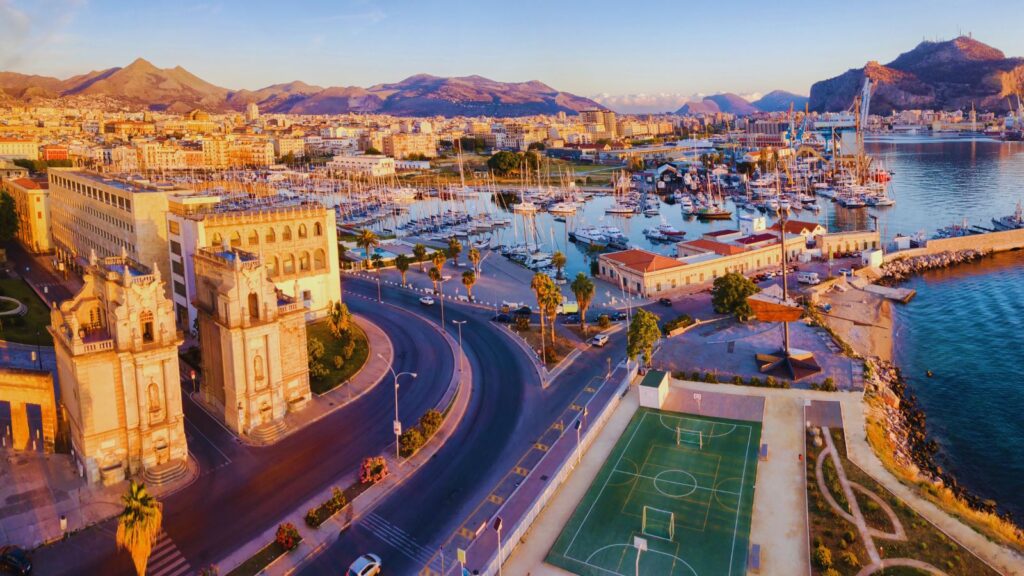
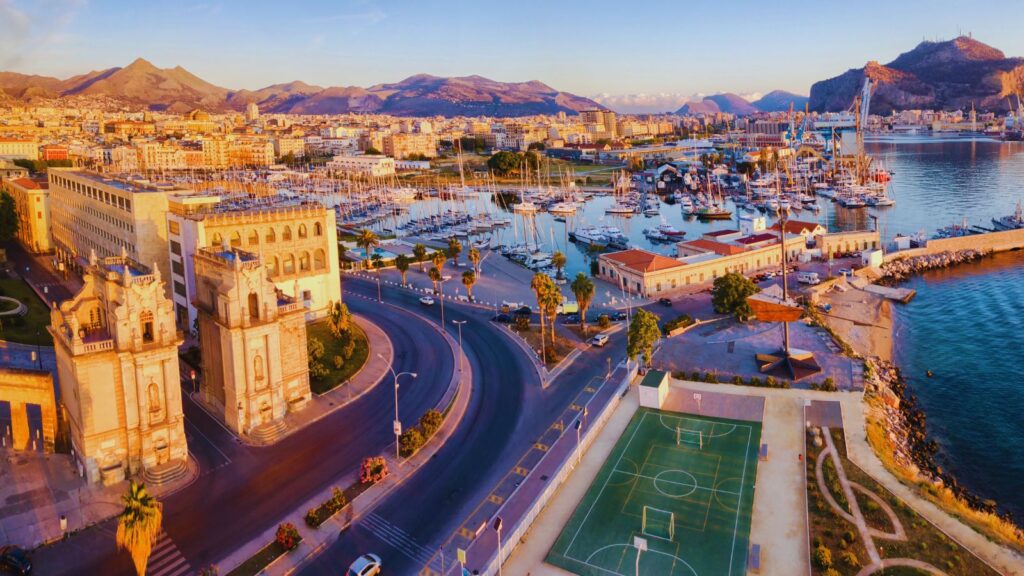
Palermo's La Cala harbor at golden hour, with Monte Pellegrino

In a World of Mass Production, Donna Pidda Reminds Us Why Handmade Still Matters

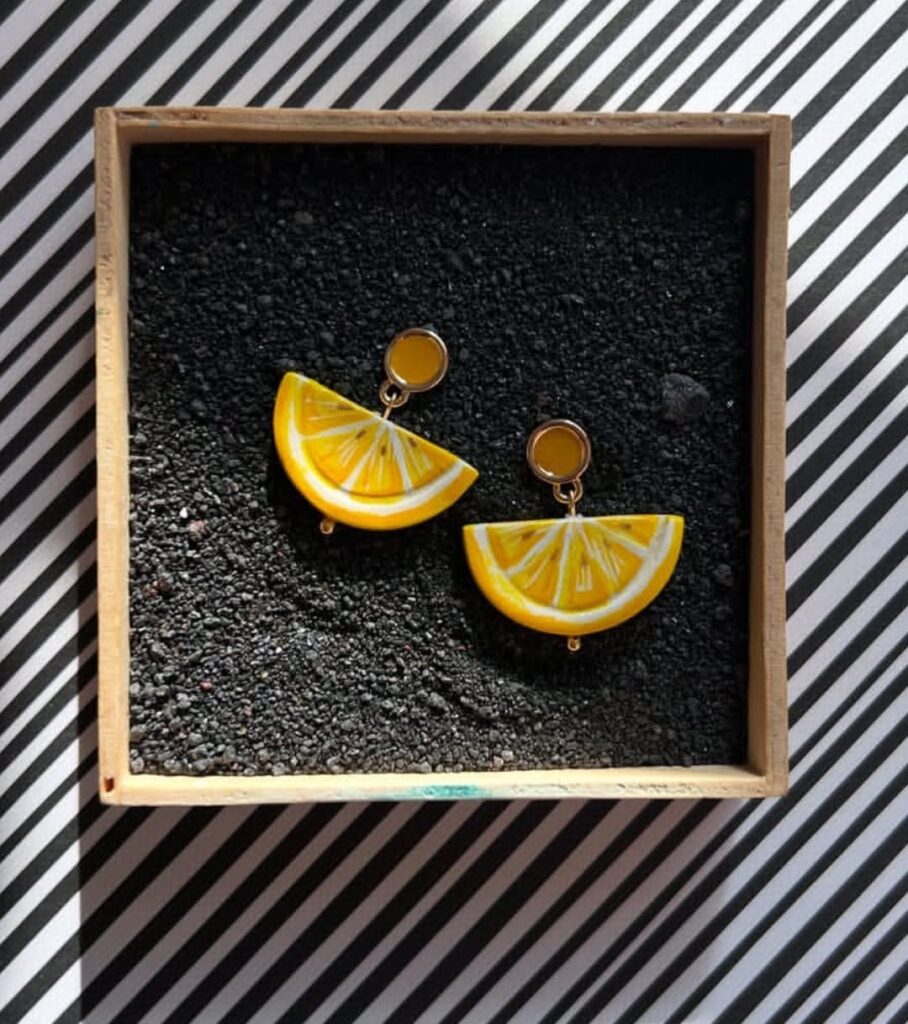
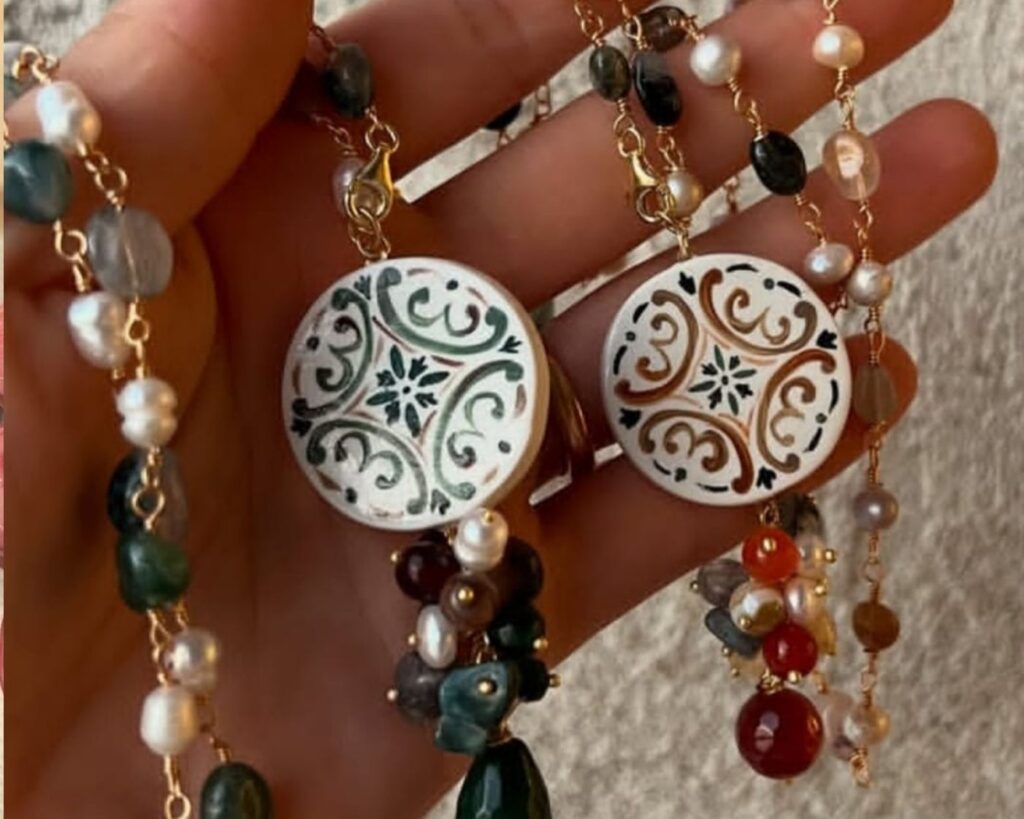
Walk through almost any tourist town in Italy and you’ll find beautiful jewelry displayed in elegant shop windows. Colorful Sicilian pinecones. Moor’s heads. Lemons. Majolica patterns. Sacred hearts.

They’re beautiful.

But here’s the question few of us stop to ask:

Who actually made them?

In today’s world, almost everything can be mass-produced. Even pieces that appear handmade. Even the earrings bought in Taormina or the necklace picked up during a holiday in Sicily may have been manufactured hundreds—or even thousands—of miles away before arriving in a souvenir shop.

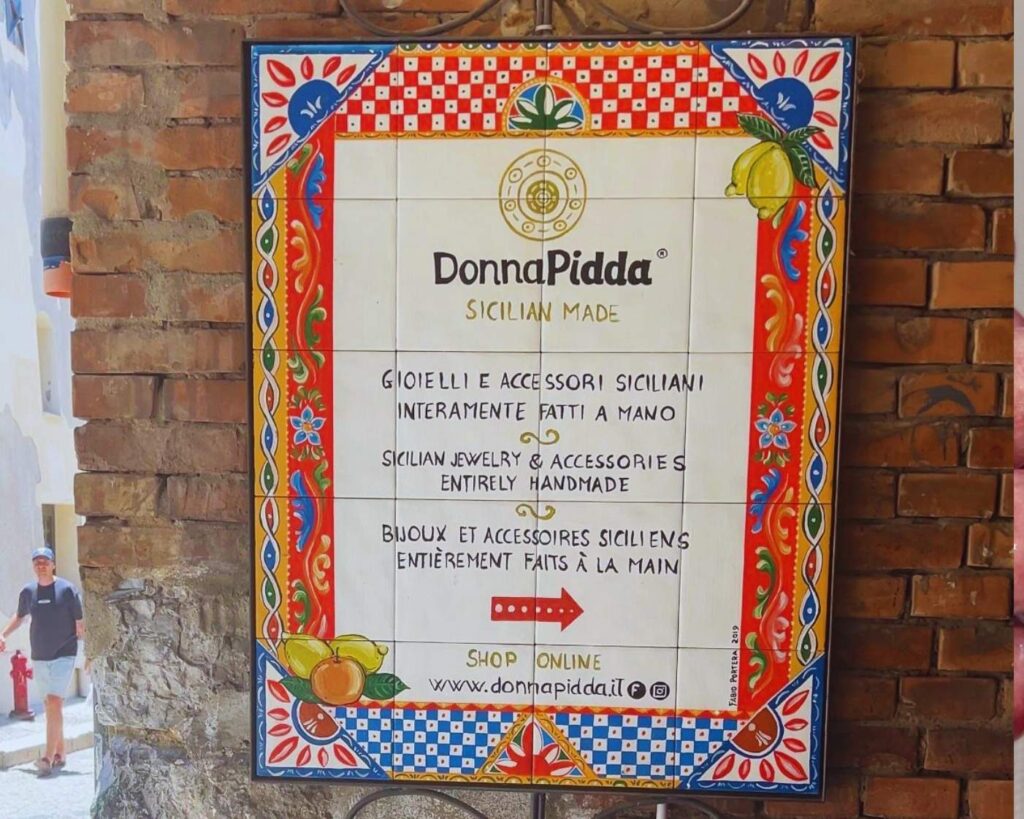
That is what makes Donna Pidda in Cefalù so special.

Here, Bruna, the founder and creative heart behind the brand, continues the tradition of creating handmade Sicilian jewelry inspired by the island’s folklore, history, and everyday beauty. Every piece is crafted with intention, preserving an art form that tells the story of Sicily rather than simply imitating it.

There is nothing wrong with buying something beautiful. But there is something extraordinary about knowing the hands that created it.

More Than Jewlery

Donna Pidda isn’t simply a jewelry shop.

It is Bruna’s love letter to Sicily.

Every piece begins with an idea inspired not by fashion trends or seasonal collections, but by the island itself—its stories, traditions, colours, folklore and the tiny details that many people walk past without ever noticing.

The faded ceramic tiles decorating an old doorway.

The lemons growing behind a stone wall.

The colourful fishing boats rocking gently in Cefalù’s harbour.

The intricate patterns painted on centuries-old majolica.

The legendary Teste di Moro that watch over balconies throughout Sicily.

The pinecone that has symbolised prosperity and hospitality for generations.

These aren’t simply decorative symbols.

They’re chapters of Sicily’s story.

And Bruna turns those stories into something you can wear.

Preserving More Than an Art Form.

Instead, Donna Pidda chooses something different.

Patience.

Every piece is assembled by hand.

Each colour is chosen with intention.

The tiny brushstrokes reflects hours of craftsmanship that no machine can truly replicate.

Mass production creates copies.

Craftsmanship creates character.

When you hold one of Bruna’s creations, you’re not holding something that rolled off an assembly line.

You’re holding a small piece of Sicilian identity.

An object that carries the fingerprints, imagination and passion of the person who made it.

The Beauty Hidden in Everyday Sicily

Perhaps what makes Donna Pidda so special is that Bruna doesn’t search for inspiration in grand monuments.

She finds it in everyday life.

In conversations between neighbours.

With old family traditions.

She is inspired by the colours hanging from laundry lines stretching across narrow streets.

As well as the scent of orange blossom carried through ancient alleyways.

The fishermen returning to the harbour before sunrise.

In grandmothers carefully preparing Sunday lunch.

In ceramic pots sitting outside weathered homes.

These are the moments that tourists often miss.

Yet they are the moments that define Sicily.

They are the memories locals carry with them long after they leave home.

Donna Pidda captures those quiet moments and transforms them into wearable art.

Every Piece Has a Story

Perhaps that’s why people are drawn to Donna Pidda.

Not because they’re simply buying jewelry.

They’re taking home a story.

A reminder of the afternoon they wandered through Cefalù’s medieval streets.

The smell of the sea.

The warmth of the Sicilian sun.

The laughter echoing through hidden courtyards.

The kindness of people who still greet strangers like neighbours.

Long after a holiday ends, a handcrafted piece becomes more than an accessory.

It becomes memory.

The Importance of Supporting Artisans

Places like Donna Pidda remind us why local artisans matter.

They protect traditions that cannot be automated.

They preserve techniques that machines cannot imitate.

Most importantly, they keep culture alive—not inside museums, but in everyday life.

When we choose handmade over mass-produced, we aren’t simply making a purchase.

We’re casting a vote for creativity.

For heritage.

For authenticity.

For the people who refuse to let centuries of craftsmanship disappear.

A Piece of Sicily You Can Wear

Sicily has never been defined solely by its beaches or its monuments.

It lives in its people.

Its traditions.

Its stories.

Its artisans.

Bruna has chosen to tell those stories through her hands.

Every earring, necklace, bracelet and pendant that leaves her workshop carries a small piece of Sicily with it—not because it was designed to look Sicilian, but because it was born here, inspired here and lovingly crafted here.

In a world where almost everything can be copied, there is still something deeply moving about owning something made by someone who poured a little of themselves into it.

That is the real beauty of Donna Pidda.

It isn’t just jewelry.

It’s Sicily, told one handcrafted piece at a time.

Cefalù Has It All: Why It’s the Perfect Home Base for Your Sicilian Adventure

Most travellers arrive in Sicily with the same challenge. How do you see as much of Sicily as possible in a short amount of time?

What location will help me get the most out of my stay?

From golden beaches and historic towns to incredible food, mountain villages, and authentic Sicilian culture, there is no shortage of places to discover.

The problem is choosing where to stay.

Many visitors spend their holiday constantly changing hotels. They pack, unpack, and spend valuable time on the road.

Cefalù offers a different approach.

Located on Sicily’s northern coast, Cefalù places you at the centre of everything.

It is easy to reach by train and well connected to Palermo and the rest of the island. Visitors can explore Sicily by day and return each evening to one of the island’s most beautiful seaside towns.

Aerial view of a coastline and big rock near Cefalu, Sicily, Italy.

A Town Where You Barely Need a Car

One of Cefalù’s greatest strengths is its walkability.

From the moment you arrive, much of what you need is within walking distance.

The beach sits beside the historic centre.

Restaurants line the waterfront and weave through the old town streets.

The train station is close enough to make day trips simple.

Many visitors spend days exploring without ever getting behind the wheel.

Beautiful view of the beach, Cefalu Cathedral and old town of coastal city Cefalu at sunset, Sicily, Italy

History at Every Turn

Few towns combine history and scenery as effortlessly as Cefalù.

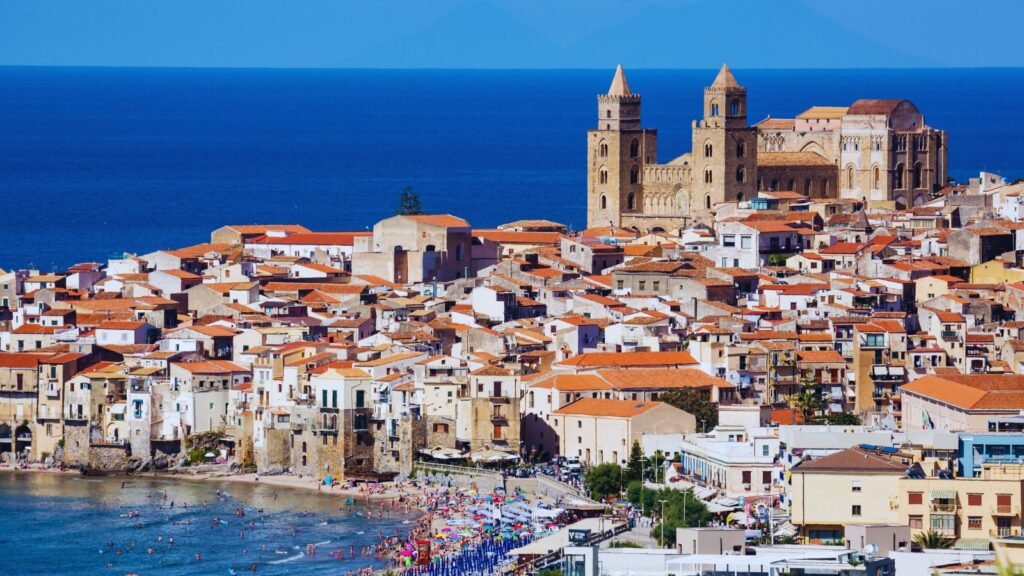
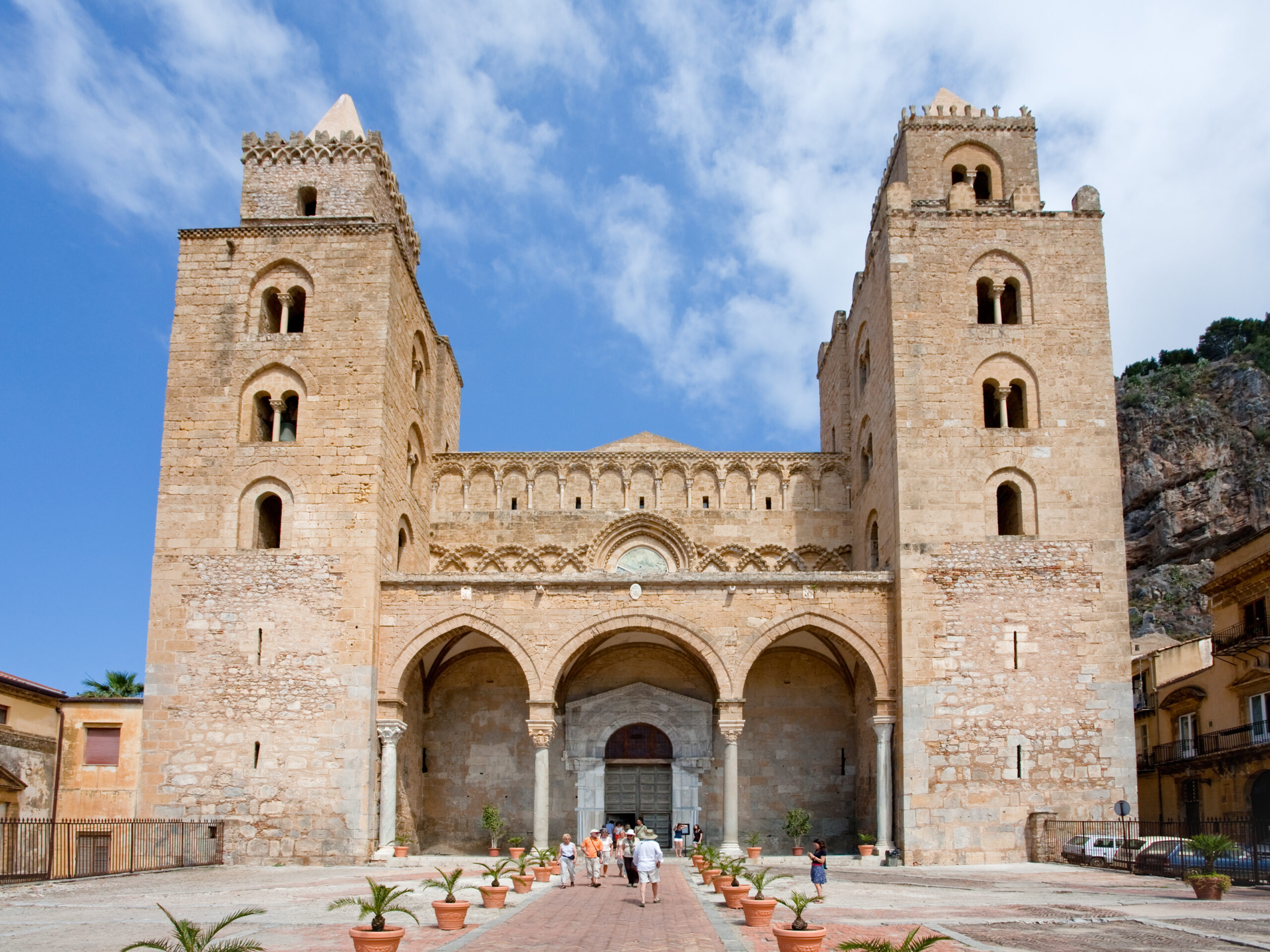
The town is dominated by its magnificent Norman Cathedral. Built in the twelfth century, it remains one of Sicily’s most important landmarks and is part of a UNESCO World Heritage site.

Just above the town rises La Rocca.

This dramatic rock formation towers above Cefalù and rewards visitors with breathtaking views across the coastline. The climb is one of the most memorable experiences in northern Sicily.

The Sicily Travellers Dream About

What makes Cefalù special is not only what it has.

It is what it has managed to keep.

Many destinations lose part of their character as tourism grows.

Cefalù remains unmistakably Sicilian.

Local families still gather in the piazzas.

Fishermen still work along the coast.

Life continues at a pace that feels authentic rather than manufactured.

This is the Sicily many travellers hope to find.

From Cinema to International Fame

Film lovers often recognise Cefalù immediately.

The town has appeared in several internationally known productions and continues to attract visitors drawn by its cinematic beauty. Some scenes connected to Giuseppe Tornatore’s work and other major productions have helped introduce Cefalù to audiences around the world.

Yet despite its popularity, Cefalù never feels like a movie set.

It remains a living town with real character.

Endless Sea Views and Waterfront Dining

Many coastal towns have one or two restaurants with a sea view.

Cefalù offers far more.

Throughout the historic centre and along the waterfront, visitors will find restaurants perched above the sea, terraces overlooking the beach, and cafés where the Mediterranean forms the backdrop to every meal.

Morning coffee, long lunches, sunset aperitivi, and fresh seafood dinners all come with a view.

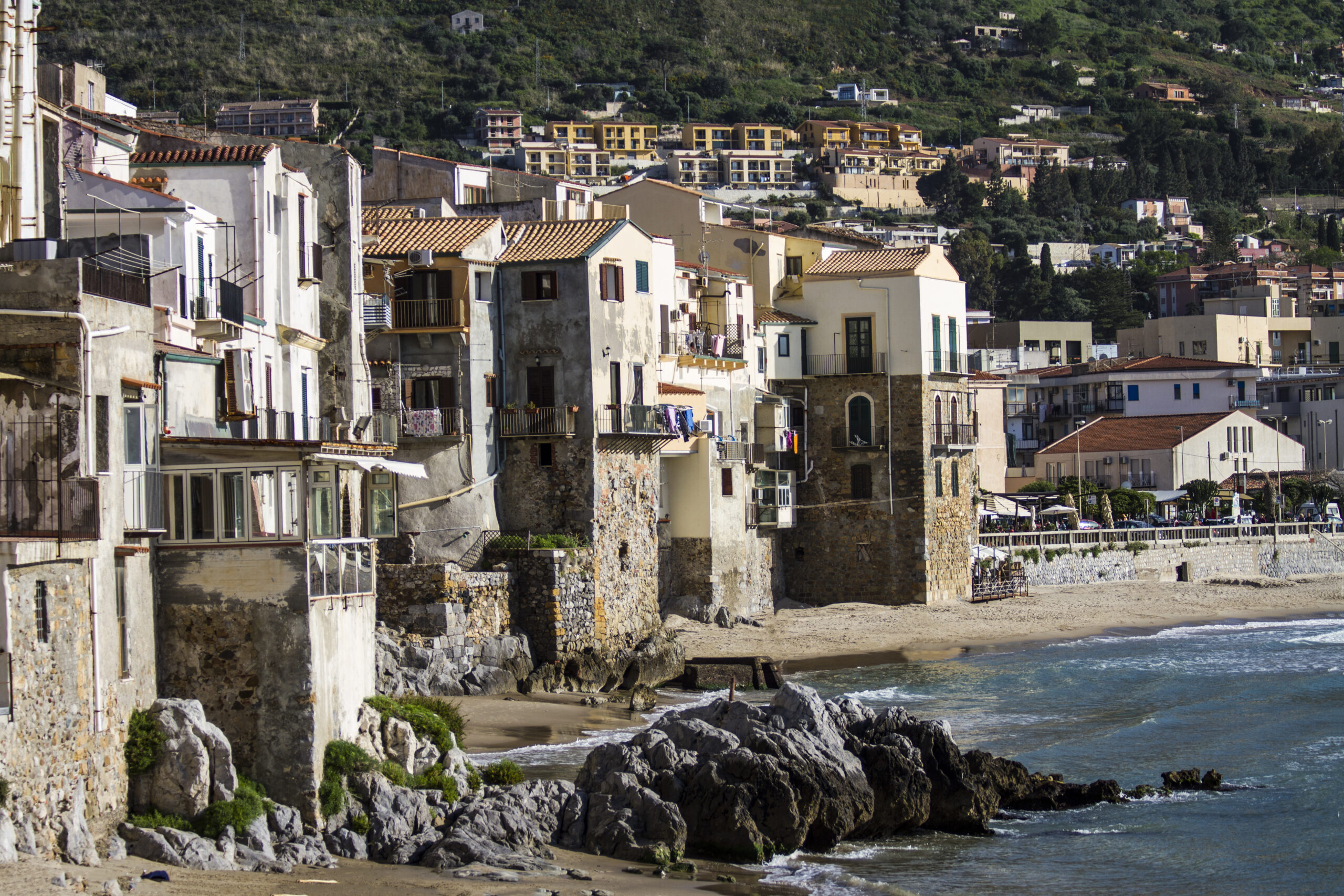
Sandy beach and old houses by the sea in Cefalu, Sicily, Italy

Discover Sant’Ambrogio

Just a short drive from Cefalù lies one of the area’s hidden treasures.

Sant’Ambrogio is a small village overlooking the sea within the Madonie region. Narrow streets, local traditions, olive groves, and spectacular coastal views make it feel like a glimpse into another Sicily.

It is the kind of place many visitors remember long after their holiday ends.

Beaches, Mountains, and Day Trips

Few destinations offer such variety.

Spend the morning on Cefalù’s sandy beach.

Explore La Rocca in the afternoon or the Duomo di Cefalù.

Enjoy dinner overlooking the sea.

The following day, visit Palermo, discover the Madonie Mountains, or explore nearby villages such as Pollina and Castelbuono.

Everything is within reach.

medieval norman Cathedral in Cefalu, Sicily, Italy on June 25, 2011

Experience Sicily from a Luxury Villa in Cefalù

Choosing Cefalù as your base allows you to experience Sicily without compromise.

Not only do you remain close to beaches, history, restaurants, but you are also perfectly positioned for exploring the rest of the island.

In addition, many of Sicily’s most rewarding destinations can be reached easily on a day trip.

a result, travellers can enjoy the perfect balance between relaxation and exploration.

Ultimately, Cefalù offers everything needed for an unforgettable Sicilian adventure.

Sicilian Stuffed Artichokes in Tomato Sauce

Sicilian stuffed artichokes in tomato sauce not only is a mouthful to say, it is quite the task to prepare.

If you visit Sicily, you might expect to find this dish everywhere. Surprisingly, you will not. Sicilian stuffed artichokes are often homemade and seasonal. This makes them even more special when you do find them.

This is the kind of recipe that belongs in a Sicilian kitchen, especially during a relaxed stay in a villa or a family vacation where food becomes part of the experience.

If you enjoy simple ingredients like cheese, onions, breadcrumbs, eggs, olive oil, and tomato sauce, you are already halfway there. These flavors come together in a way that feels both rustic and comforting.

What makes this dish stand out is not just the ingredients, but how everything is prepared. The artichokes are filled carefully so they hold their shape while cooking in the sauce. When done right, they stay intact and absorb all the flavor without falling apart.

The only thing that makes this dish taste better is having a private chef prepare this for your in villa dinner for you and your guests.

A Dish Rooted in Sicilian History

Artichokes have been part of Sicilian life for centuries, with many historians believing they were first cultivated on the island or nearby in the southern Mediterranean.

Over time, they became deeply embedded in local cuisine, shaped by the many cultures that influenced Sicily—from the ancient Greeks to the Arabs, who introduced new agricultural techniques and flavor combinations.

This layered history is still reflected in how artichokes are prepared today. Whether cooked simply with olive oil and herbs or dressed in the classic Sicilian agrodolce style, every version carries traces of the island’s past.

In Sicily, artichokes are more than just a vegetable—they are a sign that spring has arrived. Markets begin to fill with fresh carciofi, and families return to traditional recipes that have been passed down through generations.

This traditional Sicilian stuffed artichokes recipe is simple but requires attention to detail. Below you’ll find step-by-step instructions to prepare artichokes in tomato sauce just like in a Sicilian home.

Sicilian Stuffed Artichokes in Tomato Sauce

Ingredients
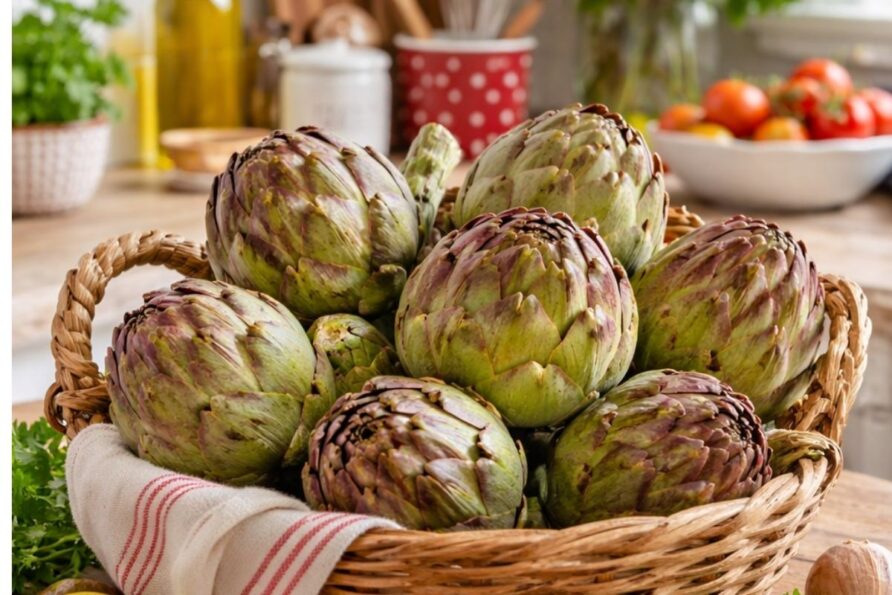
6 artichokes
1 lemon
1 cup breadcrumbs
1/2 cup grated Pecorino or Parmesan
2 cloves garlic, finely chopped
2 tablespoons fresh parsley, chopped
olive oil
salt and pepper
2 cups tomato passata
1 garlic clove

Method
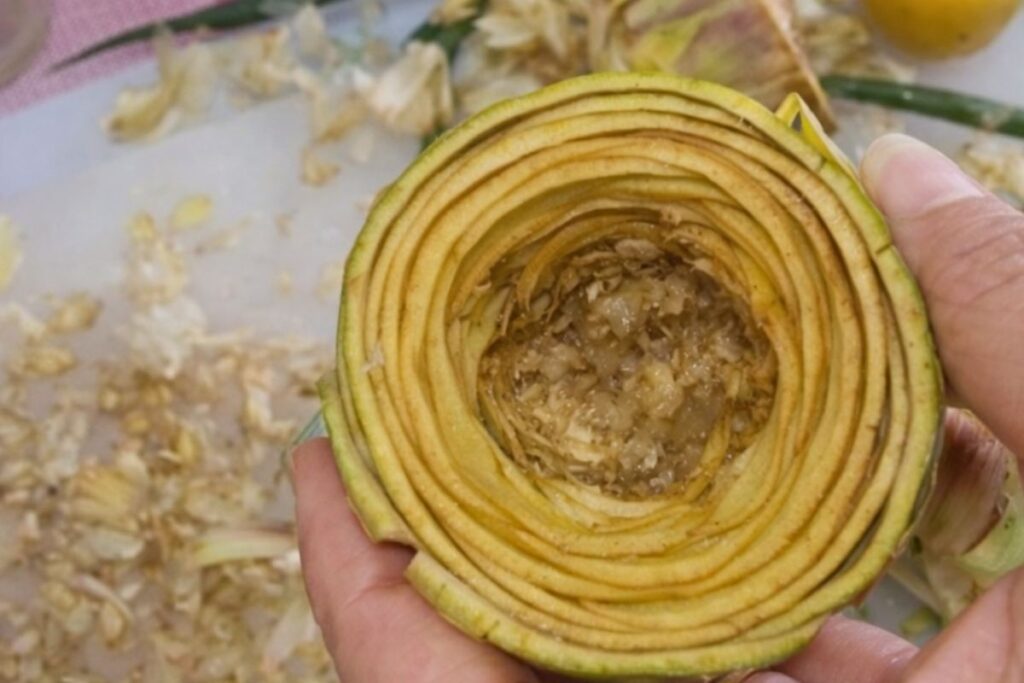
Clean the artichokes by removing the tough outer leaves, trimming the top, and cleaning out the center. Place them in water with lemon juice to prevent browning.

In a bowl, combine breadcrumbs, cheese, garlic, parsley, olive oil, salt, and pepper. Mix until the texture is slightly moist.

Open each artichoke and fill it well with the breadcrumb mixture, pressing the filling inside.

Tie each artichoke gently with kitchen string to keep it closed while cooking and prevent the filling from falling out.
In a deep pan, heat olive oil and lightly sauté a garlic clove.

Add the tomato passata and a pinch of salt and let it simmer for a few minutes.

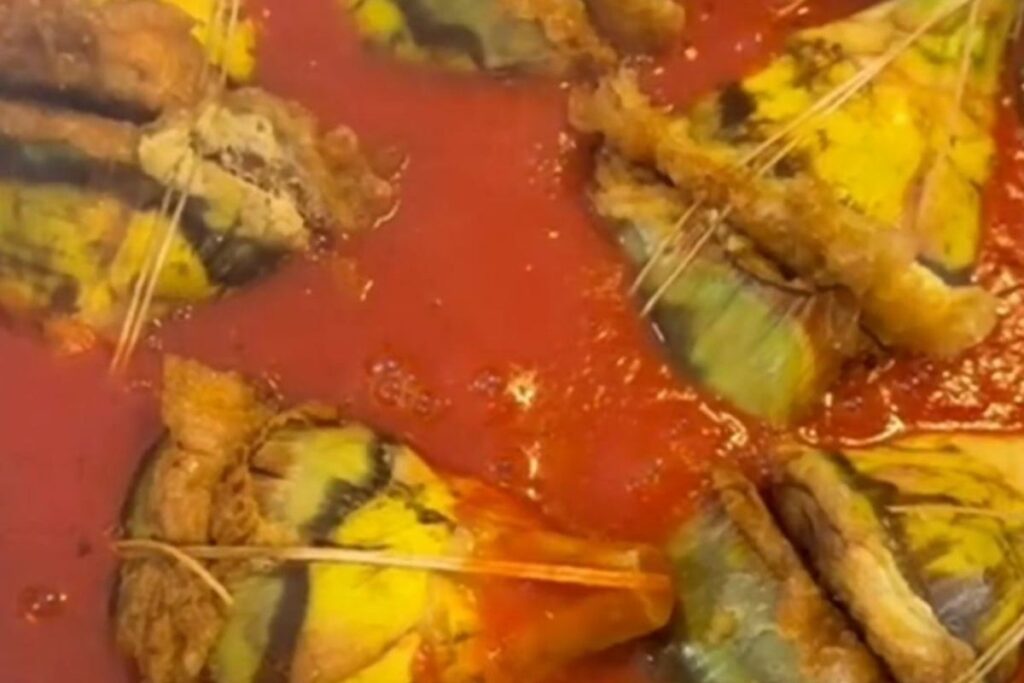
Place the stuffed artichokes upright in the sauce. Add a small amount of water, cover, and cook on low heat for about 40 minutes until tender.

Remove the string before serving and spoon the sauce over the top.

Sicily with Kids: The Ultimate Family Vacation Guide for 2026

Planning a trip to Sicily with kids in 2026?

Sicily is one of Europe’s best destinations for families. It offers beaches, culture, outdoor activities, and a relaxed lifestyle.

In fact, families quickly notice how welcoming the island is for children. Restaurants are family-friendly. Locals love kids. Large piazzas and open spaces make exploring easy.

In addition, Sicily offers a wide range of activities for all ages. Families can enjoy nature, history, and outdoor adventures in every region.

For example, children can spend the day on sandy beaches. They can visit nature parks or enjoy boat trips along the coast. Many towns also offer safe pedestrian areas for relaxed walks.

As a result, planning a flexible and stress-free family holiday becomes easy.
Staying in one of the many family-friendly Sicily villas is a great choice for families. A private Sicily villa offers space, comfort, and privacy. Many Sicily villas are close to beaches, towns, and top attractions.

Choosing the right Sicily villa allows families to enjoy the island at their own pace. It also creates a relaxed home base for exploring together.

.

Why Sicily is Perfect for Families

Sicily is an ideal destination for families because it combines variety, safety, and a relaxed atmosphere.In addition, unlike many busy European destinations, life here moves at a slower pace.

What Parents Will Appreciate

  • Warm weather for most of the year
  • A strong family culture
  • Kid-friendly restaurants and cafés
  • Plenty of outdoor space to play and explore

As a result, whether your children love the beach, animals, history, or adventure, Sicily makes it easy to create a holiday that works for everyone.

Best Places To Visit in Sicily With Kids

Family-Friendly Cities in Sicily

Cefalù

For example, Cefalù is one of the best destinations for families traveling to Sicily with kids. For a detailed itinerary, read our guide to visiting Cefalù. The historic center is compact and walkable, and the long sandy beach is perfect for young children. In addition, the relaxed atmosphere makes it ideal for a stress-free family stay.

For families visiting Cefalù, staying in a private luxury villa can make the experience even more special. Our villas in Cefalù offer the perfect combination of comfort, privacy, and authentic Sicilian charm.

Taormina

Taormina is one of the most beautiful destinations for families visiting Sicily with kids. The town offers stunning views, a relaxed atmosphere, and easy access to the sea.

Families can explore the charming historic center, ride the cable car down to the beach at Isola Bella, and enjoy a mix of sightseeing and relaxation. In addition, the pedestrian streets, open squares, and family-friendly restaurants make it easy to visit with children.

Because everything is close together, Taormina is ideal for a stress-free day trip or family stay.

Families who want more space and privacy often choose to stay in one of our villas near Taormina. Many offer private pools, beautiful views of the coastline, and peaceful surroundings while still being within easy reach of the town’s historic center and beaches.

Palermo

Palermo is a vibrant destination that combines culture, history, and outdoor experiences, making it a great choice for families visiting Sicily with kids. At the same time, the city’s lively atmosphere and wide open squares give children space to explore.
Another highlight for families is the variety of green areas, including the Botanical Garden and Parco della Favorita, where kids can run and play. Meanwhile, just a short distance from the city center, Mondello Beach offers shallow water and soft sand, ideal for a relaxing family day by the sea.

Since many of the main attractions are located close to each other, getting around is simple and convenient. Therefore, Palermo works well both as a day trip and as a short family stay.
To discover more about Palermo read our Guide on things to do in Palermo.

The area is also a great base for families staying in one of the many family villas in Sicily nearby.

Families who want more space and comfort can also explore our selection of villas near Palermo, offering beautiful outdoor spaces and an ideal base for discovering the city and nearby beaches like Mondello.

Catania

The Catania area is an excellent base for families exploring eastern Sicily with kids. In particular, its location near Mount Etna offers a unique mix of adventure, culture, and outdoor experiences.

Families can visit the lively historic center, explore local markets, and enjoy spacious piazzas where children can move around freely. At the same time, the nearby coastline provides easy access to beaches and seaside towns for relaxing breaks between sightseeing.

Another major highlight for families is Mount Etna itself, where guided excursions, cable car rides, and easy walking trails allow children to experience Europe’s highest active volcano in a safe and memorable way.
Because so many attractions are located within a short distance, the Catania area works well for families looking to combine fun activities with nature and cultural experiences.

To discover more about this area visit our page about visiting Catania .

Families looking for more space and flexibility can explore our villas near Catania, a perfect base for discovering Mount Etna and the beautiful eastern coast of Sicily.

Top Kid-Friendly Activities in Sicily

Additionally, Sicily offers a wide range of experiences that go beyond beaches and historic towns. From outdoor adventures to educational attractions, these family-friendly activities are perfect for adding variety to your Sicily with kids itinerary.

Here are some of the best things to do in Sicily with kids.

Bioparco di Sicilia Zoo & Botanical Park

Bioparco di Sicilia offers a fun and educational day out for families visiting the Palermo area. This well-maintained wildlife and botanical park combines animal encounters with shaded green spaces, making it ideal for a relaxed visit with children.

The park is home to a variety of species, including lemurs, reptiles, birds, and farm animals, along with themed botanical areas that introduce kids to different ecosystems.

Educational panels and interactive experiences make the visit both entertaining and informative.
As a result, it’s a great alternative to large theme parks, especially for families looking for a quieter, nature-focused activity suitable for all ages.

Best for: Ages 2+, half-day family visits, animal lovers, educational experiences

Location: Carini, near Palermo

Pollina Adventure Park

Nestled in the Madonie Mountains, Pollina Adventure Park offers an exciting outdoor experience for families visiting Sicily with kids.
The park features aerial obstacle courses, a climbing wall, and zip lines through the trees.
As a result, children can stay active while enjoying nature. This is an ideal choice for active families.
It’s perfect if you want to add outdoor adventure to your Sicily family trip away from the beach.

Best for: Ages 6+, adventurous kids, nature-loving families

Location: Contrada Serradaino, Pollina (PA)

GAL Hassin International Center for Astronomical Sciences

GAL Hassin is one of Italy’s most advanced astronomy centers and a unique stop when visiting Sicily with kids.
Located in the Madonie Mountains, the area offers minimal light pollution and ideal stargazing conditions.
The center features a large planetarium designed for children. In addition, families can explore interactive science exhibits.
In the evening, guided stargazing sessions make the experience even more memorable. As a result, this family-friendly attraction combines education, discovery, and wonder.


Best for: Ages 6+, science-curious children, evening family activities

Location: Isnello, Madonie Mountains

Tecnoparco Archimede (Archimedes Technology Park)

Located in Syracuse, Tecnoparco Archimede brings ancient Greek science to life for families visiting Sicily with kids.
The hands-on museum features working replicas and scale models of Archimedes’ inventions from the 3rd century BC.
Kids can interact with ancient technology such as levers and pulleys.
As a result, science becomes tangible, educational, and fun for the whole family.


Best for: Ages 7+, history-minded families, rainy day activities

Location: Syracuse (Siracusa)

Planning Your Sicily Family Adventure

Sicily is a destination that truly works for all ages. From sandy beaches and theme parks to mountains and science centers, families can easily mix fun, learning, and relaxation.

Whether you’re traveling with toddlers or teenagers, the island offers experiences that keep everyone engaged. At the same time, the relaxed pace makes it easy to explore without stress.

Ultimately, Sicily with kids is about balance, adventure during the day and simple moments together in the evening. With the right planning, your family trip in 2026 can be both memorable and effortless.

Discover our collection of family-friendly villas in Sicily and find the perfect home base for your next adventure.

Sicily offers everything you need for a relaxed and memorable family holiday in Sicily.